Daily Summary, March 23
# Results of the Day, March 23
—
🇮🇷 OIL BREACHES $100: TRUMP’S ULTIMATUM AND NUCLEAR EXCHANGE
The US President gave Iran 48 hours to fully reopen the Strait of Hormuz, threatening otherwise to strike Iranian power plants. The day before, Iranian rockets struck near Israel’s Dimona nuclear facility for the first time, while Israel attacked Iran’s Natanz nuclear complex. Brent trades above $102, while spot jet fuel prices in Asia have doubled.
*Analysis: We have entered a phase where energy infrastructure has become a direct battlefield and nuclear sites are targets. The 48‑hour ultimatum is not just rhetoric—it is an attempt to force Iran’s capitulation before a ground operation becomes inevitable. Markets are pricing in at least $100 through the end of April. But the bigger story is the collapse of the old rules: the US lifted sanctions on Russian and Iranian oil to curb prices. That means any sanctions architecture now works only as long as it does not hurt America’s own interests.*
—
📉 GLOBAL MARKETS POST FOURTH CONSECUTIVE WEEKLY LOSS
The S&P 500 dropped 1.5% on the day, while Japan’s Nikkei plunged 5.5% for the week. Energy was the only sector to close in the green. European indices (STOXX 600, DAX) recorded their worst performance since the start of the year.
*Analysis: A classic divergence: the war in the Middle East hits Europe and Asia, which depend on imports, while the US—now the world’s largest oil producer—is relatively sheltered. Capital flows into the dollar, but the traditional 60/40 model (stocks/bonds) is definitively broken: bonds no longer hedge equity declines because markets fear stagflation, not recession. Investors are seeking safety in cash, gold, and, surprisingly, oil stocks.*
—
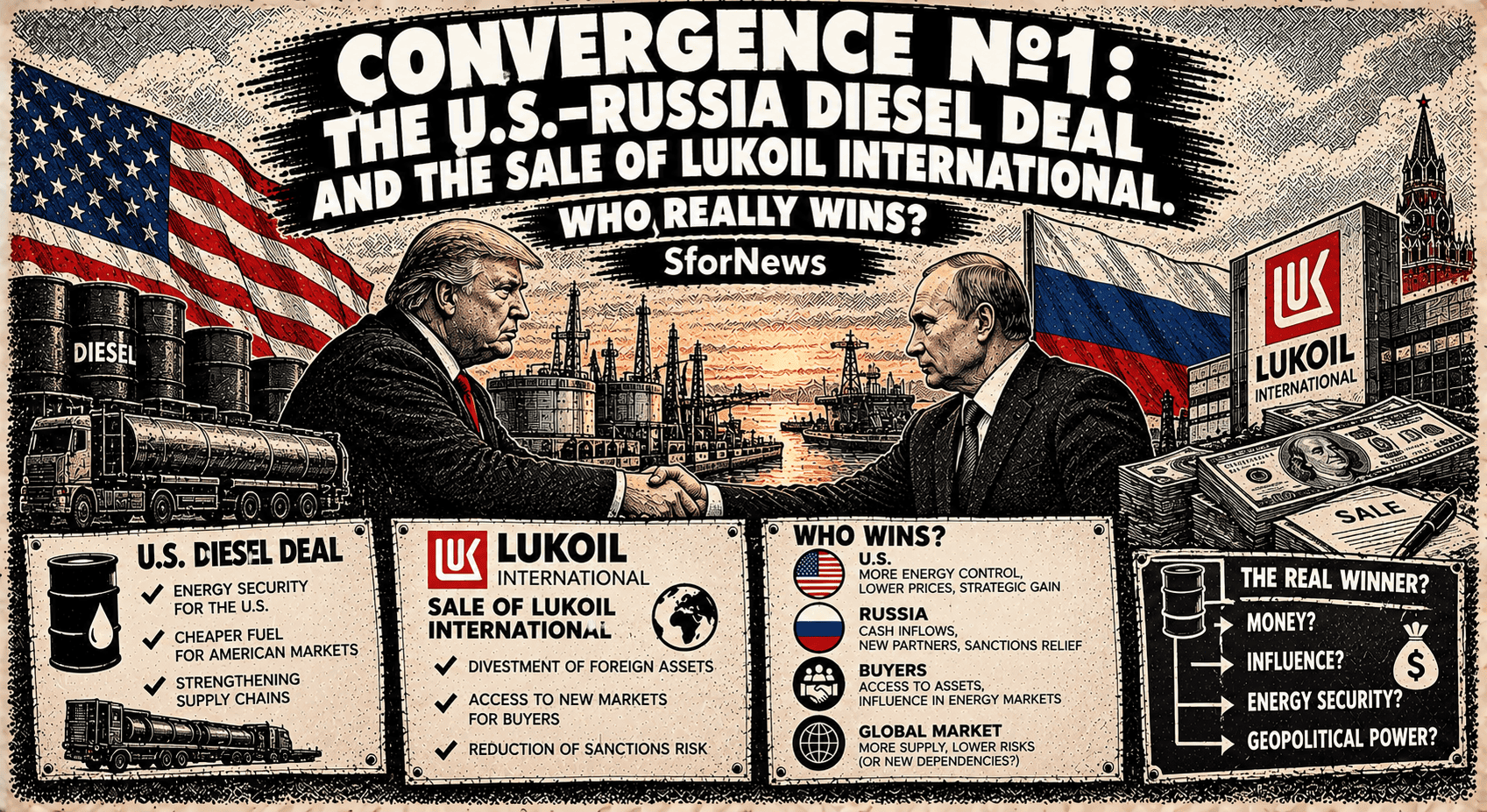
🇷🇺 RUSSIA GETS A TEMPORARY OIL PASS FROM THE US
The Trump administration allowed the sale of 130 million barrels of Russian oil that had been stuck at sea. The license runs until April 11. Treasury Secretary Bessent acknowledged Russia will gain financially but called it a “micro‑period.” For the first time in a long while, Russian oil trades without a discount.
*Analysis: This is not just a sanctions relief—it is an admission that without Russian volumes the world cannot stabilize prices. The US is consciously letting Russia’s budget benefit to avoid $150 oil before the elections. For Russia, this is a window of opportunity: three weeks to cash in on $100+ oil while the sanctions regime is relaxed. The question is whether we can turn this windfall into long‑term investments or repeat the mistake of the 1970s, when the oil shock was consumed without structural reforms.*
—
🪙 JPMORGAN STARTS ACCEPTING BTC AND ETH AS COLLATERAL
Institutional clients of the bank can now obtain dollar liquidity without selling their crypto assets.
*Analysis: This is one of the strongest signals of crypto’s integration into traditional finance. JPMorgan, which once called bitcoin a “fraud,” now allows it as collateral. The implication: large players will no longer be forced to sell during market stress, reducing volatility. For institutions, this is a step toward recognizing crypto as a legitimate asset class. For retail, it is another sign that bitcoin is becoming “digital collateral” rather than just a speculative instrument.*
—
⚡️ BITCOIN MINERS DEEP IN THE RED
The average cost to mine one bitcoin is estimated at $88,000, while the current price hovers around $69,000. Miners are losing roughly $19,000 per coin mined.
*Analysis: A classic miner capitulation scenario. When hashrate stays high but price falls below cost, inefficient farms go bankrupt. This cleans out weak players and often precedes a long‑term bottom. However, geopolitics complicates things: if Iran has indeed been mining cheap bitcoin for years and is now dumping it (as some analysts speculate), selling pressure may last longer than usual. For those who believe in the halving cycles, current levels are accumulation territory.*
—
🇷🇺 RUSSIA TIGHTENS PENALTIES FOR ILLEGAL MINING
Damage exceeding 13 million rubles now carries up to five years in prison or a fine up to 2.5 million rubles. Additionally, a bill was approved that would allow only cryptocurrencies with a market cap above 5 trillion rubles and at least five years of price history on licensed exchanges to be traded on organized markets.
*Analysis: Russia continues down the path of regulation through exclusion. Effectively, only bitcoin and possibly ether will remain permissible—everything else will fail either the market cap requirement or the history requirement. This filter removes 99% of altcoins from regulated trading. For miners, it is a double blow: criminal liability for illegal mining and a narrower sales channel. Legal mining is becoming the domain of large players who can prove their electricity sources and pay taxes.*
—
🐋 STRATEGY ADDS 1,031 BTC; BITMINE ACCUMULATES ETH
Strategy increased its holdings to 528,184 BTC, spending $76.6 million on the latest purchase. At the same time, the company revealed plans to raise up to $42 billion through stock offerings. Bitmine added another 65,341 ETH (~$141.8 million), bringing its total to 4.66 million ETH ($10.1 billion), of which 3.14 million ETH are staked.
*Analysis: Large corporate players keep accumulating regardless of market conditions. Strategy (formerly MicroStrategy) has entered a mode of “perpetual capital raising to buy BTC”—their $42 billion plan means they will likely buy bitcoin under almost any scenario. Bitmine, in turn, is doubling down on ether and staking, signaling long‑term faith in proof‑of‑stake yields. Institutional accumulation continues even as miners bleed and retail panics.*
—
💥 ANOTHER DEFI HACK: RESOLV LABS LOSES $25 MILLION
An attacker exploited a classic vulnerability, inflating the supply from $200,000 to $80 million USR. The actual loss is estimated at $25 million.
*Analysis: DeFi remains the Wild West. Protocols with hundreds of millions in TVL continue to suffer from the same mistakes: insufficient input validation, oracle manipulation, weak issuance mechanisms. $25 million is not the biggest number by 2025–2026 standards, but the fact that hacks persist undermines trust in the segment—especially at a time when traditional finance (JPMorgan) is embracing crypto and regulators are tightening rules. DeFi will either need to develop security standards comparable to TradFi or remain a niche for geeks and speculators.*
—
📊 ALTCOIN INTEREST PLUMMETS TO MULTI‑YEAR LOWS
The share of altcoin trading in total volume has fallen to levels not seen since 2020–2021. Capital is concentrating in bitcoin and ether.
*Analysis: This is not just “bitcoin season”—it is a flight from risk assets amid geopolitical uncertainty. Altcoins are always the first to suffer when investors seek safety. But there is a structural reason as well: regulators in the US, EU, and now Russia effectively recognize only bitcoin and ether as “sufficiently decentralized” and “sufficiently old.” Everything else falls under suspicion of being a security or simply does not qualify for organized trading. Capital follows liquidity and legitimacy. If the trend persists, we may see a long‑term consolidation around two or three assets, with altcoins shifting to a venture‑capital niche for a narrow audience.*
—
## SYSTEMIC TRENDS OF THE DAY
– Energy trend: Oil above $100, US lifts sanctions on Russia and Iran to curb prices. Energy has become the primary weapon, and sanctions are now bargaining chips.
– Institutional trend: JPMorgan accepts BTC/ETH as collateral; Strategy and Bitmine keep buying despite market declines. Big players accumulate while retail panics.
– Regulatory trend: Russia introduces criminal liability for illegal mining and a filter for altcoins on exchanges. The legal playing field narrows to 2–3 assets.
– Market trend: Altcoin interest at multi‑year lows; capital concentrates in BTC/ETH. DeFi continues to suffer hacks, eroding trust in the segment.
—
## ARCHITECTURAL SUMMARY
March 23 marked a day when geopolitics and finance finally intertwined into a single knot.
The US temporarily lifted sanctions on Russia and Iran to keep oil prices in check before the elections. It is an admission: the sanctions regime works only as long as it does not hurt the party imposing them. Russia gained a short‑term window to monetize expensive oil, but the real question is whether it can use the moment for structural change or will repeat the mistakes of the past—consuming the windfall without reform.
Meanwhile, in crypto, JPMorgan starts accepting bitcoin and ether as collateral; corporate giants keep stacking; regulators (including Russia) cut off altcoins, leaving only the “old” assets in the legal space. Capital is concentrating in two or three coins, and that may become the new normal.
At the same time, DeFi remains vulnerable—the latest Resolv Labs hack reminds us that the technology has not yet reached the security standards of traditional finance. Retail, as always, suffers from scams and its own gullibility.
Three key takeaways from the day:
First. Sanctions are no longer absolute. The US has shown it will lift them on anyone if dictated by oil prices. Russia should use this window for economic restructuring, not for squandering the oil rent.
Second. Crypto markets are polarizing. Institutions accumulate BTC/ETH; altcoins lose liquidity; regulators cut out the “junk.” Long‑term investment is increasingly about bitcoin and ether.
Third. Geopolitics now drives asset prices. Oil, the dollar, bitcoin—everything is a derivative of what happens in the Strait of Hormuz and the White House. Ignoring this factor is no longer an option.
*“The world no longer divides into economics and politics. Now, everything is geopolitics. And those who understand that will stay ahead.”*


Bitcoin
$62,881.23

Ethereum
$1,672.04

Litecoin
$42.71

Dash
$37.08

Bitcoin Cash
$209.43