Daily Summary, April 16
# Results of the Day, April 16
☠️ Russian exchange Grinex suffered a large-scale cyberattack, resulting in the theft of over 1 billion rubles.
*Analysis: Grinex is not a top-tier platform, but a billion-ruble hit indicates professional attackers. Likely a combination of social engineering and a zero-day exploit on a hot wallet. Important: after 2024, Russian exchanges actively moved funds offshore, but still keep some reserves inside. This attack signals to all local exchanges: security is lagging, and the regulator (Central Bank) is in no hurry to create a deposit insurance system for the crypto market. Affected users can only hope for reimbursement from the exchange’s reserves. If insufficient, lawsuits and likely criminal cases against top management will follow. For the market: the incident will accelerate the adoption of mandatory licensing for crypto exchanges in Russia, requiring proof of reserves. However, licenses will likely go only to “approved” players.*
🦅 The Bank of Russia spoke AGAINST withdrawing officially purchased cryptocurrency to personal non-custodial wallets.
*Analysis: This continues the Central Bank’s logic: “your crypto stays under our supervision.” The regulator allowed limited trading for qualified investors but with the condition of custody on reporting exchanges. Withdrawing to MetaMask or Trezor means loss of control. The Central Bank cites anti-money laundering and counter-terrorism financing, but in reality it’s an attempt to maintain a monopoly on record-keeping. For investors: officially purchased crypto becomes “paper” – you own a claim against the exchange, not the actual coins. History repeats: gold certificates instead of bullion. Irony: the Central Bank fights decentralization that it cannot destroy. The legal market will exist in a cage, while non-custodial wallets remain for the black market.*
🐮 The presale of the MOO token ends in less than a day – current price $0.0055 is almost 6 times lower than the promised listing price of $0.03.
*Analysis: MOO – another memecoin with an agricultural twist. Classic scheme: raise funds at $0.0055, promise a listing at $0.03 (+445% instantly), but in reality, price almost always crashes after DEX launch. Rare exceptions – if the project builds a real ecosystem (staking, gaming, NFTs). But judging by the lack of hype on the last day, interest is minimal. For investors: never trust promised listing prices. It’s a marketing gimmick. Listings often happen on second-tier exchanges with tiny liquidity, where early sales will crush the price to $0.001. If you must, only invest what you can afford to lose entirely.*
🚓 Ukrainian law enforcement detained a member of an international hacker group that attacked companies in Europe and the US – the man laundered over $100 million from ransoms by converting to crypto and investing in Ukrainian real estate and property.
*Analysis: The interesting part is not the arrest (many happen), but the geography: the hacker settled in Ukraine while attacking European and US companies. This leaves a mark on Ukraine’s crypto image: on one hand, the country actively fights money laundering (cooperates with Chainalysis), on the other hand, it remains attractive for cybercriminals due to relative ease of laundering through real estate. $100 million is serious. Likely schemes involved USDT through shady exchanges and buying luxury real estate in Kyiv or Odesa. For the industry: this case will show how effective Ukrainian regulators are at recovering assets. If funds are returned to victims – a precedent. If they “disappear” – another confirmation of corruption.*
🎲 Less than 1% of crypto projects disclose their market maker agreements.
*Analysis: This insight explains why 99% of altcoins dump after listing. Market makers (MMs) are firms that provide liquidity using loaned tokens from the project. Typically MMs take 5-20% of supply at prices far below market, then gradually sell while maintaining an illusion of demand. Terms are under NDA so retail investors don’t know that MMs have an incentive to suppress price. Public disclosure (as required by SEC for securities) would kill this scheme. Until a project discloses terms, assume the MM is not aiming for price growth but for earning on spread and gradual dumps. Exceptions – exchanges with proof-of-reserves and transparent MM auctions, but they are rare.*
🤖 Anthropic released Claude Opus 4.7 – their most powerful publicly available model.
*Analysis: Anthropic is OpenAI’s main competitor in the AI race. Claude Opus 4.7, according to leaks, surpasses GPT-5 in math and code analysis but lags in creativity. For crypto, this matters because Claude is widely used for smart contract auditing and blockchain data analysis. The new model can likely find vulnerabilities that previously required a team of experts. This will lower entry barriers for startups (cheap audits) but also give hackers a powerful tool for finding exploits. The AI security race accelerates. Recommendation: if you’re developing a DeFi protocol, run it through Claude Opus 4.7 before release, but don’t rely solely on AI – human audit still needed.*
🇷🇺 Aksakov stated that he believes in crypto.
*Analysis: Anatoly Aksakov – head of the State Duma Committee on Financial Markets, known for contradictory statements. He used to call crypto “surrogates,” now he “believes.” This shift in rhetoric signals that the Duma is preparing a compromise law to legalize crypto for cross-border settlements. But Aksakov’s “belief” is no reason to celebrate. He believes like in “Russia’s special path” – meaning control and taxes. Don’t expect him to defend decentralization. His belief will likely materialize in a law where crypto can only be used through authorized banks with mandatory identification of every satoshi. For enthusiasts – disappointment; for businesses – at least some legal bridge.*
🤣 The crypto project WLFI, linked to the Trump family, proposed harsh new rules – early investors can only get their tokens after 4 years, and those who disagree may have their assets frozen forever.
*Analysis: WLFI (World Liberty Financial) – a project announced by Trump’s sons as a “decentralized lending protocol.” In reality, it’s a classic centralized pyramid with tokens that the team can lock at will. A 4-year lock is an attempt to avoid early dumps, but freezing assets of dissenters is overkill. Legally, such a smart contract clause could be voided, but most investors won’t sue. The project shows that even big names don’t guarantee honesty. Irony: Trump criticizes Biden for control, yet his own protocol is a model of total centralization. Advice: stay away from tokens with such conditions unless you’re an insider.*
🖥 Miners have sold about 61,000 BTC this year – roughly 3% of total supply.
*Analysis: A significant number. Miners are among the most consistent sellers because they need to pay for electricity and equipment. Selling 61k BTC (~$4.5 billion at $75k) is normal for Q1, especially post-halving when profitability dropped. However, context matters: mostly small and medium miners are selling; large public companies are holding or even accumulating via futures hedging. 3% of total supply is not critical – the market absorbs such volumes in a couple of weeks. For investors: selling pressure exists but is offset by institutional demand. No panic unless miners dump 10%+ in a short period.*
🇨🇳 Circle, the issuer of USDC, said it sees “enormous opportunities” for creating a stablecoin pegged to the Chinese yuan.
*Analysis: Circle – Tether’s main competitor – is always looking for niches to overtake USDT. A yuan peg is logical given China’s push for a digital yuan (e-CNY), but that is fully state-controlled. A Circle stablecoin would be partially decentralized (under Circle’s management but with yuan reserves). Problem: the yuan is not freely convertible, and obtaining a license from Chinese authorities is nearly impossible. More likely, they mean an offshore stablecoin (e.g., in Hong Kong). If successful, it would create an alternative to USDT for CNY trading pairs on Asian exchanges. For now, just a statement. For the market: strengthening the yuan’s role in crypto is another step toward multipolarity, where the dollar ceases to be the sole backing.*
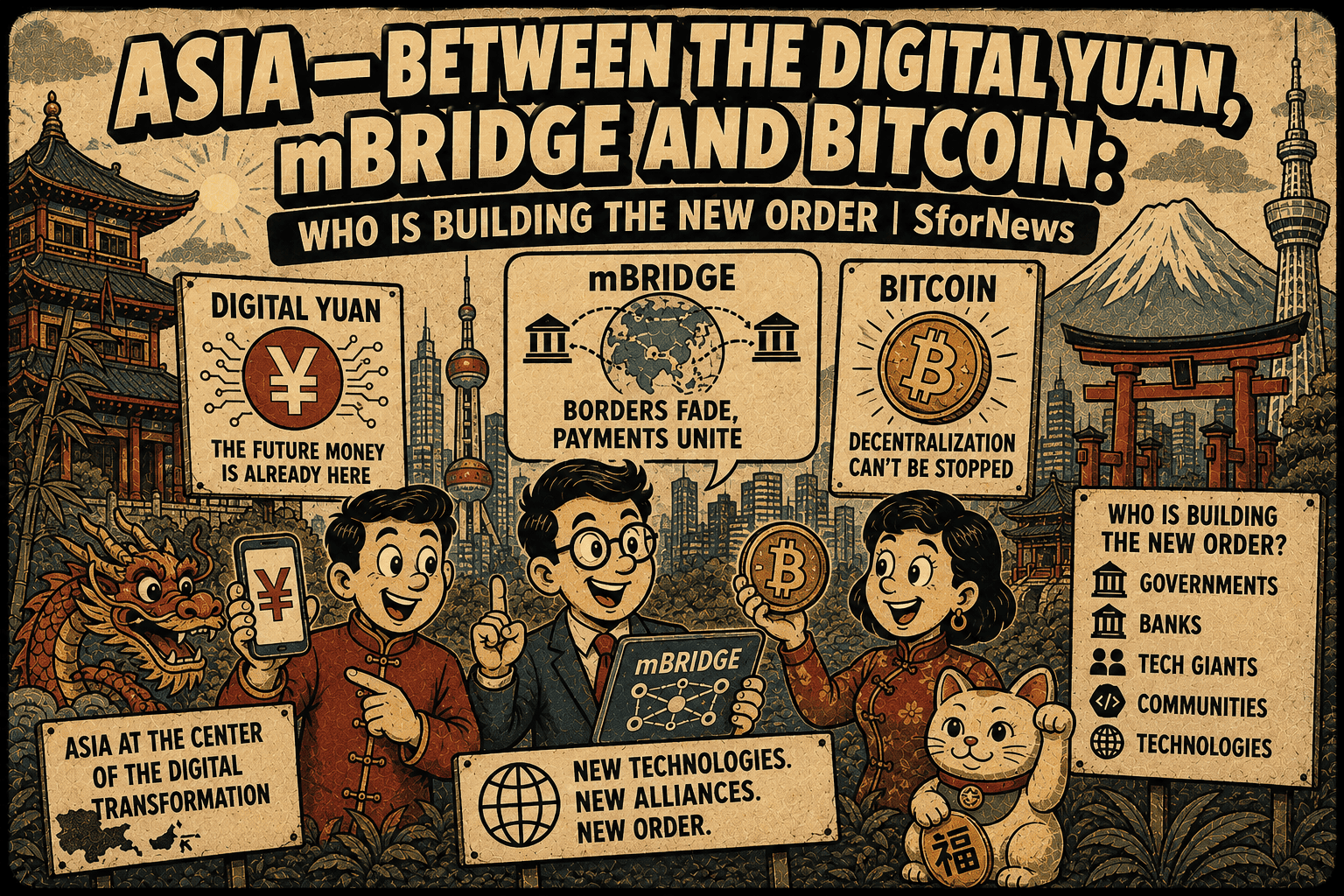
🌏 Bitcoin is still officially banned in only a few countries – China, Algeria, Egypt, Bangladesh, Morocco, Iraq, and Qatar, though rules change quickly and the list may vary.
*Analysis: Many think bitcoin is banned “everywhere except El Salvador.” In fact, most countries tolerate or legalize it with caveats. Seven countries on this list – and in China, trading is banned but holding is not criminalized. In Morocco and Algeria, the ban is formal, and P2P exchanges operate in a gray zone. Notably, Russia is not on this list (it’s “not banned, but not allowed”). This matters for global perception: bitcoin is gradually legitimized even in authoritarian regimes because bans are ineffective. Trend: in 5 years, this list will shrink to 2-3 countries. Meanwhile, these bans are merely bureaucratic hurdles that savvy users bypass via VPNs and DEXs.*
💸 Drift Protocol will receive $127,500,000 from Tether to restore user funds.
*Analysis: Drift Protocol – a decentralized perpetual futures exchange on Solana. Recently they had an exploit or liquidity shortage (details undisclosed). Tether (USDT issuer) is allocating a huge sum for compensation. Unusual because Tether typically doesn’t rescue third-party protocols. Motive: Tether wants to preserve trust in the Solana ecosystem and show USDT is reliable even when DeFi projects collapse. Also may be part of a deal: Drift Protocol will commit to using only USDT and exclude USDC. For users – good news, they’ll get their money back. But for the industry – a signal that large stablecoin issuers increasingly act as “saviors,” leading to centralization of insurance. Without Tether, users would have lost everything.*
🔵 At Blockchain Forum 2026, Leonid Shumakov, head of project A7A5, stated that the crypto market, despite talk of decentralization, is almost completely dependent on the dollar.
*Analysis: An obvious truth many prefer to ignore. 95% of trading pairs on centralized exchanges are against USDT or USDC, which are pegged to the dollar. BTC and ETH are mostly traded in dollar equivalents. Even DeFi protocols use the dollar as a unit of account (e.g., loans in DAI, which is also a dollar). True decentralization would require a basket of assets or indices, but the market chose the dollar for its stability and liquidity. As long as the Fed prints dollars and the world accepts them for oil, crypto will be dollar-based. The only way to change this is to create a stablecoin pegged to a basket of commodities or energy – none exist yet. Shumakov’s statement is a reality check for crypto idealists.*
—
## SYSTEMIC TRENDS OF THE DAY
1. Crypto exchanges under fire. The Grinex attack and the Central Bank’s stance against non-custodial wallets are two sides of the same coin: security and control. Exchanges will be forced to tighten security, but regulators will use any attack as a pretext for licensing.
2. Stablecoins become saviors. Tether allocates $127 million to compensate Drift Protocol. A new trend: large issuers take on the role of insurers to preserve trust in their tokens and ecosystems.
3. AI and crypto converge. Claude Opus 4.7 will be used for auditing and attacks. This lowers security costs for startups but increases risks. Expect rising demand for AI agents in compliance.
4. Memecoins and presales lose hype. The MOO project failed to generate excitement despite promised 6x listing price. Investors are tired of scams and demand real economics. A sign of market maturation.
5. Global ban map shrinks. Bitcoin is officially banned in only 7 countries. Even China does not prosecute holders. This creates a positive backdrop for crypto adoption elsewhere.
## ARCHITECTURAL CONCLUSION
April 16, 2026 shows that the crypto industry has finally split between the illusion of decentralization and the reality of dollar control. Exchanges are attacked, regulators tighten screws, stablecoins rescue, and memecoins die. The only things growing are dependence on AI for security and on the dollar for pricing.
For the retail investor:
– Do not keep large sums on Russian exchanges like Grinex – security is weak, and recovery is not guaranteed.
– Do not believe promised 6x on presales. If a project does not disclose market maker terms, it’s a red flag.
– Use non-custodial wallets despite the Central Bank’s stance – only then do you truly own your coins.
– Follow AI audit developments but do not abandon human review.
For the crypto entrepreneur:
– Consider listing on exchanges with proof-of-reserves and transparent MM contracts – this builds trust.
– Invest in AI security, but remember hackers also use AI. Defense must be multi-layered.
– If launching a yuan or other fiat-pegged stablecoin, prepare for lengthy regulatory approval.
Global trend: crypto is no longer the “Wild West” but instead becomes a high-tech adjunct to traditional finance. The dollar remains king, stablecoins are its courtiers, and decentralized protocols are marginals tolerated as long as they don’t interfere.
*”The crypto market in 2026 resembles a zoo: predators (hackers), keepers (regulators), the animal house (exchanges), and visitors (you). Visitors pay for tickets, keepers feed predators, and the animal house sometimes collapses. The safest place is to leave the zoo and watch the animals through the fence (a non-custodial wallet). But then you won’t hear their roar. And the roar is the market.”*


Bitcoin
$62,881.23

Ethereum
$1,672.04

Litecoin
$42.71

Dash
$37.08

Bitcoin Cash
$209.43