Crypto Salary Trends 2025: 10% of Pros Paid in Stablecoins | USDC Dominates
From Speculation to Salary: Crypto Breaks Through as a Wage Tool
What sounded like science fiction just a few years ago has become reality today: a growing number of IT professionals in the crypto sector are being paid in digital currencies (stablecoins). According to a new report from Pantera Capital, 9.6% of all crypto professionals are now paid in stablecoins such as USDC or USDT—a threefold increase in just one year. This marks a turning point in the crypto sector’s evolution: from wild speculation to practical applications in human resources management and financial infrastructure.
By our International Platform editorial team – August, 2025
Crypto as wages: more than a gimmick
Pantera Capital, a renowned American venture capital firm, surveyed over 1,600 crypto sector employees from 77 countries. The results speak volumes: the popularity of stablecoins as a means of compensation is skyrocketing. In 2023, only 3% of respondents received (part of) their salary in crypto. Today, that figure has risen to almost 10%. This is a sign not only of confidence in digital assets but also of the sector’s maturation.
“Crypto is becoming less of a ‘speculative investment’ and more of a functional tool in business operations,” says technology analyst Laura Shin. “You don’t pay your staff with a toy.”
USDC gains confidence – despite lower trading volumes than USDT
Notable in the report is the dominant position of Circle’s USDC, which accounts for 63% of all crypto salaries, despite the fact that competitor Tether’s USDT is much more widely traded on exchanges globally.
The reason? According to Pantera, it’s because major payroll providers like Deel, Remote, and Rippling don’t support USDT due to concerns about transparency, compliance, and legal risks.
USDC, which is fully backed by transparent reserves and regulated US banking partners, is considered more reliable by employers. Tether, on the other hand, has faced critical reports for years about insufficient substantiation of its reserves and is more commonly used in Asian markets and informal trading.
“USDC is seen as the ‘safe bet’ for companies that want to be compliant,” says fintech lawyer William Zhang. “No one wants to pay salaries in a token that could come under fire from regulators tomorrow.”
Circle’s big plans: from fintech startup to digital central bank
This confidence in USDC is no coincidence. Circle, the currency’s issuer, has transformed itself in recent years from a startup to a strategic player in the financial infrastructure world. Some of their recent moves include:
- In March 2024, Circle partnered with Intercontinental Exchange (ICE), the parent company of the New York Stock Exchange, to integrate USDC into derivatives markets.
- In May 2024, Circle applied for an official banking license from the US government – a sign that the company wants to position itself structurally within the regulated banking system.
- In July 2025, President Donald Trump signed the GENIUS Act, a law that creates an official framework for regulated stablecoin issuers. Circle is explicitly praised as an example of “digital dollars with real compliance.”
“The GENIUS Act makes Circle what SWIFT and VISA are to the traditional world: a standard for digital financial processing,” said U.S. Senator Mike Warner (D-McGram).
Digital wages, real responsibilities: maturity within HR
Not only is the payment method changing, but the compensation structure is evolving as well. Pantera notes that nearly 88% of employees in the crypto sector have a token-based compensation plan with a four-year vesting period. By comparison, last year that figure was only 64%.
This means employees only fully acquire their digital bonus or shares after four years of service—a method adopted from the Silicon Valley tech sector, intended to encourage long-term engagement. This is further evidence of professionalization: the crypto sector is mature enough to combine classic HR tools with the Web3 ethos.
Salary trends: fewer degrees, more value
A striking finding in the report concerns the relationship between qualifications and income. While a master’s or doctoral degree traditionally guarantees a higher salary, in the crypto sector we see the opposite:
- Bachelor’s degree graduates earn an average of $286,000 per year
- Masters receive an average of $214,000
- PhD holders earn $226,000
The explanation is obvious: it’s about practical experience, technical skills, and output, not academic prestige. Self-taught programmers, crypto-economists, or white-hat hackers appear to generate more revenue than theory-driven researchers without direct application.
“In this industry, your GitHub counts for more than your degree,” says HR consultant Tanya Dubois, who helps crypto companies recruit.
The broader trend: stablecoins as the backbone of the digital economy
The rise of stablecoins as a means of payment is only part of a much larger story. Globally, the market value of stablecoins is expected to grow to over $270 billion by 2025 (according to DeFiLlama).
They are not only used in crypto, but also in:
- International payments (faster and cheaper than SWIFT)
- Micropayments and subscriptions
- Crowdfunding and DAO financing
- E-commerce in countries with unstable currencies, such as Nigeria, Argentina or Lebanon
- Government bonds and tokenized bonds, as recently introduced in Singapore and Hong Kong
America is seizing the opportunity — thanks to the GENIUS Act
A key moment in this transition was the signing of the GENIUS Act (Global Enabling National Infrastructure for Ubiquitous Stablecoins) by President Trump in July 2025. This act had bipartisan support and is considered a turning point in the institutionalization of stablecoins in the United States.
What the GENIUS Act does:
- Provides legal clarity for stablecoin issuers
- Requires full coverage of tokens with liquid and transparent reserves
- Allows issuance under the supervision of the Office of the Comptroller of the Currency (OCC), giving stablecoin issuers a status similar to trust banks
- Recognizes Circle’s USDC as a compliant model, setting a de facto standard
The impact is immediate: thanks to the GENIUS Act, large employers, payroll companies, and institutional investors now dare to work with digital dollars on a regular basis . Circle’s application for a federal banking license is gaining broader support, and financial services providers like Visa, Stripe, and BlackRock are integrating USDC into their systems.
In short, the GENIUS Act serves as an accelerator and standardizer . Without that legislation, crypto-payroll might remain a legal minefield today. Now, it’s considered a regulated innovation with economic viability.
Europe is lagging behind — and Russia is charting an alternative course
While the United States is taking the lead and Asia is experimenting with both private and government-controlled stablecoins (such as the digital yuan or Japanese yen-pegged tokens), Europe remains in a wait-and-see mode for now.
Although the EU has adopted a strict and detailed regulatory framework for stablecoins with the MiCA (Markets in Crypto-Assets) regulation, there is no European counterpart to Circle or USDC. The digital euro is still in the experimental phase at the ECB and has no commercial adoption beyond test projects. Initiatives from private companies like EUROC remain marginal.
This creates a dependency on US infrastructure, just as it did with cloud technology, e-commerce, and social media.
Russia, on the other hand, is following a radically different path. Through a combination of sanctions, a lack of SWIFT access, and domestic economic reorientation, the country has built its own ecosystem around digital currencies:
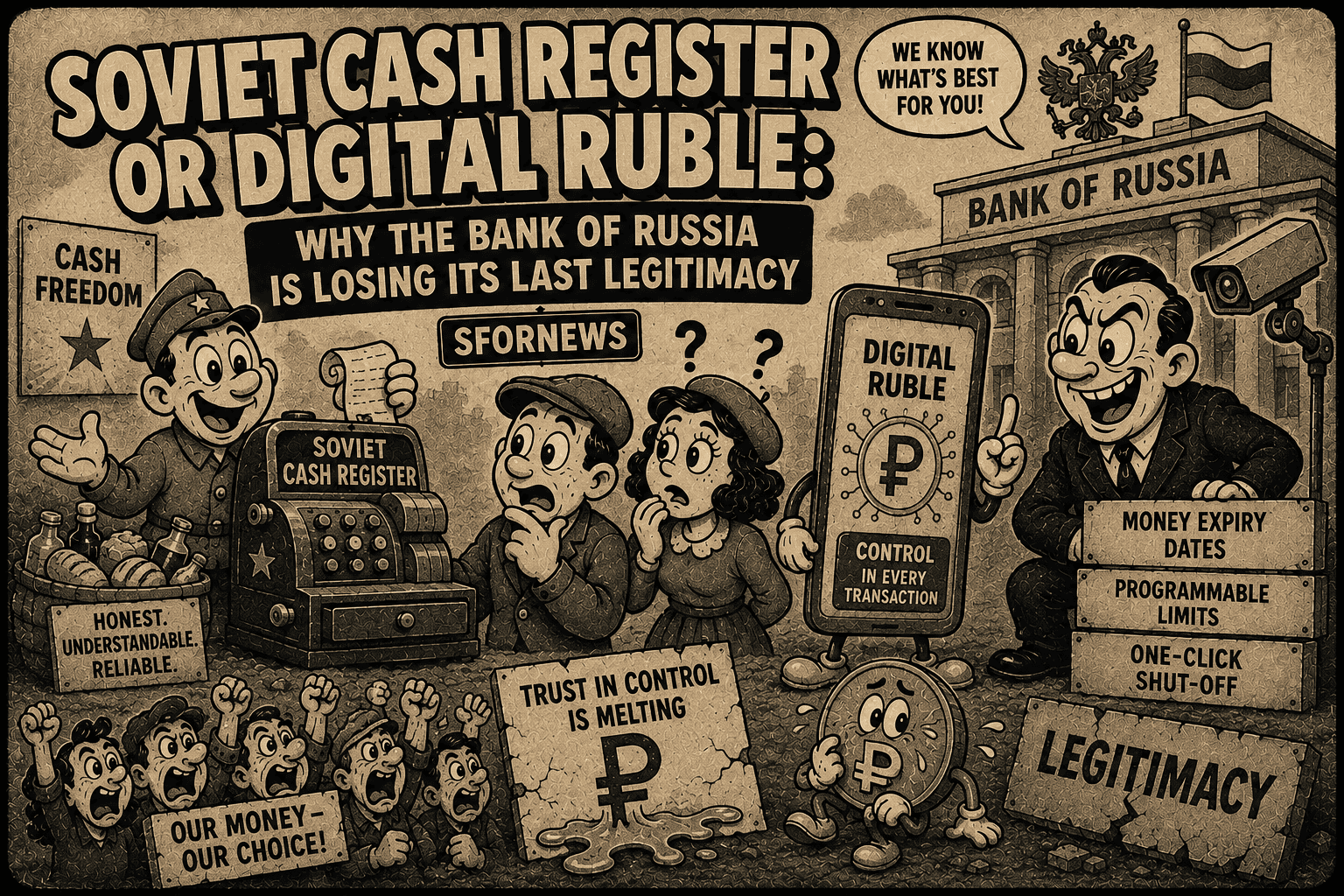
- The digital ruble, launched in 2023, is mandatory for certain government payments.
- Stablecoins used in Russia are often linked to Asian markets (such as USDT on Huobi or Binance) or used in OTC transactions and gray import flows.
- Russian tech companies like Sberbank and Tinkoff are experimenting with internal tokens and crypto payment systems — albeit without formal affiliation with the global stablecoin market.
Crypto payroll in Russia does exist, but it is largely informal — freelancers, developers, or consultants are often paid via P2P platforms in USDT or even BTC, outside of regular employment contracts.
Official payroll systems rarely integrate digital assets due to strict central bank oversight.
So the Russian strategy is not institutionalization like in the US, but rather a pragmatic use of crypto as an alternative payment system in a sanctioned economy
Crypto isn’t what it used to be — and that’s good news
What we’re seeing today isn’t a hype or a bubble. It’s the structural integration of crypto into the real economy. Stablecoins like USDC are being used in the most conservative function of a business: payroll. And that, in turn, opens the door to broader adoption.
The US leads the way, thanks to legal innovation (the GENIUS Act), strong players (such as Circle), and technological infrastructure. Europe has a legal framework, but lacks clout and vision.
Russia is pursuing its own path through digital sovereignty and alternative networks.
The crypto sector is growing up. No longer as a rebellious outsider, but as a reliable partner in a new financial era — with salaries that are digital, covered, and cross-border.
ⓒ Antonio Georgopalis


Bitcoin
$62,881.23

Ethereum
$1,672.04

Litecoin
$42.71

Dash
$37.08

Bitcoin Cash
$209.43