Cosmic Volatility 2026: Mexico, Iran, and the Mathematics of Chaos — Cui Prodest? | Tat’yana Burmagina
Cosmic Volatility: The Mexican Fire, the Persian Torch, and the Mathematics of Chaos | Tat’yana Burmagina
February 2026 will enter the textbooks as the month when the old world finally cracked. On one scale of the balance — burning banks in Guadalajara and cartel blockades in twenty Mexican states. On the other — US aircraft carriers moving to a safe distance from the shores of Iran, and the evacuation of American bases in Qatar and Bahrain.
It would seem, what do Mexican drug cartels and Iranian ayatollahs have in common? The commonality is mathematics. The very same mathematics I wrote about in 2022, when energy markets went crazy, and discussions about “Nord Stream” were replaced by the demand to pay for gas in rubles.
Cui prodest? Who benefits?
The founder of the Rothschild dynasty, Mayer Amschel, formulated this principle with utmost clarity: “Give me control over the issuance of money in a country — and I couldn’t care less who writes its laws.” And if we add to this the wisdom of Kozma Prutkov — “Look to the root” — then the picture becomes completely transparent.
Let us detail through the prisms of our models.
Mathematics: The Law of Conservation of Chaos
On February 22, 2026, Mexican special forces, with the support of American intelligence, eliminated Nemesio Oseguera Cervantes — El Mencho, the leader of the “Jalisco New Generation” cartel (CJNG). It would seem, a triumph of the law. But by the next morning, the country had turned into a powder keg.
Unrest engulfed at least 20 out of 32 states. Cartel members are burning banks, supermarkets, trucks. The National Chamber of Freight Transport CANACAR ordered drivers to stop movement. The largest chains — Walmart, Sam’s Club, Coppel — closed their doors.
Experts have calculated: the damage to the economy from organized crime was already 3.4% of Mexico’s GDP BEFORE the current events. And in the states of Colima and Guerrero, losses exceeded 30% of the state’s gross product. Now these figures are outdated — they will be revised upwards, potentially multiple times.
The mathematics is simple: when the state loses its monopoly on violence, assets begin to seek a new coordinate system. Cartels in Mexico have long become a “state within a state” — they have strong influence, connections with politicians, and shape the shadow economy. Political scientist Leonid Savin accurately noted: the Mexican government made the same mistake previously made by Colombia and Ecuador — they started harsh crackdowns without prior neutralization of the middle and lower tiers. Therefore, the armed conflict could drag on indefinitely, and the place of killed leaders will be taken by new, younger ones.
And here we see the first signal. Ricardo Salinas Pliego — the fifth richest man in Mexico with a fortune of $4.9 billion — has for several years kept 70% of his liquid portfolio in Bitcoin. The rest is gold. No pesos. A man living at the epicenter of events long ago bet on an asset that cannot be blocked at a cartel checkpoint.
Physics: Pressure on the Contours
Now let’s look at the Middle East.
The US is moving significant naval forces toward Iran. The Pentagon has begun evacuating military personnel from bases in Qatar and Bahrain. Aircraft carriers are kept at a safe distance — fearing Iranian ballistic missiles.
The physics of the process: the higher the pressure in the system, the thinner the walls of the vessel. In June 2025, Iran already fired missiles at a US base in Qatar — at that time, Tehran warned in advance. Now there might be no warnings.
Experts speak directly: “This looks like preparation for a much longer conflict.” Axios reports a 90% probability of a direct confrontation.
If conflict begins, the Strait of Hormuz — the transport artery through which 20% of the world’s oil passes, or about 20 million barrels per day — will be shut down. Logistics will collapse. Oil prices will soar to heights that will break the economies of importing countries. Experts at Oxford Economics predicted back in 2025 that in the event of a blockade of the strait, the oil price could reach $150 per barrel.
Political scientist Malek Dudakov adds: the seizure of Iranian tankers could provoke a harsh response from Tehran — up to closing the strait, which would be a shock to the global economy.
Chemistry: Reaction to the Catalyst
In 1973–1974, the world went through the first oil shock. Then, Arab countries, in response to Western support for Israel, imposed an embargo, and the price of oil increased fourfold — from $3 to almost $12 per barrel. The US economy went into recession, industrial production collapsed.
In 1979–1980 — the second oil crisis. The Islamic Revolution in Iran stopped Iranian oil exports: production fell from 6.5 million to less than 1 million barrels per day. The price shot up from $13 to $34 per barrel. And then the Iran-Iraq war was added, destroying the oil infrastructure of both countries. It was then that the expectation effect first came into play: Western countries, in a panic, began creating strategic reserves, which further drove up prices.
In 1990–1991 — the third shock. Iraq invaded Kuwait, oil facilities were destroyed, production in the region collapsed. The price jumped from $14 to $42 per barrel in three months. But the crisis proved short-lived — international forces intervened, and Saudi Arabia increased production.
Today, the chemistry is repeating, but with different reagents.
The catalyst of 2026 is the simultaneous ignition in the Western Hemisphere (Mexico) and the Middle East (Iran). Add trade wars to this, and you get a perfect storm.
The reaction has already begun: the Bitcoin Fear and Greed Index has plummeted to historic lows. But that’s the average temperature in the hospital. Smart money thinks differently.
Psychology: What Drives People at the Bifurcation Point
Why does escalation become inevitable? Why do parties prefer war to negotiation?
Psychology provides the answer. In 2022, I wrote: the fear of loss is stronger than the desire for gain. Today, we see this in action. https://yatakdumayu.ru/tatyana-burmagina-kosmicheskaya-volatilnost-na-energorynkax-idealnyj-shtorm-tochka-bifurkacii-2022-qui-prodest-lat-komu-eto-vygodno/
For Mexico, the loss of control over half its territory is existential fear. “The problem of organized crime has already surpassed the institutional capabilities of Mexico,” experts admit. Cartels possess latest-generation weapons, paramilitary groups, and special military transport vehicles. In small and medium-sized cities, a squad of 50 fighters can overpower any local police force.
For the US, the fear is losing control over the Western Hemisphere. Washington has already rushed to blame Mexican President Claudia Sheinbaum for her inability to handle the chaos. The State Department has recommended Americans not leave their homes in five states. And if American tourists die (remember: Guadalajara will host matches of the 2026 FIFA World Cup in June), Trump will get a formal pretext to send in troops. Mexico’s sovereignty will become a bargaining chip.
For Iran, the fear is losing the regime. Internal opposition is activating, protests are erupting on campuses. The simultaneity of these processes hints at external management.
The herd instinct and the scarcity effect complete the picture. When some feel there won’t be enough resources for everyone, and others feel they are about to be deprived of the last they have, war becomes the only “rational” choice.
Cui prodest? Who is the Key Beneficiary?
I return to the main question.
Who benefits from cosmic volatility? Who benefits from chaos in energy markets, paralysis of entire states, and the evacuation of aircraft carriers?
It benefits those who manage liquidity. Those who print the dollar while others print declarations. Those who sit on the exchange, not in the trenches.
Cui prodest?
The answer lies on the surface, if you look at the numbers.
The main beneficiary is the United States of America.
From 2010 to 2023, the accumulated US current account deficit amounted to $7.3 trillion. This means that to cover this deficit, the US must attract colossal amounts of foreign capital annually. And they do this successfully: 2/3 of all global net capital redistribution over the past three years went precisely to the USA.
The mechanism is simple: chaos drives capital into “safe havens.” When banks burn in Mexico and the Persian Gulf smells of war, investors withdraw funds from emerging markets and direct them to where it is safe, liquid, and predictable. The US ideally meets these criteria. As economist Pavel Shpidel notes, “the creation of tension points in geopolitics and geoeconomics is one of the most effective methods for the rapid concentration of international capital, primarily in the USA and Great Britain, as the main beneficiaries of chaos in the global capital market.”
The US has structurally been a net borrower since 1992 and is critically dependent on the inflow of foreign investment. Therefore, maintaining manageable chaos in the world is not a side effect of their policy, but a crucial tool for the survival of the financial system. If international capital flows are sluggish, the US creates the necessary geopolitical conditions to make investments in the dollar zone look more attractive than any alternatives. Throughout history, there hasn’t been a single failure — the mechanism works like clockwork.
The second beneficiary — the largest financial institutions and transnational corporations.
In any crisis, as experts rightly note, there is someone who profits from it. In 2008, when global losses exceeded $60 trillion, and governments poured nearly $10 trillion into bailing out banks, this money went not to taxpayers, but precisely to those banks and corporations that created the crisis.
A historical pattern: during global economic crises, large players always find politically influential allies and push through measures protecting them from competition. In the book “Saving Capitalism from the Capitalists,” Raghuram Rajan and Luigi Zingales show how, during downturns, major financiers and owners of leading companies achieve restrictions in financial markets that weaken competition and gain access to government financing.
The third beneficiary — holders of real assets not tied to a specific jurisdiction.
During periods of escalation, the dollar traditionally strengthens, gold updates historic highs (in 2025 it set 53 records, exceeding $5500 per ounce). Investors switch from “seeking yield” mode to “preserving money” mode.
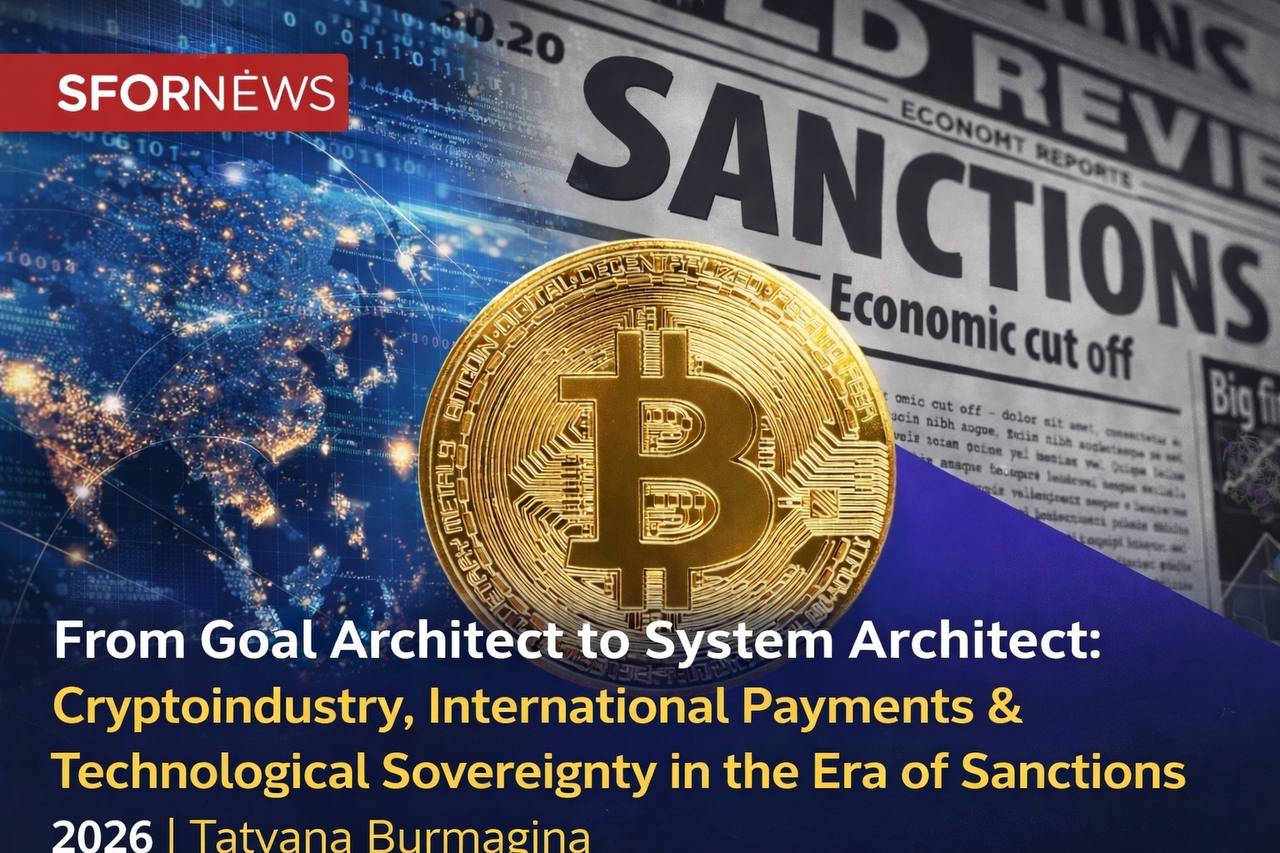
But there is an asset that does not depend on stock market capitalization. Bitcoin has no territorial borders. It cannot be blocked by sanctions. It has no “off switch,” unlike stablecoins, whose issuers freeze accounts at the first request of authorities.
This is precisely why billionaires like Ricardo Salinas hold fortunes in Bitcoin. This is precisely why, when the fear index drops to minimums, smart money buys.
Who Loses?
The losers are developing countries dependent on the inflow of foreign capital. Among them is Mexico itself, which attracted $0.23 trillion in net international investment from 2010 to 2023 and is now critically dependent on “friendly” creditors. At moments of global shocks, their markets appear less elastic, asset prices fall catastrophically, and domestic investors do not have sufficient foreign savings to replace the departing capital.
Also losing are small and medium-sized businesses, trade unions, and ordinary citizens, who find themselves hostage to a situation created by large players.
Architectural Conclusion
Look wider.
1973 — OPEC oil embargo. 1979 — Iranian revolution and second oil shock. 1990 — Gulf War. 2008 — mortgage crisis. 2022 — energy crisis and redistribution of gas markets. 2026 — Mexican fire and Iranian torch.
Each time, old elites lose control. Each time, money flees into new assets. Each time, there is a cui prodest.
Mexico in flames is not just criminal infighting. It is a signal: the state is no longer a guarantor of security. Iran in the crosshairs is not just geopolitics. It is a signal: global supply chains could rupture tomorrow morning.
The oil market has always been a game for trillions of dollars, where everything depends on everyone and everyone influences everyone. Today, a new player has joined this game — digital energy.
Bitcoin in this coordinate system is not speculation. It is an asset with a fixed supply of 21 million, which does not depend on the decisions of the Fed, the ECB, or the Chinese regulator. It doesn’t care who is fighting whom.
During periods of crisis, the winners are not those who run faster, but those who chose the right coordinate system in advance. Those who understood that control over money is more important than control over laws.
Those who read between the lines understood this long ago.
“Look to the root” (Kozma Prutkov).
© Tat’yana Burmagina & EWA


Bitcoin
$64,100.76

Ethereum
$1,857.74

Litecoin
$51.31

Dash
$32.46

Bitcoin Cash
$483.66