Digital Ruble & Future Payments: CBDC vs Cryptocurrency, Tokenization, BRICS Bridge | 2025 Guide
The Future of Payment Systems: Integration of the Digital Ruble, Tokenization, and Global Trends
On the Threshold of a Financial Revolution
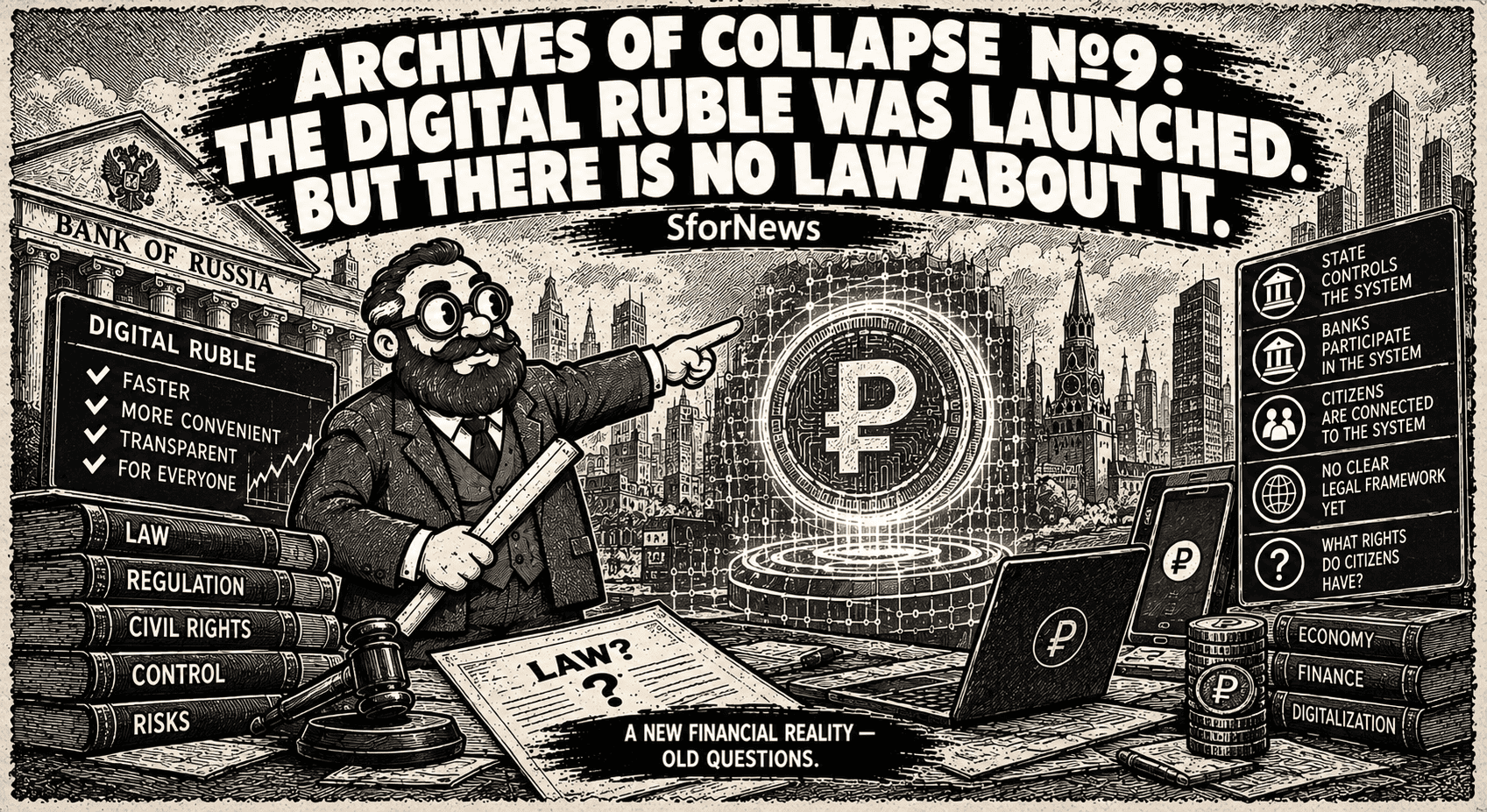
The world’s financial system is undergoing a profound transformation, driven by the rapid development of digital technologies. Central banks in many countries, including the Bank of Russia, are actively developing central bank digital currencies (CBDCs), while private crypto-assets and tokenization technologies are challenging traditional payment models. Russia, operating in a context of changing international settlements, views the digital ruble not only as a tool for modernizing its domestic financial system but also as a potential mechanism for simplifying cross-border payments and reducing dependence on infrastructures controlled by other jurisdictions. In this article, we will examine in detail the place of the digital ruble in the new financial reality, analyze global trends, and propose ways to build a unified cross-border system.
- The Digital Ruble and Private Cryptocurrencies: Synthesis Instead of Competition
Fundamentally Different Roles
The digital ruble is a legal tender issued by the Bank of Russia and represents a third form of the national currency alongside cash and non-cash rubles. Its key task is to be a stable, secure, and efficient state payment instrument. In contrast, private cryptocurrencies, such as Bitcoin or Ethereum, are decentralized assets whose value is determined primarily by market demand and community trust, not by state guarantees. Therefore, direct competition between them should be considered incorrect: they perform different functions in the economy.
– The Role of the Digital Ruble: The main function is payments and transfers. The Bank of Russia emphasizes that the digital ruble is focused on conducting transactions, not on accumulation: no interest will be accrued on wallet balances, and loyalty programs like cashback are not envisaged. Its strengths are speed, transparency, and cost reduction for businesses and citizens. For example, transfers between individuals will be free, and retailers will be able to significantly save on acquiring (on average 0.5-2% per transaction).
– DeFi Functionality (Staking, Lending): Equipping the digital ruble with functions similar to decentralized finance (DeFi) would contradict its nature. As a state instrument, its stability and security are based on centralized control. Introducing speculative mechanisms could undermine trust in it as a reliable means of payment. However, smart contract technology, which is already embedded in the digital ruble platform, opens the way to programmable payments. This can be used for targeted state subsidies, automatic contract settlements upon the occurrence of certain conditions (goods delivery, work completion), which increases the efficiency and transparency of financial flows without the need to introduce purely speculative instruments.
Potential for Synthesis
Instead of competition, symbiosis is possible. The combination of private crypto-assets and central bank digital currencies represents a unique historical chance to create a financial system independent of sanctions pressure. The digital ruble can become a stable anchor for the digital economy, while private cryptocurrencies and DeFi protocols will be responsible for innovative, riskier, and higher-yield segments. For example, settlements between participants of DeFi platforms could ultimately be conducted via CBDCs to ensure stability and legitimacy.
- Balance of Control and Innovation: How Not to Miss the Future
The Problem of Regulatory Uncertainty
Entrepreneurs indeed face a tough stance from regulators, who fear capital flight and the use of digital assets for illegal operations. This leads to promising projects migrating to more liberal jurisdictions. The key problem is the lack of specifics in experimental legal regimes, which creates uncertainty and distrust.
Solutions
- Regulatory “Sandboxes” with Clear Rules: Instead of creating vague regimes, it is necessary to develop detailed technical and legal standards for working with digital assets. The “sandbox” should provide participants not with general frameworks, but a clear algorithm of actions, including compliance procedures, KYC (Know Your Customer), and AML (Anti-Money Laundering). A prime example is Switzerland with its FinTech rules, which give businesses clear guidelines.
- The Principle of “Proportional Regulation”: Startups and small innovative projects should not be burdened with the same regulatory requirements as systemically important banks. Regulation should be graduated depending on the scale of activity, volume of operations, and risk level of the project.
- Public-Private Partnership: The Bank of Russia and the Ministry of Finance need to actively involve technology entrepreneurs in the process of developing regulatory norms through open working groups and advisory councils. This will allow regulators to better understand technological trends, and businesses to see the rationale for certain restrictions. The successful experience of the UK (FCA Sandbox) shows the effectiveness of such dialogue.
- Creating Incentives for Legal Work: This could include tax holidays at the initial stage for projects selected for the “sandbox,” or simplified licensing procedures.
- Global Trends in Payment Systems for the Next 5-10 Years
The payment industry will be shaped by several interconnected trends.
Trend 1: Central Bank Digital Currencies (CBDCs)
More than 130 countries, representing 98% of the global economy, are already exploring the possibility of issuing CBDCs. This is not accidental, but a response to fundamental challenges:
– Increasing Payment Efficiency: CBDCs allow for settlements almost in real-time and reduce operational costs.
– Strengthening Financial Sovereignty: Creating a state-controlled payment infrastructure reduces dependence on international systems (e.g., SWIFT) and private payment services.
– Combating the Shadow Economy: Increased transparency of operations with CBDCs can help counter money laundering and terrorist financing.
Examples:
– China: Leads in testing the digital yuan (e-CNY), which is already used in retail, including payments in stores and applications.
– Nigeria: The first African country to launch a CBDC (e-Naira) for transfers and government payments.
– EU, Canada, Japan: Are at the stage of pilot projects and active study of the consequences of implementation.
Trend 2: Tokenization of Assets
Tokenization is the process of converting rights to any asset (real estate, stocks, bonds, works of art) into a digital token on a blockchain. This opens up unique opportunities:
– Asset Fractionalization: An expensive asset (e.g., commercial real estate) can be divided into thousands of tokens, making investment in it accessible to the mass investor.
– Increased Liquidity: Tokenized assets can be traded on digital platforms 24/7, creating new markets.
– Automation: The use of smart contracts allows for the automation of dividend payments, coupon payments, and compliance with other conditions.
Trend 3: Integration of Artificial Intelligence (AI)
AI will play a key role in:
– Security: Analyzing behavior patterns in real-time to detect fraudulent transactions.
– Personalization: Offering users personalized financial products and services based on analysis of their transactions.
– Risk Management: Forecasting credit risks and liquidity risks based on big data.
- Models for Legal Token Trading in Rubles
At present, the legal framework for operations with digital assets is being formed in Russia. Two potentially legal models can be identified:
- Through Licensed Investment Platform Operators (IPOs): Under the law “On Digital Financial Assets,” it is these platforms that have the right to organize the issuance and circulation of digital financial assets. Theoretically, they can facilitate token trading with settlements in non-cash rubles, subject to strict adherence to KYC/AML requirements.
- Using the Digital Ruble and Smart Contracts: In the future, when the digital ruble platform is fully deployed, it could become the basis for tokenized payments. A smart contract could automatically ensure the atomicity of a “delivery-versus-payment” transaction, where the transfer of rights to the token and the transfer of digital rubles occur simultaneously and irreversibly within a single operation. This would significantly reduce counterparty risks.
New mass market segments could emerge in the areas of:
– Tokenization of claims (e.g., shares in rental income from commercial real estate).
– Issuance of loyalty tokens by retail chains, which could be freely exchanged or sold.
– Trading of digital rights to content (movies, music, literature).
- Advantages and Risks of Tokenized Payments
Key Advantages
– Speed and 24/7 Availability: Transfers are carried out almost instantly, 24/7/365, without being tied to bank working hours.
– Transparency and Immutability: All transactions are recorded in a distributed ledger (blockchain), making them transparent to participants and protected from unauthorized alteration.
– Cost Reduction: The elimination of numerous intermediaries (correspondent banks) leads to a significant reduction in commissions, especially in cross-border settlements.
– Programmability: The ability to embed complex payment conditions into smart contracts automates business processes.
Systemic Risks
– Regulatory: Inconsistency of legislation in different countries, the risk of tighter regulation or outright bans in certain jurisdictions.
– Technological: Cybersecurity threats (hacking of smart contracts, code vulnerabilities), as well as scalability problems of blockchain networks.
– Reputational: Association of tokens with illegal activities in case of weak control, as well as risks associated with errors in protocols leading to loss of funds.
- Integration into the Global System: A Path for Russia
Russia’s Prospects in International Settlements
Russia has a chance to become an active player in the new architecture of cross-border payments, but to do this, it must overcome several challenges. One of the key directions is the development of cooperation within BRICS and the EAEU. Russia, holding the chairmanship in BRICS, promoted the idea of creating a BRICS Bridge — a platform for settlements in CBDCs. This would allow member countries to conduct mutual settlements, bypassing systems like SWIFT, which are under the influence of Western countries. The success of this project will depend on:
– Technical compatibility of the digital currencies of different countries.
– Development of common legal standards.
– Political will of all participants.
Key Success Factors
- The earliest possible successful implementation of the digital ruble domestically: Convincing success of the pilot project and its mass adoption by the population and businesses is the foundation for the international role of the digital ruble. According to the Central Bank, mass implementation for the largest banks and retail chains will begin on September 1, 2026.
- Active international negotiation work: It is necessary to participate in the development of international standards for CBDCs (for example, under the auspices of the Bank for International Settlements — BIS) so that Russian technical solutions are compatible with global infrastructure.
- Flexibility and openness of the regulator: It is important for the Bank of Russia to find a balance that allows ensuring the security and stability of the financial system without suppressing innovation. This includes dialogue with the business community to identify promising use cases for the digital ruble and tokenization.
- Development of its own IT infrastructure: The success of the digital ruble and tokenization directly depends on the reliability and security of the national IT infrastructure. Investments in cybersecurity, education, and training are necessary.
Conclusion
The coming decade will be a period of formation of a new global financial architecture, based on central bank digital currencies, tokenization of assets, and artificial intelligence. Russia, possessing a developed financial infrastructure and technological potential, has every chance to take a worthy place in this system. The digital ruble should become not just a digital copy of cash, but a cornerstone for building a more efficient, transparent, and competitive national economy, integrated into alternative international payment systems. However, this requires a balanced regulatory approach that will stimulate innovation, not suppress it, and active international cooperation with friendly countries. The future of payments lies in the interoperability of various systems, and Russia must actively participate in creating these new standards.
ⓒ Bureau of Global Monitoring & EWA


Bitcoin
$62,881.23

Ethereum
$1,672.04

Litecoin
$42.71

Dash
$37.08

Bitcoin Cash
$209.43