Daily Summary, July 1
RESULTS FOR JULY 1, 2026
🌍 GEO-ECONOMICS AND MACROECONOMICS
🇪🇺 EU’s 21st Sanctions Package Against Russia Takes Effect
On July 1, 2026, the EU’s 21st sanctions package came into force. Over 170 positions were targeted: banks, weapons manufacturers, oil traders, refineries, and crypto operators in third countries. The package was agreed on June 30 and implemented without delay.
Analysis: The 21st package is no longer about “punishing Russia” but about “squeezing out the last channels.” Crypto operators in third countries — a new front. The EU is trying to cut off circumvention routes. But the marginal effect of sanctions diminishes with each package. Europe pays for sanctions with its own growth.
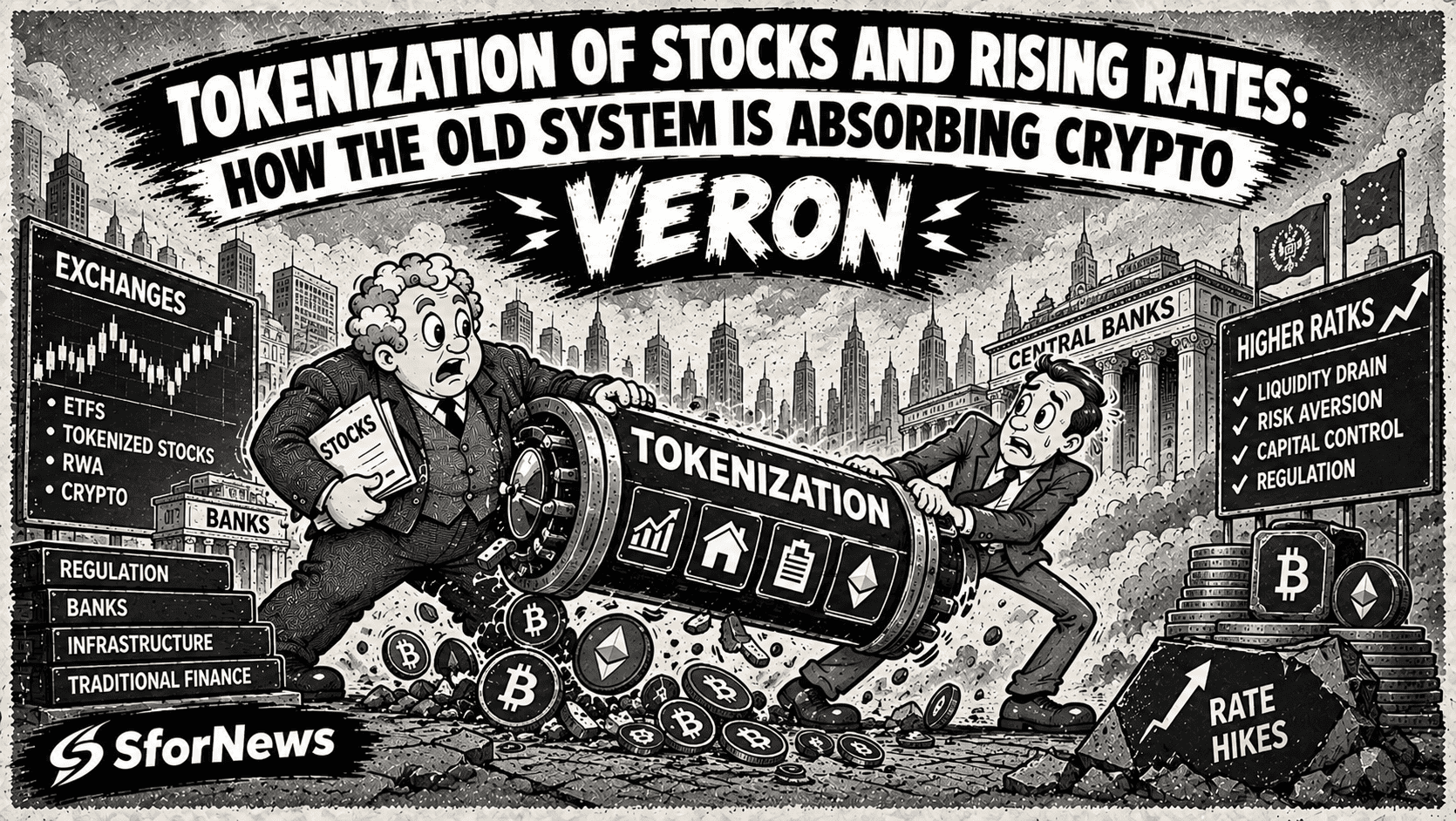
🇪🇺 MiCA Takes Effect in the EU — Regulatory Shock for Crypto Market
On July 1, 2026, the EU’s Markets in Crypto-Assets Regulation (MiCA) officially came into force across all 27 member states. Crypto companies without a license lose the right to serve EU clients. USDT is effectively squeezed out of the European market. Binance ceased servicing EU clients. Over 200 companies received licenses, including Coinbase, OKX, and Kraken.
Analysis: MiCA is not just regulation — it is a weapon. The EU uses licensing as a tool of geopolitical and monetary control, pushing out unwanted players. Europe becomes a “regulatory oasis”: high entry barriers, complex requirements, shrinking liquidity. Crypto activity in the EU will decline, and liquidity will flow to Dubai and other jurisdictions.
🇷🇺 Russia: Digital Assets Law Takes Effect
On July 1, 2026, Russia’s law “On Digital Currencies and Digital Rights” came into force. Non-qualified investors are allowed to trade only BTC, ETH, and USDT, with an investment limit of 300,000 rubles. All investors must pass a knowledge test before purchasing digital assets. From 2027, unlicensed crypto lending will be prohibited.
Analysis: Russia is taking the path of “protection from oneself.” The 300,000 ruble limit is an attempt to protect small investors from risks, but it also limits their opportunities. The knowledge test is a filter that could become a bureaucratic barrier. The law legitimizes cryptocurrencies but within a strict framework.
🇷🇺 Russian Government Suspends Rail Crossing Points on Borders with Finland, Estonia, and Latvia
The Russian government has suspended the movement of people, vehicles, goods, and cargo through railway crossing points on certain sections of the border with Finland, Estonia, and Latvia, effective July 1, 2026. The Foreign Ministry has been instructed to notify these countries.
Analysis: This is not a complete border closure, but a suspension of movement through railway crossing points on specific sections. A logistics blow to the Baltic region — key freight routes are being cut off. This is a response to the EU’s 21st sanctions package and a demonstration of readiness for further confrontation with Baltic neighbors and Finland.
🇺🇸🇮🇷 Iran: Presidential Election Runoff — Decisive
Four days remain until the second round of Iran’s presidential election (July 5). Reformist Masoud Pezeshkian and conservative Saeed Jalili are continuing their campaigns. The election outcome will determine whether Iran maintains a hardline stance in negotiations with the US or moves toward concessions. Markets are pricing in the status quo until July 5.
Analysis: Iran’s elections are a referendum on foreign policy. A Jalili victory means a hardening of positions and continued confrontation. A Pezeshkian victory opens a window for diplomatic maneuver. Until July 5 — a period of maximum uncertainty.
🇪🇺 NATO Summit in Ankara: Preparations for Key Event of the Week
The NATO summit in Ankara (July 7–8) is the key event of the week. Ukraine will receive €40 billion in aid instead of €70 billion. Slovakia, Hungary, and Bulgaria blocked the larger amount. Fatigue with Ukrainian financing is growing within the alliance. Ankara will be where this split becomes public.
Analysis: Halving the package is a political defeat for proponents of a hardline stance. Three veto countries have set a precedent. Without consensus on Ukraine, NATO risks entering the summit with an agenda of “how to save face” rather than “how to intensify pressure.”
🇷🇺 Putin: Russia Ready for Talks, but Taking into Account “Realities on the Ground”
Vladimir Putin stated that Russia is ready for negotiations on Ukraine, but only taking into account “realities on the ground” and “new territorial acquisitions.” He emphasized that the West continues to pump Ukraine with weapons, making the negotiation process difficult.
Analysis: Putin is synchronizing rhetoric with the NATO agenda: readiness for talks — but only on his terms. “Realities on the ground” is code for maintaining control over captured territories. The West will not accept these conditions. Talks will remain a formality.
🇪🇺 European Commission: 21st Sanctions Package Takes Effect
Ursula von der Leyen confirmed that the 21st sanctions package took effect on July 1. She stated that “Europe will not ease pressure on Russia.”
Analysis: A symbolic date. July 1 — not only MiCA and Russia’s digital assets law, but also a new round of sanctions. Europe is trying to maintain unity, but cracks are becoming visible.
🇺🇸🇮🇷 US-Iran Doha Talks Postponed
Technical talks between the US and Iran in Doha, scheduled for June 30, have been postponed indefinitely. Iran confirmed its refusal to participate. Trump accused Iran of being “unready for peace.” The Strait of Hormuz remains effectively blocked for commercial shipping.
Analysis: The collapse of Doha talks means the risk of a strait blockade becomes long-term. Markets are starting to price in a risk premium for months, not days. $75–80 per barrel is a realistic scenario over the next 2–4 weeks.
🇹🇼 Taiwan Adopts One of Asia’s Strictest Crypto Laws
Taiwan adopted a new law regulating cryptocurrencies, introducing strict requirements for crypto exchanges and investors. The law tightens control over digital asset operations.
Analysis: Taiwan joins the growing list of countries tightening crypto regulation. This could drive crypto businesses to jurisdictions with more lenient regimes, such as Dubai or Singapore.
💻 TECHNOLOGY AND AI
🤖 BIS: AI Bubble Has Already Begun to Deflate
The Bank for International Settlements, in its annual report, repeated its warning about the risks of a “burst AI bubble.” The regulator urged central banks to pay attention to the concentration of capital in the technology sector.
Analysis: The BIS states that the bubble has already begun to deflate. The Nasdaq is recovering losses, but fundamentally the market remains overheated. The technology sector is overvalued, and companies’ real earnings do not match market expectations. A signal for investors — to hedge.
🤖 OpenAI GPT-5.6: Restricted Access for “Trusted Partners”
OpenAI released GPT-5.6 Sol with restricted access for “trusted partners” at the request of the US administration. Terra and Luna versions — with gradual access expansion.
Analysis: The US is moving to a “trusted partners” model — access to cutting-edge models is governed by political rather than market mechanisms. Technological sovereignty becomes a national security issue.
🤖 Anthropic Restores Access to Fable 5 and Mythos 5
Anthropic is restoring access to Fable 5 and Mythos 5 as of July 1. Earlier, the US government demanded a suspension of access to these models for security reasons. Mythos 5 is already open to “trusted partners,” and Fable 5 is returning to circulation.
Analysis: The US continues to build a system of managed access to advanced AI models. Restoring access signals that restrictions were temporary and politically motivated. Anthropic’s compliance with government demands strengthens the “trusted partners” model.
🤖 Google Restricts Gemini Due to Capacity Crunch
Google has begun restricting access to the Gemini API due to a sharp rise in demand. Meta was unable to obtain necessary quotas for its AI projects.
Analysis: Even the largest companies face a shortage of computing power. Shortages of GPUs, electricity, and cooling are real limits to growth for the AI industry.
✈️ Google Disables Tenor API: GIF Search in Telegram to Change
Google is disabling the Tenor API, which will cause built-in GIF search in Telegram, Discord, X, and other services to stop working as before.
Analysis: This illustrates how technology monopolies (Google) can influence service functionality worldwide, even in small details.
💰 FINANCE, BLOCKCHAIN AND CRYPTOCURRENCIES
📉 Bitcoin: Start of Month — Consolidation Above $60,000
Bitcoin is holding above $60,000, closing June at around $61,800. Investors are assessing the month’s results: record ETF outflows ($40.6 billion) and the Fear and Greed Index at 12 (extreme fear). Ethereum is trading around $1,600.
Analysis: Bitcoin held $60,000, but this is not a “bottom” — it is a “zone of uncertainty.” Institutional outflows continue; fear dominates. Without a catalyst, bitcoin could test $55,000–57,000. But extreme fear is a capitulation zone that historically precedes reversals.
🪙 Jeremy Grantham Buries Bitcoin
Billionaire Jeremy Grantham, who predicted the dot-com bubble and the 2008 crisis, stated that bitcoin “will go to zero, even if it takes a long time.”
Analysis: Grantham is a well-known pessimist. His forecasts often come true with long time lags. For the market, this is a signal, but not a catalyst. The “bearish” narrative is a classic component of the market cycle, where extreme pessimism coincides with accumulation zones.
⚡️ Dozens of Companies Launch New Stablecoin OUSD
Visa, Stripe, Mastercard, BlackRock, and Coinbase announced the launch of a new stablecoin called OUSD.
Analysis: This is a tectonic shift. Institutional capital is officially entering stablecoins not as an “experiment” but as a strategy. OUSD could become a bridge between traditional finance and DeFi.
🇰🇿 Solana Company to Support Kazakhstan in $6 Billion Crypto Megapolis
The project aims to become a major hub for blockchain, digital assets, and Web3 infrastructure.
Analysis: Kazakhstan is betting on blockchain as a growth driver. For Solana — a chance to establish itself as infrastructure blockchain for government projects.
🤣 Ansem Project Conducts Airdrop: $7 Million of $9.4 Million Goes to 7 Wallets
Ansem conducted an airdrop of 67.38 million ANSEM ($9.4 million) to over 700 wallets. Nearly 50 million tokens ($7 million) went to just 7 wallets.
Analysis: 74% of tokens went to 1% of wallets — this is not “distribution” but “concentration.” The market will judge the token by how quickly these 7 wallets start selling.
🇦🇪 After MiCA, Crypto Companies Move Business to Dubai
It is expected that after MiCA takes effect, many crypto companies will move their business to Dubai, where regulation is considered more flexible.
Analysis: Europe tightens regulation — capital moves to jurisdictions with more lenient regimes. Dubai is becoming a new “crypto hub.” Europe is losing liquidity and innovation.
🪙 Tether Enters Top 5 Most Active Investors in 2026
In six months, Tether closed 17 deals — as many as in all of 2025.
Analysis: Tether is an aggressive investor. 17 deals in six months is a 2x acceleration. Tether is investing USDT profits into various projects: from blockchain infrastructure to AI and energy.
🪙 Circle Mints 1,000,000,000 USDC
Circle issued 1 billion USDC, increasing the stablecoin supply in the market.
Analysis: Minting 1 billion USDC signals growing demand for stablecoins, especially amid the regulatory shock in Europe (MiCA) and the squeeze on USDT. Circle is strengthening its position as a key competitor to Tether in the “white” stablecoin segment.
🗽 Trump Earned $1.1 Billion from Crypto in 2025
According to his financial disclosure, Donald Trump earned $1.1 billion from cryptocurrencies in 2025. The document also reveals his stakes in crypto companies and $100 million in BTC and ETH.
Analysis: Trump is becoming a major player in the crypto industry. $1.1 billion in income is not just “investment” — it is serious business. His stake in BTC and ETH ($100 million) makes him one of the larger crypto holders. This also signals that cryptocurrencies are becoming a tool for political and business elites.
🐋 Ethereum Gets a Separate “Entry” for Big Players
An organization called Ethereum Institutional has been created to help banks, funds, and custodians navigate Ethereum, L2, and tokenization.
Analysis: Ethereum is officially becoming an institutional asset. The creation of a structure for institutional investors signals that Ethereum is ready for mass adoption by large capital. This also strengthens Ethereum’s position as a platform for tokenization and DeFi.
🚬 Unknown Trader Liquidated for Nearly $175 Million in One Order on Binance
It was later reported that this was allegedly a CoinGlass bug.
Analysis: $175 million in one order is an anomaly. If it was a bug — the problem is in the infrastructure. If a real liquidation — it was a “whale” that miscalculated its risks.
🎲 Director Carl Erik Rinsch Gets 2.5 Years for Spending Netflix Budget on Exchanges
Instead of completing a series for Netflix, he sent $11 million of the budget to exchanges.
Analysis: A classic case of gambling addiction in its purest form. A person had access to money, decided to “win it back” in trading, lost everything, and received a sentence.
🚓 In Irkutsk Region, Four Men Receive Suspended Sentences for Theft of Mining Equipment Worth 5.3 Million Rubles
At night, they broke into a hangar and removed 28 ASIC miners on a truck.
Analysis: Crypto mining remains attractive to criminals. Suspended sentences are lenient punishment for such a crime.
🚓 Darknet Sells User Chat Logs from Telegram Client “Telegа”
The darknet is selling chat logs from users of the closed Telegram client “Telegа,” linked to VKontakte. For 155,000 rubles, they offer 100 recent messages from any 10 accounts.
Analysis: This is a serious signal about privacy risks in messengers. If Telegа user chats are being sold on the darknet, it means the client’s security has been compromised. Users of Telegа should be cautious.
📉 Public Token Sales Cool to 4-Year Low
In Q2 2026, only 47 ICO/IDO/IEOs took place, raising $40 million — a 4-year low.
Analysis: The primary crypto placement market is cooling. Investors are tired of risks and scandals. Regulatory pressure (MiCA, CLARITY Act) is also cooling the market. Token sales are no longer a “gold mine” for quick profits.
☠️ SlowMist Warns of New Attack on DeFi Users
Scammers are distributing fake trading bots and DeFi packages containing hidden JavaScript stealers. The attack targets developers and DeFi protocol users.
Analysis: DeFi remains a high-risk zone. Scammers are becoming more sophisticated — they are not just stealing keys but embedding malicious code into tools trusted by developers. A signal for all DeFi participants — verify code and avoid untrusted bots.
🪙 FG Nexus: “Bought High, Sold Low”
FG Nexus engaged in treasury trading at the level of “bought high, sold low” — acquired ETH at $3,860 and then started selling at approximately $2,138.
Analysis: FG Nexus is a classic example of how even professional players make mistakes. Buying at the peak and selling at the bottom is not strategy — it is panic. It also shows that institutional players are not immune to market errors.
🇷🇺 Bank of Russia Discusses Stablecoins for International Settlements
The Bank of Russia is discussing whether stablecoins in the Russian Federation could complement the digital ruble in international settlements. Nabiullina confirmed that this topic is under discussion.
Analysis: Russia is exploring stablecoins as a tool for international settlements under sanctions pressure. This could become an alternative to SWIFT and the dollar. But using stablecoins requires regulatory clarity and integration with the digital ruble.
🏛 COMPANIES AND REGULATION
🇪🇺 MiCA Takes Effect: Binance Leaves Europe, USDT Squeezed Out
On July 1, 2026, MiCA officially took effect. Binance ceased servicing EU clients. USDT is effectively squeezed out of the European market. Over 200 companies received licenses, including Coinbase, OKX, and Kraken. Bybit is moving clients to a separate platform, Bybit EU.
Analysis: MiCA is a regulatory shock for the European crypto market. Europe becomes a “regulatory oasis” with high entry barriers. Crypto activity in the EU will decline, and liquidity will flow to other regions.
🇷🇺 Russia: Digital Assets Law Takes Effect
Russia’s digital assets law takes effect: non-qualified investors are allowed to trade only BTC, ETH, and USDT, with a limit of 300,000 rubles. All investors must pass a knowledge test.
Analysis: Russia legitimizes cryptocurrencies but within a strict framework. The 300,000 ruble limit is an attempt to protect small investors from risks, but it also limits their opportunities.
📜 CLARITY Act: 3 Days Until Deadline
There are 3 days left until July 4. Galaxy Research has lowered the probability of CLARITY passing to 49%. The Senate goes on recess until July 13.
Analysis: The CLARITY Act is a litmus test for the US crypto market. If the law is not passed by July 4, regulatory uncertainty will persist for another year. The US risks being left in a regulatory vacuum.
📊 MARKETS AND ECONOMY
📈 Global Markets: Nasdaq Continues Rebound, but Week Under Pressure
The Nasdaq Composite closed higher on expectations of a softening Fed stance. However, the index is down about 2.5% for the quarter, and the AI sector remains under pressure following BIS warnings. The S&P 500 added 0.7%, the Dow Jones rose 0.4%. The 10-year Treasury yield fell to 4.32% amid easing inflation expectations.
Analysis: Investors are buying back losses, but fundamentally the market remains fragile. The BIS warning about a “burst AI bubble” is not just analysis — it is a signal that regulators see systemic risks. The AI sector is due for a revaluation.
🛢 Oil: Brent Holds Above $73
Brent is holding above $73 per barrel amid the collapse of US-Iran talks. Markets are pricing in the risk of a prolonged blockade of the Strait of Hormuz. WTI is trading around $68.5.
Analysis: The oil market has shifted into “expectation of deterioration” mode. The collapse of Doha talks means the risk of a strait blockade becomes long-term. $75–80 per barrel is a realistic scenario over the next 2–4 weeks.
🏛 ARCHITECTURAL CONCLUSION (RESULTS FOR JULY 1)
Receptive Intelligence recorded: EU’s 21st sanctions package took effect; MiCA took effect in the EU — Binance leaves, USDT squeezed out; Russia’s digital assets law took effect; Russian government suspended rail crossing points on borders with Finland, Estonia, and Latvia; Anthropic restores access to Fable 5 and Mythos 5; Trump earned $1.1 billion from crypto in 2025; Circle minted 1 billion USDC; spot Bitcoin ETFs experienced worst month since launch ($4.5 billion outflow); Taiwan adopted strict crypto law; FG Nexus “bought high, sold low”; darknet sells Telegа user chat logs; token sales hit 4-year low; SlowMist warns of new DeFi attack; Bank of Russia discusses stablecoins for international settlements; CLARITY Act — 3 days until deadline; US-Iran talks postponed; 4 days until Iran elections; BIS warns of AI bubble.
Coordinating Intelligence is moving in multiple directions: EU imposes 21st sanctions package and MiCA simultaneously — double blow to Russia and crypto market; Russia responds with rail crossing suspension; US and Iran diverge — talks postponed; NATO enters summit divided; crypto market faces regulatory shock (MiCA, Russian law, CLARITY on edge); institutional players enter stablecoins via OUSD; Dubai and Kazakhstan pull crypto business from Europe; Trump becomes major crypto player; Ethereum Institutional opens path for big players; stablecoins (USDC) increase issuance, strengthening positions.
Structuring Intelligence works ahead: July 1 — bifurcation point for crypto market (MiCA, Russian law); 21st sanctions package — new pressure level but marginal effect diminishing; rail crossing suspension — response to sanctions and demonstration of readiness for confrontation; Iran elections on July 5 determine future of negotiation process; CLARITY Act — US’s last chance to maintain crypto regulatory leadership; Dubai and Kazakhstan pull crypto business from Europe; stablecoins become tool for international settlements (under discussion in Russia); Ethereum Institutional signals readiness for mass adoption by large capital; token sales cool, showing market fatigue.
Executive Intelligence is already acting: Binance left Europe; USDT squeezed out of EU; Russian investors prepare for new restrictions; crypto companies move business to Dubai; Tether closes deals twice as fast; Circle increases USDC issuance; Trump books $1.1 billion in crypto income; spot ETFs see record outflows; oil holds above $73; Nasdaq rebounds but under pressure.
📅 WHAT’S NEXT (JULY 2–5)
July 2–4:
CLARITY Act in the US — deadline July 4, 3 days left.
Preparation for NATO summit in Ankara (July 7–8).
Lebanon-Israel negotiations continue.
July 5:
Second round of Iran presidential elections — will determine the future of the negotiation process with the US.
Expected:
Market reaction to MiCA and the 21st sanctions package taking effect.
Decision on CLARITY Act in the US Senate.
💡 MAIN ADVICE FOR THE NEXT TWO WEEKS
Keep 20–30% of your portfolio in cash / short-term bonds. July 1 — triple regulatory shock: MiCA in the EU, 21st sanctions package, Russian digital assets law. Iran elections (July 5) and NATO summit (July 7–8) create maximum uncertainty. Oil could reach $75–80 per barrel in the coming weeks.
In cryptocurrencies — the $60,000 zone for BTC. The Fear and Greed Index is at a minimum (12). MiCA and the Russian law are a regulatory shock for the market. CLARITY Act in the US — 3 days until deadline. Without a catalyst, bitcoin could test $55,000–57,000, but extreme fear is a capitulation zone that historically precedes reversals. OUSD launch and USDC issuance are long-term positive signals.
Pay attention to regulatory changes. MiCA in the EU, Russia’s digital assets law, CLARITY Act in the US — three regulatory events that are redrawing the crypto industry map. Dubai and Kazakhstan are pulling business from Europe — this changes the geopolitics of the crypto market. The Bank of Russia is discussing stablecoins for international settlements — this could become a new direction for the digital ruble.
Be prepared for volatility. The Hormuz crisis, Iran elections, NATO summit, EU’s 21st sanctions package, MiCA, and CLARITY Act create risks for all asset classes. Trump becoming a major player in the crypto industry changes the political dynamics around cryptocurrencies.
The digest is based on open sources. The analysis is for informational purposes only and does not constitute investment advice.


Bitcoin
$62,881.23

Ethereum
$1,672.04

Litecoin
$42.71

Dash
$37.08

Bitcoin Cash
$209.43