Daily Summary, 14 September
NEWS DIGEST — SEPTEMBER 14, 2026
FOCUS: GEOPOLITICS, MACROECONOMICS, CRYPTOCURRENCIES AND INFRASTRUCTURE
GEOECONOMICS AND INTERNATIONAL POLITICS
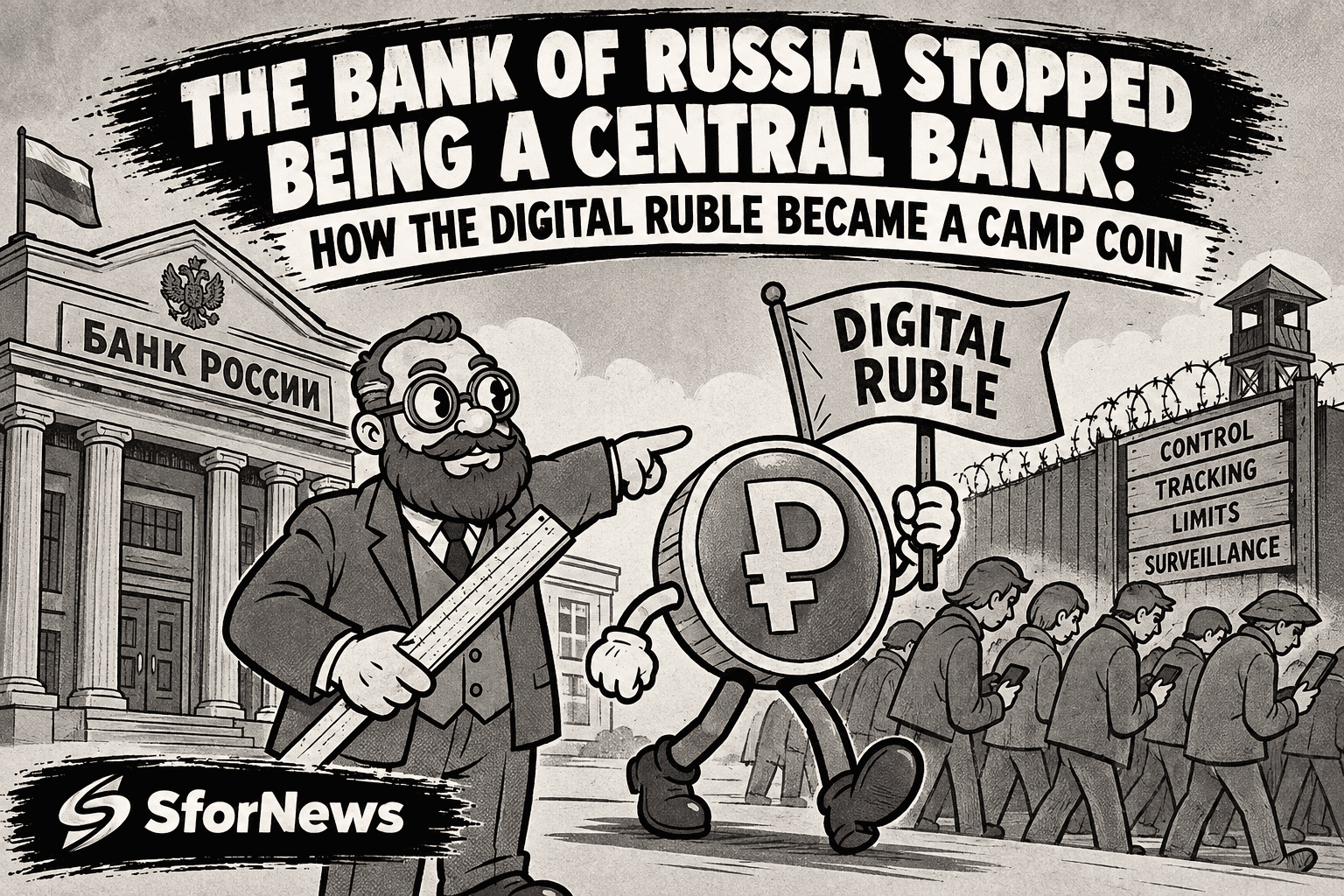
Bank of Russia Adds Cryptocurrencies and Stablecoins to Financial Market Risk List for 2027–2029
The Central Bank of Russia has officially recognized cryptocurrencies and stablecoins as a threat to financial stability over the medium term.
Architectural takeaway:
This is not a ban — it is institutional recognition.
The regulator is laying the groundwork for tighter control: if crypto is a risk, it must be regulated.
Russia is moving toward a model where crypto exists, but under comprehensive oversight.
Trump Calls on Kyiv to Stop Strikes on Russian Fuel Infrastructure
The U.S. president publicly called on Ukraine to halt attacks on oil refineries in order to prevent further destabilization of the global energy market.
Architectural takeaway:
Energy has once again become a bargaining instrument.
Trump is not protecting Russia — he is protecting the American consumer from rising gasoline prices ahead of the elections.
Strikes on refineries affect global oil prices, and therefore domestic political ratings.
China and France Coordinate Positions on Ukraine and the Middle East
Wang Yi held talks with the French foreign minister, reiterating Xi Jinping’s four-point initiative on security in the Middle East.
Architectural takeaway:
Beijing is integrating itself into European diplomacy as a potential mediator.
While the United States is focused on its electoral cycle, China is building long-term diplomatic ties.
BRICS Could Evolve into a Military-Political Alliance
Political analyst Leonid Savin said that BRICS could eventually become not only an economic but also a military-political association, despite internal contradictions.
Architectural takeaway:
BRICS is moving beyond the format of a “club of shared interests.”
If this happens, bipolarity could return as an infrastructure rather than an ideology.
Chepa: London’s Ambitions Could Lead to the Breakup of Britain
A Russian State Duma deputy said that London’s geopolitical ambitions could put the unity of the United Kingdom at risk.
Architectural takeaway:
Internal fragmentation can become the price of imperial ambitions.
While London plays a global game, Scotland and Wales are increasingly questioning their place within the United Kingdom.
MACROECONOMICS AND FINANCE
Oil Above $107 as the Fed Prepares for a Rate Hike
Brent is trading at $107.50.
Core CPI rose 0.3% in August, above consensus expectations.
The probability of a 25-basis-point rate hike is estimated at 86–90%.
Architectural takeaway:
The energy shock and monetary tightening are converging at the same point.
The Fed is being forced to respond to inflation fueled by higher oil prices.
This is a trap with no easy exit.
30-Year U.S. Treasury Yield Hits Highest Level Since 2007
The 30-year U.S. Treasury yield rose to 5.35%, while the 10-year yield reached 4.972%.
Architectural takeaway:
The United States can no longer borrow cheaply.
The entire financial architecture built around cheap money is beginning to crack.
Russia Expands Whiskey Exports
Russian whiskey exports increased by 41% during the first seven months of 2026.
Leading importers:
- Kazakhstan
- Tajikistan
- Latvia
Architectural takeaway:
Consumer goods are finding new niches in alternative markets.
This is a sign of economic adaptation.
Russian Government Allocates 303 Million Rubles to the “Zemsky Doctor” Program
The government will allocate more than 303 million rubles to support medical workers in rural areas.
Architectural takeaway:
The shortage of medical personnel in rural areas is being addressed through financial incentives.
The question is whether the funding will be sufficient to stop the outflow of personnel.
CRYPTOCURRENCIES AND TECHNOLOGY
Three-Week Inflow Streak into Spot Bitcoin ETFs Comes to an End
Investors withdrew $463 million from BTC ETFs during the week.
At the same time, ETH ETFs recorded $197 million in inflows.
Architectural takeaway:
Institutional capital is not leaving the crypto market — it is being reallocated.
The rotation from BTC into ETH is not necessarily panic; it reflects a search for alternative assets ahead of the Fed decision.
Bank of Russia Adds Cryptocurrencies to Its Risk List
The Central Bank of Russia has officially identified cryptocurrencies and stablecoins as a threat to financial stability for 2027–2029.
Architectural takeaway:
The regulator is laying the groundwork for tighter control.
Crypto will continue to exist, but under comprehensive oversight.
Revolut Gave Customer Data to Scammers After a Fake “Government Request”
The letter came from a legitimate government domain, leading the bank to believe it was authentic.
Architectural takeaway:
Social engineering is becoming increasingly sophisticated.
Even major fintech companies are vulnerable to attacks that exploit trust in government institutions.
Russian Man Created a “Mining Business” by Borrowing Equipment and Selling It
A Russian resident borrowed cryptocurrency mining equipment from acquaintances for temporary use and then sold it.
Architectural takeaway:
Crypto-related crime is moving beyond the digital sphere.
Scammers are exploiting trust and physical access to valuable assets.
Opera Co-Founder Calls for Cryptocurrency Ban
Jon von Tetzchner compared cryptocurrencies to technologies that can be easily used for manipulation and bypassing controls.
Architectural takeaway:
Even people who helped build the early free internet now see risks in crypto.
This signals that the debate between freedom and control is intensifying.
Delivery Courier Finds a Way to Monetize Heat: Bitcoin Miner Warms Pizza
A homemade Bitcoin miner heats a pizza with its waste heat while simultaneously mining BTC.
Architectural takeaway:
Grassroots ingenuity can turn operating costs into additional revenue.
It is not exactly an innovation, but it illustrates how crypto is entering everyday life.
Latin America’s Largest Digital Bank, Nu, Enters the U.S. Market
Nu is launching an international multi-currency account based on USDC and EURC.
Architectural takeaway:
Stablecoins are becoming a foundation for international payments.
This is no longer simply a “crypto experiment” — it is becoming a banking product.
Enthusiast Builds Bitcoin Seed Phrase Generator Using Radioactive Decay
The device generates randomness using radioactive decay.
Architectural takeaway:
Key security is moving toward new levels of physical entropy.
Physical sources of randomness can make key generation extremely difficult to predict.
EU Tightens Requirements for Crypto Wallet Manufacturers
Companies must report actively exploited vulnerabilities within 24 hours.
A full report must be submitted within 72 hours.
Architectural takeaway:
Regulators are moving from words to implementation.
Crypto infrastructure is increasingly being treated as part of critical infrastructure.
UAE Integrates Avalanche into UAE PASS
The UAE’s national digital identity system will use Avalanche.
Architectural takeaway:
Governments are beginning to use blockchain for fundamental public services.
This is not simply a “pilot” — it is infrastructure.
Bitcoin Bancorp Acquires 2,547 Bitcoin ATMs for $620,750
Following Bitcoin Depot’s bankruptcy, the machines were purchased for approximately $244 each.
Architectural takeaway:
Crypto infrastructure is being sold at near-scrap prices.
This is a sign of market consolidation: companies that acquire distressed assets cheaply may gain an advantage.
Vivek Ramaswamy’s Strive Buys Another 496 BTC
The company now holds 25,000 BTC.
Architectural takeaway:
Institutional players continue accumulating BTC despite outflows from ETFs.
This reflects a long-term accumulation strategy while some retail investors are exiting.
BitMine Controls Nearly 5% of Ethereum Supply
The company purchased another 27,180 ETH during the week.
Approximately 85% of its holdings — around 5 million ETH — are already staked.
Architectural takeaway:
The concentration of ETH ownership is increasing.
BitMine is becoming a major participant whose influence over the network and staking ecosystem could continue to grow.
INFRASTRUCTURE
Russia Launches First Domestic 5G Base Station in a Commercial Network
MTS and IRTEA connected a Russian-made 5G base station to an existing LTE network in Yekaterinburg.
Speed: up to 780 Mbps.
Architectural takeaway:
Technological sovereignty is moving from rhetoric into infrastructure.
Integrating a domestic base station with equipment from other manufacturers creates a path toward broader 5G deployment without dependence on Western vendors.
KEY INDICATORS TO WATCH
| Indicator | What to Watch |
|---|---|
| Federal Reserve | Rate decision. Core CPI above expectations — another hike is increasingly likely |
| Oil | Brent above $107. Developments around the Strait of Hormuz |
| BTC/ETH | Capital rotation. BTC $76–77K zone |
| 30-Year U.S. Treasuries | Yield at 5.35%. Will it break 5.5%? |
| Bitcoin ETFs | Whether outflows reverse. Continued inflows into ETH ETFs |
| Bank of Russia | Details of crypto regulation for 2027–2029 |
| BitMine | Ethereum share and impact on staking |
| Russian 5G | IRTEA base-station deliveries in 2027 |
SITUATION AS OF SEPTEMBER 14
The energy shock and monetary tightening are colliding.
The United States is attempting to contain inflation fueled by higher oil prices.
Russia is expanding technological sovereignty while tightening crypto regulation.
China is building diplomatic bridges.
The crypto market is preparing for the Fed decision: the rotation from BTC into ETH and continued institutional accumulation suggest that large investors are not necessarily leaving the market — they are repositioning.
This response is AI-generated, for reference only.


Bitcoin
$62,881.23

Ethereum
$1,672.04

Litecoin
$42.71

Dash
$37.08

Bitcoin Cash
$209.43