Daily Summary, 21 September
NEWS DIGEST FOR SEPTEMBER 21, 2026
FOCUS: REGULATION, CRYPTOCURRENCIES, MACROECONOMICS, INFRASTRUCTURE
REGULATION AND GOVERNMENT
U.S. Senate Fails to Advance Clarity Act: 49 Against 50
The U.S. Senate failed to advance the procedural vote on the Clarity Act, a bill establishing the framework for the crypto market. The result was 49 votes in favor and 50 against. Democrats voted unanimously against it, joined by Republicans Susan Collins, Josh Hawley, and Jerry Moran. Thom Tillis initially voted in favor and then switched his vote to against — leaving a procedural possibility for the bill to be reintroduced.
Architectural takeaway: The legislative process is blocked, but this is not the end. Senator Angela Alsobrooks stated directly: “The Clarity Act is not going away.” However, in the short term, the market will receive not “clarity from Congress,” but “clarity from regulators.” This is a fundamental shift: the rules of the game are being defined not by lawmakers, but by the SEC and CFTC.
Coinbase: Real Action Is at the SEC and CFTC, Not Congress
Coinbase Chief Policy Officer Faryar Shirzad said the legislative initiative stalled because of the electoral calendar and a campaign by major banks worth around $200 million. Coinbase presented a “three-pillar strategy”: legislation, regulation, and international coordination. The main focus is the SEC under Paul Atkins, the CFTC, and banking regulators.
Architectural takeaway: The institutionalization of crypto in the U.S. no longer depends on Congress. The SEC and CFTC set the rules, banking regulators determine relations with the traditional sector, and international coordination forms the third layer. This is a decentralized regulatory model: there is no single center, only a network.
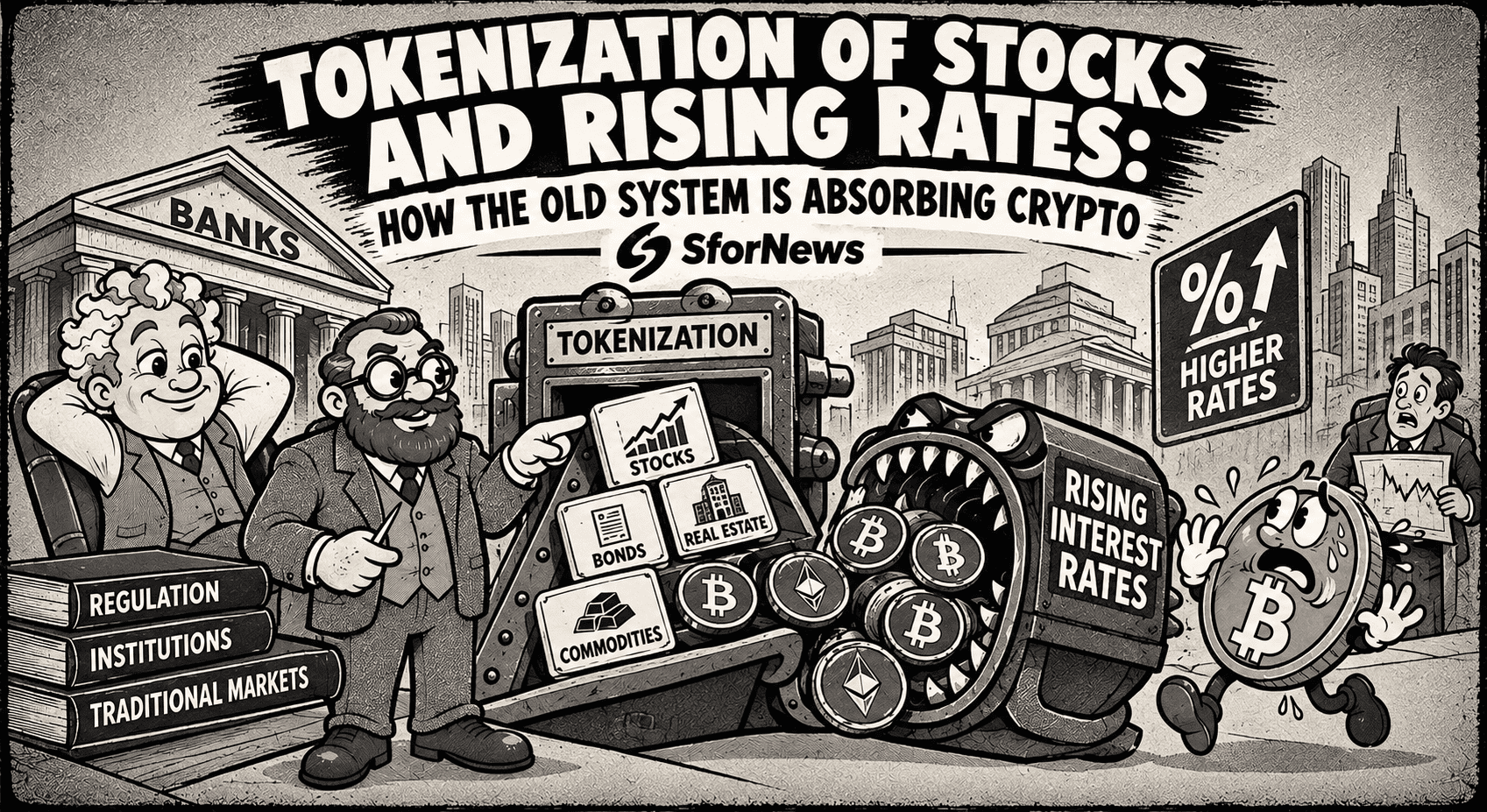
SEC Opens Five-Year Exemption for Tokenized Stocks
The SEC granted a temporary conditional exemption for licensed platforms — Tokenized Securities Venues (TSVs) — allowing tokenized NMS stocks to be traded on blockchain using AMMs and liquidity pools. The exemption is valid until 2031. Two new categories have been introduced: “TSV Exemption” and “Covered Firm Exemption.”
Architectural takeaway: The SEC recognizes blockchain as infrastructure for traditional stocks — but only through “permitted” venues. Decentralized protocols remain outside the framework. It is a hybrid model: blockchain is integrated into the traditional system, but under regulatory control. This is the same principle as in IFC Oman: a parallel system, but a managed one.
CFTC Sends Crypto Market Rules to the White House
The CFTC submitted draft rules for the broader crypto market to the White House. The contents of the document have not yet been disclosed. At the same time, the CFTC has taken a hard line on “passive software services.”
Architectural takeaway: The SEC and CFTC are operating in parallel. The SEC is opening gateways for tokenized stocks, while the CFTC is preparing general rules for the crypto market. This is a division of labor: the SEC for securities, the CFTC for commodity assets.
Finance Ministry and Bank of Russia Work on Launching a Russian Stablecoin
The Russian Finance Ministry and Bank of Russia are discussing the launch of a Russian stablecoin. The focus is on how it would operate, who would be allowed to issue it, and which transactions it could be used for.
Architectural takeaway: Russia is moving toward an institutional stablecoin. This is not “crypto for citizens,” but a settlement instrument within a regulated framework. If launched, it could change the structure of foreign-trade settlements. The question is not “if,” but “when” and “under whose control.”
Bank of Russia Limits Banks’ Crypto Investments to 1% of Capital
The Bank of Russia is introducing a limit: banks’ investments in cryptocurrencies may not exceed 1% of their capital. At the same time, a 1250% risk weight is being introduced. This means that for every ruble of crypto exposure, a bank must reserve 12.5 rubles of capital.
Architectural takeaway: This is not a ban — it is a filter. Banks cannot ignore crypto, but they also should not be exposed to excessive risk. A 1250% risk weight is effectively an “economic ban”: holding crypto on the balance sheet becomes extremely costly. Working with crypto may therefore be possible primarily through subsidiaries or partnerships.
27 Secondary Regulations for the Crypto Market Law Could Be Adopted by the End of October
In Russia, 27 secondary regulations detailing the crypto market law could be adopted by the end of October 2026.
Architectural takeaway: Russia is building its regulatory framework faster than the U.S. Twenty-seven secondary regulations represent operational detail. While the U.S. Congress is blocking the Clarity Act, Russian regulators are issuing concrete rules.
Around 20 Million People in Russia Use Cryptocurrency
Deputy Finance Minister Ivan Chebeskov said that around 20 million people in Russia now use cryptocurrency, while the total volume of citizens’ investments is estimated at 3.7 trillion rubles.
Architectural takeaway: 20 million users represent critical mass. 3.7 trillion rubles is comparable to the budget of a major region. Crypto in Russia is no longer “marginal” — it has become mass-market. Regulators understand this.
CRYPTOCURRENCIES AND BLOCKCHAIN
Bitcoin Surges Above $85,000, Bitfinex Futures Spike Above $150,000
On September 21, 2026, Bitcoin rose above $85,000, while Ethereum moved above $2,700. For both assets, these were their highest levels since January 2026. On Bitfinex futures, Bitcoin briefly spiked above $150,000 — an anomalous move likely related to the liquidation of a large position. Total liquidations in the futures market reached $746 million, of which more than $647 million involved short positions. Liquidations affected around 137,000 traders. The Fear & Greed Index rose to 70 points — the “greed” zone.
Architectural takeaway: The market has not simply recovered — it has entered a phase of “rational greed.” $647 million in short liquidations shows that bears were forced to close their positions. The Bitfinex spike above $150,000 was a technical anomaly, but it demonstrates the fragility of liquidity. BTC is holding above $80,000 — a new base. But caution remains: investors continue to hedge.
Ethereum Holds Above $2,600, Altcoins Remain Active
According to KuCoin, BTC briefly tested $82,000 before retreating toward around $81,000, while ETH held above $2,600. Altcoin activity remained relatively high. The yield on 2-year U.S. Treasuries remains around 4.76% amid expectations of further Fed tightening.
Architectural takeaway: BTC is consolidating, ETH is holding its level. Altcoins are showing strength — a sign that capital is not leaving the sector but being redistributed within it. The $80,000–81,000 range is key support. If it holds, the market will remain in a recovery phase.
Whale Swaps $86 Million in BTC for ETH and Stakes It
Over the past five days, an unknown whale sold 1,107 BTC, worth around $86.76 million, on Hyperliquid and bought 34,422 ETH, worth around $86.5 million, after which the entire amount was staked.
Architectural takeaway: This is not speculation — it is rotation. Large capital is moving from BTC into ETH and staking it. Staking is not trading; it is holding. The whale is positioning for yield rather than simply price appreciation.
Strategy Buys Another 950 BTC, Bringing Holdings to 846,000 BTC
Strategy, formerly MicroStrategy, bought another 950 BTC, bringing its total holdings to 846,000 BTC. Separately, the company has $6 billion in cash. Strive bought another 1,355 BTC and now holds 26,355 BTC.
Architectural takeaway: Corporate demand for BTC is not declining. Strategy continues accumulating. 846,000 BTC represents around 4% of the total supply. Strive is also increasing its position. This is not trading — it is strategic holding. Corporations are acting like central banks: buying and holding.
Circle Begins Offering Institutional Clients USDC Loans Collateralized by BTC
Circle launched a lending program for institutional clients in USDC against BTC collateral.
Architectural takeaway: Circle is evolving from a stablecoin issuer into a lender. This is similar to the path Tether has taken with gold. USDC is becoming not merely a “digital dollar,” but a lending instrument. This strengthens Circle’s position as a systemic player.
Switchboard and Linera Shut Down: Infrastructure Is Polarizing
The multichain oracle network Switchboard, which previously raised $7.5 million in Series A funding, announced its shutdown and asked protocols to migrate to alternatives by September 25. Linera, a Layer 1 project backed by a16z that raised around $12 million, failed to launch its mainnet after four years of development; its token sale generated only around $900,000, the minimum threshold was not reached, and emergency financing could not be secured.
Architectural takeaway: The infrastructure layer is polarizing. Mid- and lower-tier projects are not surviving. This is natural selection. While regulators argue, infrastructure is being cleared of weaker projects. Those creating real value will survive.
Uniswap Founder Says Team Declined to Buy Uniswap.com for a Seven-Figure Sum
The founder of Uniswap said that the team once declined to purchase the Uniswap.com domain for a seven-figure sum.
Architectural takeaway: This is less of a news event than an interesting detail. But it shows that in crypto, domains and brands do not always have decisive importance. The product matters more than the domain.
Ukrainian Citizen Suspected of $655,000 Crypto Fraud
A Ukrainian citizen is suspected of crypto fraud totaling more than $655,000. According to police, he persuaded the victim to invest money for “passive income,” while transferring the funds to crypto wallets under his control.
Architectural takeaway: Fraud remains one of the major problems in the crypto market. This highlights the importance of KYC/AML and verification. Regulators are tightening infrastructure precisely to make such schemes more difficult.
MACROECONOMICS
Fed Raises Rate to 3.75–4.00%: First Hike Since 2023
The Federal Reserve raised its key interest rate by 25 basis points to a range of 3.75–4.00%. The decision was unanimous (12–0). Fed Chair Kevin Warsh said inflation remains “too high for too long.” The dot plot shows that 16 of 18 officials expect at least one more hike this year. The median forecast is one additional hike by year-end, unchanged rates in 2027, and a 25-basis-point cut in 2028 and 2029.
Architectural takeaway: The Fed is entering a tightening phase. The neutral rate has been raised to 3.25% — a new benchmark. Pressure on risk assets will persist. But markets had already priced in the hike, so the reaction was muted. The key question is whether there will be a second hike in October. The probability is around 50%.
Bank of Japan Raises Rate to 1.25%: Highest in 31 Years
The Bank of Japan raised its rate by 25 basis points to 1.25% — the highest level since 1990. This is the shortest interval between rate hikes since 1990. Governor Kazuo Ueda said the BOJ would continue raising rates as necessary, taking into account the situation in the Middle East, AI demand, and the impact of exchange rates.
Architectural takeaway: Japan is exiting the era of free money. This is a tectonic shift for global markets. Japanese capital has financed risk around the world for decades through the carry trade. If rates continue rising, that flow may reverse. And that would affect everything from Wall Street to crypto.
Bank of England Holds Rate at 3.75%, but Tone Turns More Hawkish
The Bank of England kept its base rate at 3.75% — the sixth consecutive hold. At the same time, the regulator warned that if the Middle East conflict intensifies inflation, rates could be raised. Governor Andrew Bailey said the economic outlook was “too unpredictable,” and officials had not yet discussed whether the market pricing of nearly four hikes next year was justified.
Architectural takeaway: The Bank of England is trapped. Energy-driven inflation is rising, but the economy is weak. Holding rates is a pause, not a reversal. The tone has become more hawkish: if oil prices continue rising, a rate hike may become necessary.
ECB: Lagarde Warns of Vulnerability from AI Technology Imports
ECB President Christine Lagarde warned that Europe risks becoming vulnerable by relying exclusively on imports of U.S. AI technologies. She noted that AI has strategic importance and that the cost of exiting such dependence is extremely high. ECB Governing Council members Šíkrus, Kazāks, and Stournaras signaled the possibility of further policy tightening.
Architectural takeaway: Lagarde sees AI not simply as “technology,” but as a strategic asset. This is the same logic applied to the digital euro and stablecoins. Europe is protecting technological sovereignty. The ECB is ready to act at any meeting — the data will decide.
Global Central Banks Enter Coordinated Tightening Cycle
Emirates NBD notes that global central banks have entered a coordinated tightening cycle. The Fed raised rates for the first time since 2023, the BOJ tightened policy, and the ECB, RBA, RBNZ, and Norges Bank joined them. The yield on 10-year U.S. Treasuries exceeded 5% for the first time since 2023.
Architectural takeaway: This is synchronized tightening. The era of cheap money is ending. 10-year Treasury yields above 5% represent a new regime. For risk assets, this creates pressure. For crypto, the effect is mixed: on one hand, traditional assets compete for capital; on the other, crypto can function as an alternative to fiat currencies losing purchasing power.
INFRASTRUCTURE
ECB Launches Pontes: Settlement for Tokenized Assets in Central Bank Money
The Eurosystem launched the Pontes infrastructure for settlement of tokenized assets on September 21, 2026. The platform allows wholesale transactions in tokenized assets to settle in central bank money through TARGET Services. Deutsche Bank, Santander, Société Générale, the European Investment Bank, and 13 other banks, as well as four DLT operators, became the first participants. Full completion is planned for 2028.
Architectural takeaway: The ECB is building infrastructure for tokenized assets with settlement in central bank money. This is not “crypto for crypto.” It is institutional infrastructure for traditional assets. Europe is building a parallel system — controlled, but modern.
Eugene Investment & Securities Tests Stablecoins for STO Settlements
Eugene Investment & Securities signed a memorandum with VTOZ to test a method for paying subscription funds for tokenized securities using stablecoins. The goal is to connect subscription, payment, and settlement in a single blockchain-based chain.
Architectural takeaway: Tokenized securities currently use DLT to record rights, but settlement still takes place through bank accounts. This is a gap. Stablecoins may close it. If successful, this could become a template for the entire industry.
Apple and Google Hire for Stablecoin-Related Positions
Apple and Google are hiring employees for positions related to stablecoins as part of the development of their payment and financial businesses.
Architectural takeaway: Major technology companies are entering stablecoin infrastructure. This is not “crypto”; it is payment infrastructure. If Apple and Google begin using stablecoins within their ecosystems, it could represent mass adoption.
Bitcoin Miners Reorient Toward AI Infrastructure
In the first half of 2026, public mining companies reduced their actual hashrate by approximately 56 EH/s — 15%, higher than the 10% decline across the overall market. Part of their electricity capacity has been redirected toward AI/HPC. Revenue from HPC and AI increased by 52% quarter over quarter. HPC hosting generates around $175 per MWh, AI cloud services up to $941 per MWh, and Zcash mining around $586 per MWh. Fourteen public companies spent $18.6 billion in a single quarter on AI infrastructure.
Architectural takeaway: Miners are becoming AI operators. The principle remains the same:
ENERGY → COMPUTING → VALUE
Only the type of computation has changed: not hashes, but neural networks. Whoever controls energy controls the future. Capital expenditure is enormous: $18.6 billion per quarter, and only part of it will reach the desired return. But the direction is clear.
KEY INDICATORS TO WATCH
| Indicator | What to monitor |
|---|---|
| SEC Tokenized Stocks Exemption | First TSV platforms and trading volumes |
| Clarity Act | Next steps by the SEC and CFTC, possible reintroduction |
| Fed | Probability of a second hike in October (~50%) |
| Bank of Japan | Carry trade dynamics and Japanese capital outflows |
| Pontes (ECB) | First settlements and expansion of participants |
| BTC / ETH | BTC holding above $80,000, ETH above $2,600 |
| Switchboard / Linera | Wave of shutdowns among mid-level projects |
| Miners / AI | Debt dynamics and demand for computing |
| Eugene / VTOZ | Results of the stablecoin PoC for STOs |
| Russian stablecoin | Who issues it and for which operations |
| Circle USDC loans | Loan volumes collateralized by BTC |
| Strategy / Strive | Dynamics of corporate BTC balances |
SITUATION AS OF SEPTEMBER 21
The day was marked by legislative failure and regulatory offensive. The U.S. Senate failed to advance the Clarity Act (49–50), but the SEC and CFTC immediately took the initiative: the SEC opened a five-year exemption for tokenized stocks, while the CFTC sent its rules to the White House.
In crypto — recovery and rotation. BTC above $85,000, ETH above $2,700. $647 million in short liquidations. A whale exchanged $86 million in BTC for ETH and staked it. Strategy brought its balance to 846,000 BTC. Circle began issuing USDC loans collateralized by BTC. Switchboard and Linera are shutting down — infrastructure is polarizing.
In macroeconomics — synchronized tightening. The Fed raised rates for the first time since 2023, while the BOJ reached a 31-year high. 10-year U.S. Treasury yields rose above 5% for the first time since 2023. Global central banks have entered a coordinated tightening cycle.
In infrastructure — institutional construction. The ECB launched Pontes for settlement of tokenized assets. Eugene Investment is testing stablecoins for STOs. Apple and Google are hiring stablecoin specialists. Bitcoin miners are transforming into AI operators: $18.6 billion spent in a quarter.
In Russia — institutionalization. The Finance Ministry and Bank of Russia are working on a Russian stablecoin. The Central Bank is introducing a 1% capital limit and a 1250% risk weight for banks. By the end of October, 27 secondary regulations may be adopted. 20 million users and 3.7 trillion rubles in investments.
Main architectural takeaway: legislation is not keeping pace with the market. Regulators are taking the initiative. Europe is building parallel infrastructure — controlled, but modern. Russia is institutionalizing crypto. Corporations are accumulating BTC. Those who build open, verifiable systems will win. Those who rely on closed code and trust in intermediaries will lose.


Bitcoin
$62,881.23

Ethereum
$1,672.04

Litecoin
$42.71

Dash
$37.08

Bitcoin Cash
$209.43