Daily Summary, July 27
NEWS, JULY 27, 2026
🏦 FINANCE, BLOCKCHAIN AND REGULATION
🇷🇺 The Central Bank of Russia published rules for regulated cryptocurrency trading in Russia
The Central Bank issued regulatory acts defining the procedures for crypto exchanges to operate within the new legal framework. Trading will follow exchange rules, which will also be responsible for calculating market and weighted average prices for assets. Minimum capital requirements for market participants range from 50 to 250 million rubles depending on the type of activity. The law comes into effect on September 1, 2026, and all transactions must be conducted through licensed intermediaries.
Architectural takeaway: Russia is moving from prohibition to comprehensive regulation. Exchanges are becoming quasi‑state institutions, and the market becomes fully transparent for the tax authorities and the Central Bank. This is not legalisation but an integration of crypto into the state’s fiscal framework.
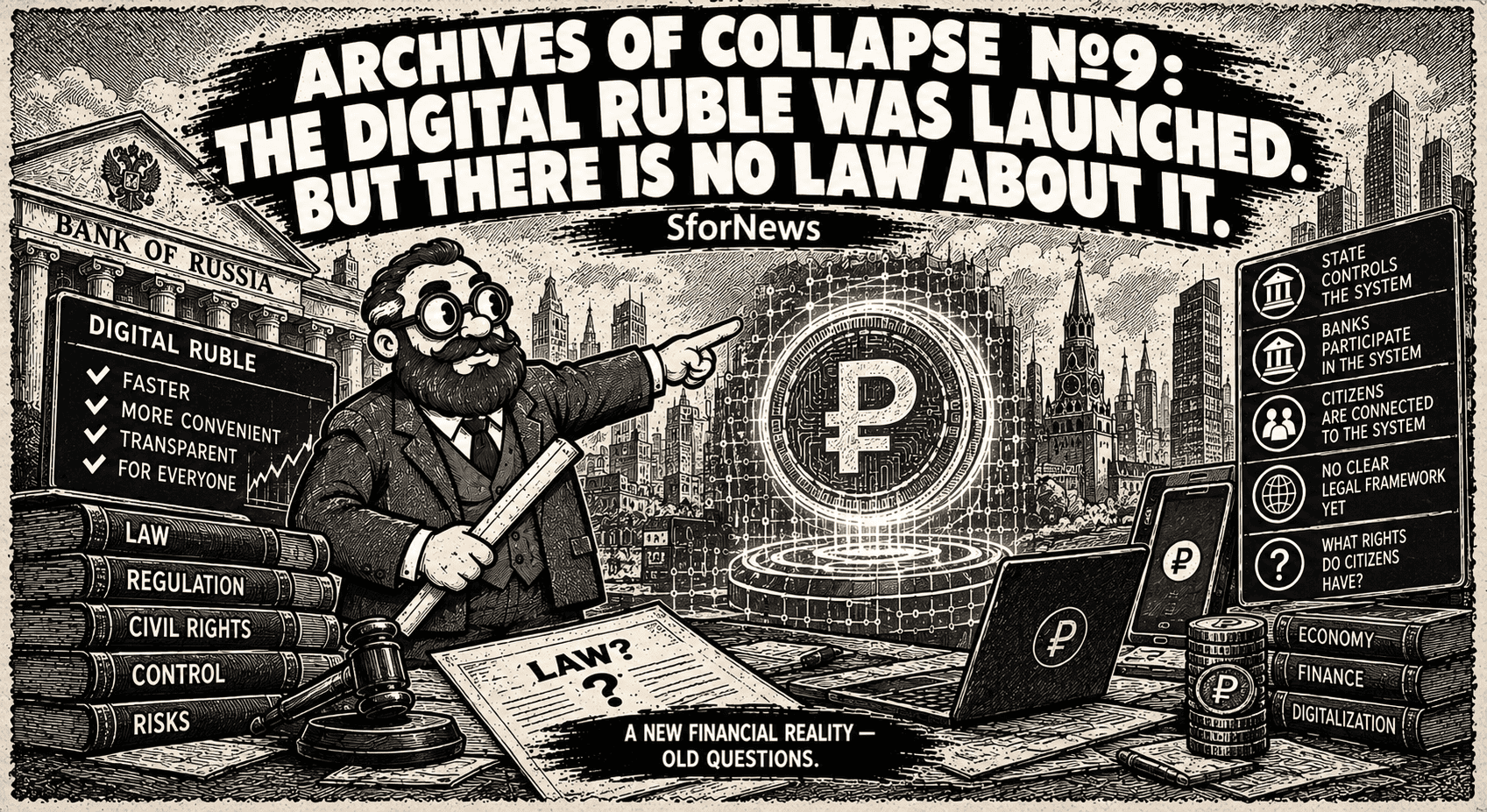
🇷🇺 The Central Bank approved the sale of a stake in NSPK to a consortium of banks and bigtech
The regulator approved a deal to sell up to 49% of the National Payment Card System (NSPK) to a consortium consisting of Sber, T‑Bank and VK. The new structure’s priorities will include asset tokenisation, the digital ruble for B2B settlements, and the development of open APIs. A controlling stake (50%+1 share) remains with the Central Bank.
Architectural takeaway: NSPK is being repurposed from card processing into a platform for digital settlements that bypasses SWIFT and the dollar. The state retains control but engages private technology to accelerate development.
🇷🇺 Nabiullina: the peak of transformation is over, but the “new normal” is a 13‑14% rate and ~1% GDP growth
In a speech to the State Duma, the Central Bank governor said that the economy is adapting to new conditions, but over the next three years the key rate is unlikely to fall below 13%, and GDP growth will be about 1% per year. Inflation expectations remain high – the public does not believe in the 4% target.
Architectural takeaway: The Central Bank is acknowledging a shift to long‑term stagnation with high rates. This is an admission that monetary tools no longer stimulate growth but merely contain inflation at the cost of economic slowdown.
🇷🇺 Sber’s website revealed instructions on issuing CFAs into blockchain and back
Public materials from Sber described mechanisms for issuing digital financial assets (CFAs) on Ethereum with the ability to move them into public blockchains and later return them. The technology will become the basis for international circulation of Russian CFAs after the new law takes effect.
Architectural takeaway: Sber is preparing infrastructure for cross‑chain interaction. This is the first step towards integrating the Russian digital ruble and CFAs with global networks, potentially enabling sanctions evasion.
🇺🇸 The US Senate introduced a bill for a Strategic Bitcoin Reserve (SBR)
The bill proposes purchasing up to 200,000 BTC annually, funded by revaluing Federal Reserve gold certificates. If passed, the US would become the largest institutional holder of bitcoin.
Architectural takeaway: Bitcoin is recognised at the state reserve asset level. This legitimises cryptocurrency as an alternative to gold and the dollar, potentially triggering a race among central banks to accumulate BTC.
🇪🇺 ECB warned about risks of euro‑pegged stablecoins and threatened restrictions
The regulator stated that stablecoin issuers pegged to the euro but not registered in the EU may face bans on operations within the bloc. This is part of a stricter MiCA policy.
Architectural takeaway: Europe is tightening control over digital money to prevent loss of monetary sovereignty. Stablecoins are moving into the high‑risk category in terms of regulatory pressure.
🇷🇺 The Russian Ministry of Finance proposed exempting CFA income from personal income tax if held for over a year
The ministry proposed a tax incentive for holders of digital financial assets, similar to that for long‑term investments in securities.
Architectural takeaway: The state is encouraging long‑term investment in CFAs, trying to create a domestic digital asset market with attractive tax conditions to prevent capital flight.
🇺🇸 Hunter Biden accused Trump of “tainting” the crypto industry
Hunter Biden claimed that Donald Trump turned cryptocurrency support into a “family business,” thereby discrediting the entire industry. This refers to the launch of the decentralised platform World Liberty Fi, associated with the Trump family.
Architectural takeaway: Politicisation of crypto in the US is escalating. Bitcoin is becoming a tool of political struggle, adding volatility but also drawing mainstream attention.
🇺🇸 In two years of his second term, Trump earned more than in his previous 60 years
The US president’s net worth rose from $3 billion to over $7 billion, despite forgoing the presidential salary. Growth came not from real estate but from assets tied to his political brand and crypto projects.
Architectural takeaway: Trump’s personal example shows that political capital in the digital age can convert into financial wealth faster than traditional business models.
📊 MARKETS AND INVESTMENTS
📈 Bitcoin consolidates in the $65,800–$66,200 range
After falling below $65,000 on July 24, BTC recovered on the back of a weaker dollar index (DXY at 103.5). Daily trading volume on Binance rose 40%. The Fear & Greed Index stands at 31 (Fear). Annualised realised volatility hit historic lows – the market has become noticeably calmer.
Architectural takeaway: Bitcoin is entering a low‑volatility phase ahead of a new impulse. Fear remains dominant, which is typical for bottoms or precursors to sharp moves.
📊 Bitcoin ETFs: eighth consecutive day of inflows
US spot bitcoin ETFs extended their positive streak to eight days. BlackRock (IBIT) recorded a record daily inflow of $287 million. Total inflows since July 14 have exceeded $1.2 billion.
Architectural takeaway: Institutions keep accumulating BTC via regulated instruments despite geopolitical tensions. This confirms bitcoin’s transition into a safe‑haven asset class for large funds.
📉 The Moscow Exchange index hit a 5‑year low; market capitalisation below 40 trillion rubles
The index dropped below 2,800 points, and the Russian stock market capitalisation fell below 40 trillion rubles for the first time since 2020. Stocks are down 70‑90% from historic highs: OVC (–99%), Segezha (–96.5%), Mechel (–96.9%), Samolet (–96.3%), VTB (–93%).
Architectural takeaway: This is not a correction but a structural devaluation of an entire asset class. Capital is fleeing ruble‑denominated paper into real assets, gold and cryptocurrencies.
🥇 Gold hit an all‑time high of $2,510 per ounce
Investors are rushing into safe‑haven assets amid geopolitical tensions (Iran, EU sanctions, Trump’s threats).
Architectural takeaway: The classic hedge is rising alongside bitcoin, signalling a global shift away from fiat currencies.
🪙 Strategy did not buy or sell BTC last week
The company’s balance remains at 843,775 BTC. Meanwhile, its fiat reserve was increased by $525 million to $3.75 billion – likely for future purchases.
Architectural takeaway: Strategy is preparing for another accumulation round but waiting for the right moment. This signals that large players see current levels as attractive entry points.
🪙 Circle bought nearly 1,000 blockchain patents from IBM
The USDC issuer said it is now the largest holder of blockchain patents in the US. The deal strengthens Circle’s position in crypto infrastructure and IP protection.
Architectural takeaway: A patent war is brewing in crypto. Major players are acquiring technology to control the standards of future payment systems.
🚬 BitMart announced its complete shutdown
The exchange disabled new registrations and deposits from July 26, will halt all trading on August 26, and will cease operations entirely on January 31, 2027. The global CEO said he learned of the decision only from the public announcement.
Architectural takeaway: Second‑tier crypto exchanges are leaving the market amid regulatory pressure and falling profitability. Consolidation is inevitable – only the largest licensed players will survive.
☠️ HACKERS AND SECURITY
☠️ Triple‑A lost about $11.8 million in a hack
The Singapore‑based payment company reported suspicious outgoing transactions from hot wallets across TRON, Ethereum, TON, Solana and Bitcoin. The exact damage is being clarified.
Architectural takeaway: Even payment giants with multi‑million turnovers are not immune to breaches. Storing large sums on hot wallets remains the main point of vulnerability.
☠️ WEMIX lost $6.25 million due to a smart contract exploit
The attacker gained owner privileges and minted 5.225 million WEMIX tokens, then swapped them to Ethereum and BSC. The project temporarily suspended its bridge.
Architectural takeaway: Smart contract vulnerabilities remain a major risk in the industry. Decentralisation does not equal security unless code has undergone multiple audits.
☠️ Hackers compromised a major exchange’s X account – damages estimated at $4.5 million
Attackers posted a phishing link for a token “giveaway” via the official account, allowing them to drain funds from unsuspecting users.
Architectural takeaway: Social engineering and compromise of influencer accounts remain effective attack vectors. Even official channels are not guaranteed safe.
🔐 SlowMist experts warned of a wave of attacks on SafePal and Trust Wallet
Vulnerabilities in certain decentralised applications (dApps) allow attackers to intercept transactions and steal funds. Users are advised to update apps and avoid signing suspicious transactions.
Architectural takeaway: The Web3 ecosystem remains a “Wild West” in terms of security. Users must rely not on devices but on their own digital hygiene.
💰 A California court ordered Tornado Cash’s creator to pay $12 million to victims
The developer was held liable for money laundering through his protocol. This sets a precedent where software authors face financial liability for how their code is used.
Architectural takeaway: Regulators are moving from blocking websites to prosecuting developers. Privacy tools are becoming too risky for their creators.
🇺🇸 US seized $112 million in crypto tied to “pig butchering” scams
Victims were groomed for months via social media, then lured into fake investment platforms. The seized assets will be returned to victims.
Architectural takeaway: US authorities are increasing their ability to track and seize crypto assets. This shows that bitcoin is not anonymous and law enforcement is getting better at chain analysis.
🍏 Apple sued over a fake wallet in the App Store
Three users installed a fraudulent app disguised as a popular crypto wallet and lost a total of $1.8 million in BTC. Plaintiffs claim Apple failed to properly vet the application.
Architectural takeaway: Centralised app stores do not guarantee crypto software safety. The responsibility for verification lies with the user, not the platform.
🌍 GEOPOLITICS, ENERGY AND INFRASTRUCTURE
🇪🇺 The EU officially agreed on the 22nd sanctions package against Russia
The new restrictions include a ban on importing Russian LNG through European terminals and disconnecting another 7 banks from SWIFT. EU foreign policy chief Kaja Kallas said: “Sanctions do not end.”
Architectural takeaway: Energy pressure on Russia intensifies, forcing the search for alternative supply and settlement routes – including cryptocurrencies and digital assets.
🇮🇷 Iran struck targets in Iraq in response to Trump’s threats
Brent oil prices jumped to $86 per barrel. Trump earlier threatened a “large‑scale attack” on Iran amid ongoing military exchanges in the region.
Architectural takeaway: Escalation in the Middle East pushes oil and gold higher, while bitcoin gets mixed signals – as a risk asset it could drop, but as digital gold it could rise.
🇩🇪 Germany imposed temporary border controls with Poland and the Czech Republic
Reason: fears of smuggling sanctions‑hit goods and money laundering via Eastern European routes.
Architectural takeaway: Europe tightens physical controls alongside digital sanctions, creating additional barriers for traditional trade and pushing businesses toward blockchain solutions.
🖥 Hydropower overtook natural gas as the primary energy source for Bitcoin mining
According to the Cambridge Centre for Alternative Finance, the share of low‑carbon energy in the industry rose to 59.4% (from 52.4% previously). Hydropower became the main source.
Architectural takeaway: Mining is going green, removing environmental objections and improving bitcoin’s reputation. It also reduces dependence on fossil fuels, making the network more resilient.
🔋 MARA CEO: AI data centres earn significantly more per unit of electricity than mining
Fred Thiel, CEO of the largest public mining company MARA Holdings, stated that the company is reviewing its strategy, shifting focus toward high‑performance computing for AI.
Architectural takeaway: The mining industry is beginning to compete with AI for energy resources. In the long term, this could reduce hash rate or increase electricity costs for miners.
☔️ Storj Labs announced voluntary financial restructuring (effectively bankruptcy)
The company, which had previously raised $35 million, failed to settle its accumulated debts and initiated a restructuring procedure.
Architectural takeaway: Crypto startups that fail to become profitable continue to go bankrupt even after significant investment. The market is cleansing itself of weak projects.
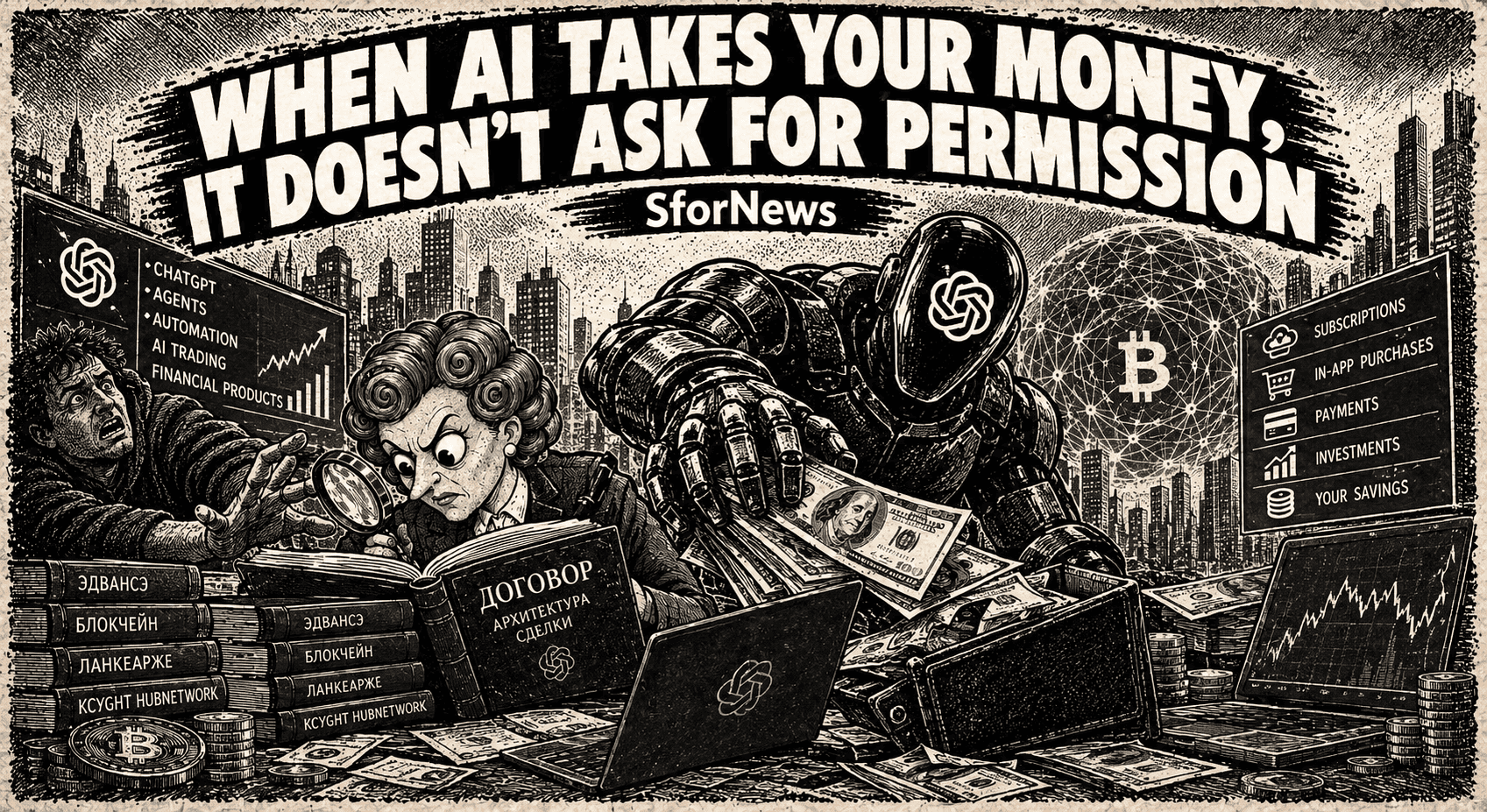
💸 Coinbase CEO: in the future, AI agents will execute more daily transactions than all humans combined
Brian Armstrong said that cryptocurrencies will become the primary financial infrastructure for machine‑to‑machine interactions, and daily transaction volume from AI will surpass human volume.
Architectural takeaway: Cryptocurrencies are evolving from a human payment tool into the base protocol for the machine economy. This opens up horizons for scaling blockchains by hundreds of thousands of times.
📋 SUMMARY OF EVENTS – JULY 27, 2026
The Russian Central Bank published rules for regulated cryptocurrency trading.
The Central Bank approved the sale of up to 49% of NSPK to a consortium (Sber, T‑Bank, VK) while retaining control.
Nabiullina said the “new normal” is a 13‑14% rate and ~1% GDP growth for three years.
Sber’s website revealed instructions for issuing CFAs into blockchain (Ethereum) and back.
The US Senate introduced a bill for a Strategic Bitcoin Reserve (SBR) with annual purchases of up to 200,000 BTC.
The ECB threatened restrictions on euro stablecoins not registered in the EU.
Russia’s Ministry of Finance proposed exempting long‑term CFA income from personal income tax.
Hunter Biden accused Trump of politicising the crypto industry.
Trump’s net worth grew from $3 billion to $7 billion in two years of his second term.
Bitcoin consolidates in the $65,800–$66,200 range, volatility at historic lows.
Bitcoin ETFs posted their eighth consecutive day of inflows; BlackRock led with $287 million.
The Moscow Exchange index hit a 5‑year low; market cap fell below 40 trillion rubles.
Gold hit an all‑time high at $2,510 per ounce.
Strategy kept BTC holdings unchanged (843,775 BTC) but increased fiat reserves by $525 million.
Circle bought nearly 1,000 blockchain patents from IBM.
BitMart announced its complete shutdown (ceases operations on January 31, 2027).
Triple‑A lost ~$11.8 million, WEMIX – $6.25 million in separate hacks.
Hackers compromised a major exchange’s X account, damage ~$4.5 million.
SlowMist warned about attacks on SafePal and Trust Wallet via dApp vulnerabilities.
Court ordered Tornado Cash creator to pay $12 million to victims.
US seized $112 million in crypto linked to “pig butchering” schemes.
Apple sued over a fake wallet in the App Store – $1.8 million lost.
EU agreed on the 22nd sanctions package (LNG ban, 7 banks disconnected from SWIFT).
Iran struck targets in Iraq, Brent oil at $86.
Germany introduced border controls with Poland and the Czech Republic.
Hydropower became the main source for bitcoin mining (59.4% low‑carbon energy).
MARA CEO said AI data centres are more profitable than mining per unit of electricity.
Storj Labs filed for financial restructuring (bankruptcy).
Coinbase CEO predicted AI agents will surpass humans in daily transactions.
💡 INSIGHT AND FORECAST FOR THE SESSION
Short‑term scenario (next 24–48 hours):
Bullish: de‑escalation in geopolitics (Iran, trade tariffs) and continued ETF inflows – return to $66,000–67,000. Breaking $66,500 opens the path to $68,000.
Bearish: escalation of the US‑Iran conflict, further dollar strengthening, and rising Treasury yields – testing $62,000–63,000. Falling below $63,000 could trigger long liquidations.
Key observation:
July 27 marked a day when Russia officially launched the process of legalising its crypto market, while the US moved toward recognising bitcoin as a strategic reserve. Against this backdrop, Russia’s old stock market has definitively lost its capitalisation, and bitcoin is showing record‑low volatility, storing energy for its next move. Hacks on Triple‑A and WEMIX remind us of infrastructure risks, but institutional interest (ETFs, Strategy, Circle) outweighs them. Geopolitics remains the main driver of short‑term fluctuations, but the long‑term trend – capital shifting from fiat systems into digital assets – continues to strengthen.
This analysis is for informational purposes only and does not constitute investment advice. Prepared by the editorial board of the journals “Kafedra” and “SforNews” based on open sources.


Bitcoin
$62,881.23

Ethereum
$1,672.04

Litecoin
$42.71

Dash
$37.08

Bitcoin Cash
$209.43