Daily Summary, September 7
📅 DIGEST FOR SEPTEMBER 7, 2026
FOCUS: GEOPOLITICS, MACROECONOMICS, CRYPTOCURRENCIES & INFRASTRUCTURE
🏛 GEOPOLITICS & INTERNATIONAL RELATIONS
🇺🇸🇷🇺 Witkoff and Kushner Visit Moscow: Outcomes of Talks
US presidential envoys Steve Witkoff and Jared Kushner completed their visit to Moscow, where they met with Vladimir Putin, before traveling to Kyiv. The American side characterized the talks as “encouraging.”
During the negotiations, an agreement was reached on a temporary halt to mutual strikes on capitals — a so-called “three-day truce” for air attacks on Kyiv and Moscow. The Ukrainian side, in turn, reaffirmed its position of refusing territorial concessions.
Architectural Conclusion: The tactical truce on capitals demonstrates the parties’ ability to reach limited agreements, but strategic contradictions remain. The negotiation process remains the primary factor of uncertainty, and any positive signals create temporary windows for reducing the geopolitical premium in assets, but without cementing results.
🇩🇪 Incidents at German Energy Facilities
A fire broke out at an energy infrastructure facility in central Berlin overnight — flames spread from a neighboring construction site to an electrical substation. The incident did not cause power outages.
Hours earlier, a possible incident was reported at a substation in Wesel (North Rhine-Westphalia) — a hole was found in the facility’s fencing. Over the past week, at least three suspected sabotage attempts on electrical substations have been recorded in Germany.
Architectural Conclusion: The series of incidents at German energy facilities confirms that European critical infrastructure is becoming a target of hybrid attacks. This raises risks for industry and logistics, increasing pressure on governments to invest in power system protection.
🇪🇺 EU Extends Sanctions
The European Union decided to extend sectoral sanctions against Russia for another six months — until March 2027.
Architectural Conclusion: The sanctions extension cements the status quo in Russia-EU economic relations and deprives markets of hopes for a rapid restoration of trade flows. This keeps the ruble dependent on alternative trade routes.
🏛 MACROECONOMICS & FINANCE
🇷🇺 Ruble and Oil: Consolidation
The ruble closed on September 7 consolidated in the range of 96–98 rubles per dollar amid stable oil prices (Brent around $87.5–88 per barrel). No domestic drivers for ruble strengthening are observed.
Architectural Conclusion: Ruble stability remains hostage to global conditions. Maintaining oil prices in the current range allows the exchange rate to hold, but any external shock can quickly translate into volatility and rising inflation expectations.
🇺🇸 Spot Bitcoin ETFs: Nearly $1B Inflows for the Week
Over the past week, spot Bitcoin ETFs received nearly $1 billion** in net inflows, and their total assets again exceeded **$100 billion.
Architectural Conclusion: The return of Bitcoin ETF aggregate assets above $100 billion confirms sustained institutional demand for Bitcoin. This strengthens BTC’s status as a store-of-value instrument and could increase capital inflows to the segment if macroeconomic uncertainty decreases.
🇺🇸 Investors Await US Inflation Data
Equity and cryptocurrency markets paused in anticipation of key US inflation data scheduled for the coming week. The strong jobs report earlier raised concerns that the Fed may maintain hawkish policy longer than expected.
Architectural Conclusion: Markets are in a wait-and-see phase, creating elevated short-term volatility. Any deviation in inflation figures from forecasts could trigger sharp movements in both traditional assets and cryptocurrencies.
💎 CRYPTOCURRENCIES, BLOCKCHAIN & TECHNOLOGY
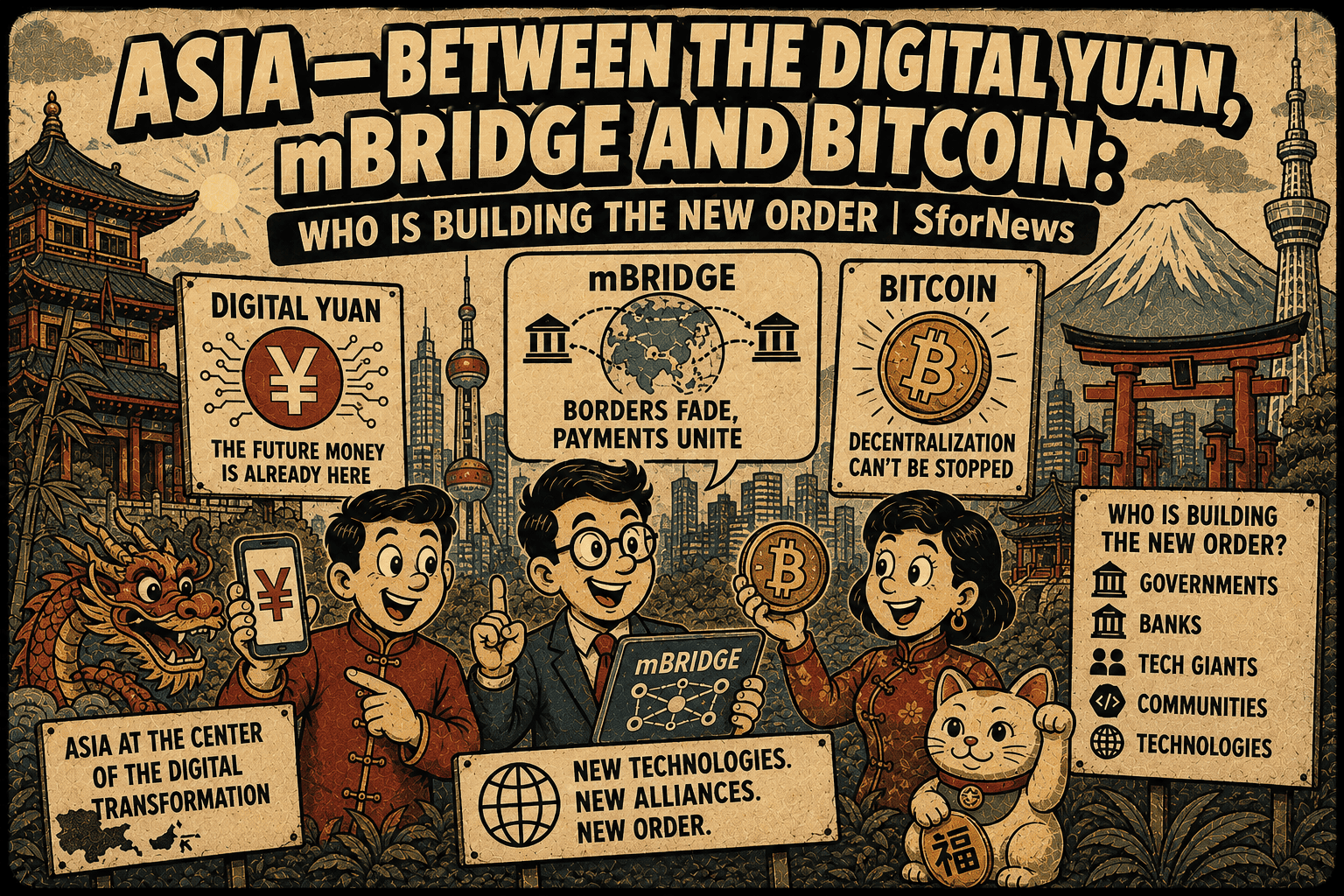
🇰🇿🇰🇬 Binance Strengthens Presence in Central Asia
Kazakhstan. Binance intends to make Kazakhstan a settlement hub for CIS countries, according to the country’s National Bank. Earlier, during Changpeng Zhao’s visit, three memoranda were signed with Kazakhstan’s Ministry of Digital Development, the National Bank, and the Astana International Financial Centre (AIFC).
Kyrgyzstan. CZ participated in a meeting of Kyrgyzstan’s National Crypto Council. Discussions covered crypto market regulation, AML, anti-fraud measures, tokenization, and stablecoins, including the domestic stablecoin KGST.
Architectural Conclusion: Kazakhstan and Kyrgyzstan are cementing their roles as regional digital finance hubs, transitioning from regulatory frameworks to practical project implementation. This sets a precedent for the legal integration of cryptocurrencies into national investment and payment systems across the post-Soviet space.
🇰🇷 South Korea Prepares Full Tokenization of Stocks, Bonds, and Funds
South Korea is preparing a phased tokenization of stocks, bonds, and funds.
Architectural Conclusion: South Korea becomes one of the first major markets to systematically implement tokenization of traditional financial instruments. This creates a new regulatory precedent and could accelerate the convergence of traditional and digital finance in Asia, serving as a model for other jurisdictions.
☠️ Liquid Network Hack: Majority of Funds Returned
Approximately 4,000 BTC (~$320 million) were withdrawn from the Liquid Network. The operators called themselves “white hat hackers” and offered to contact the team. Later, the hackers returned **3,400 BTC** (~$272 million). About 600 BTC (~$48 million) remain with the attackers.
Architectural Conclusion: The incident demonstrates vulnerabilities in even specialized layer-2 networks. The partial return of funds suggests possible negotiations with Liquid’s team, but the remaining $48 million creates trust risks for sidechains. This underscores the need for improved security mechanisms in L2 infrastructure.
⛔️ Withdrawal Issues at WOO X Exchange
Users report that withdrawal requests on WOO X have been stuck in pending or processing status for days, with some requests being canceled.
Architectural Conclusion: Withdrawal delays at WOO X create a risk of loss of trust in the platform and may trigger liquidity outflows. This serves as a reminder of systemic risks in centralized exchanges and confirms the importance of diversifying asset storage.
🛡️ Critical Risk in Management of $91B USDT on TRON
Hacken identified a critical risk in the management of $91 billion USDT on the TRON network.
Architectural Conclusion: The discovery of a critical risk in the largest stablecoin’s management on the TRON network raises systemic concerns for the entire market. The vulnerability requires immediate auditing and could affect trust in USDT as a settlement and storage instrument.
🆕 My Wallet: September Update
My Wallet rolled out a September update featuring a completely redesigned mobile interface, a new “Market” section for 24/7 token trading, tokenized stocks, gold, and ETFs without KYC, as well as smart search across functions, assets, and the built-in Agent.
Architectural Conclusion: Expanding non-custodial wallet functionality toward trading tokenized traditional assets without KYC accelerates the convergence of DeFi and TradFi. This creates new liquidity access opportunities but also heightens regulatory risks for platforms operating outside the compliance framework.
🧠 Vitalik Buterin: EIP-8141 Frames and Views on AI
Vitalik Buterin is actively promoting EIP-8141 Frames — an idea aimed at making standard Ethereum accounts significantly more flexible.
Additionally, Buterin believes that AI will NOT break Bitcoin. He argues that network attacks can be mitigated through upgrades, and breaking Proof-of-Work or hashing itself is so difficult that the scenario of an AI-induced BTC collapse appears highly unlikely.
Architectural Conclusion: EIP-8141 could be the next step in Ethereum’s account model evolution, enhancing flexibility and user experience. Buterin’s stance on AI alleviates market concerns about technological risks to Bitcoin from quantum computing and AI, supporting the long-term investment narrative.
🪙 Movement of 600 BTC from Early Mining Era
After 16 years, 600 BTC (~$48 million) from the early mining era were moved — the coins had remained untouched since 2010.
Architectural Conclusion: Movement of early-era coins (2010) traditionally creates short-term market pressure as it may signal intent to sell. However, 600 BTC is not critical to current market depth, though it could affect short-term trader sentiment.
🇲🇽 Murder in Mexico City for Bitcoin Access
In Mexico City, a musician, his pregnant wife, three-year-old daughter, and housekeeper were murdered for access to his Bitcoin holdings worth approximately $1,500,000.
Architectural Conclusion: The incident illustrates the growing value of crypto assets as targets for physical crime. This underscores the importance of privacy and secure storage for large digital asset holdings, as well as the need to develop institutional solutions for user protection.
🇺🇦 Ukraine: Crypto Fraud Network with $1M Monthly Turnover
Ukrainian law enforcement dismantled a network of crypto fraudsters with a monthly turnover of up to $1,000,000.
Architectural Conclusion: Active actions by Ukrainian authorities against crypto fraud demonstrate increasing regulatory pressure on illegal digital asset circulation in the region. This could boost trust in legitimate crypto platforms and reduce risks for compliant market participants.
💡 FINAL ARCHITECTURAL CONCLUSION
September 7, 2026 demonstrates the continuation of several parallel processes:
Diplomacy remains active: The Witkoff-Kushner visit produced a tactical agreement, but strategic contradictions persist. EU sanctions extended through 2027.
Critical infrastructure under attack: The series of incidents at German energy facilities points to the systematic nature of hybrid attacks against European infrastructure.
Institutional crypto inflows strengthen: $1 billion into Bitcoin ETFs in a single week and assets returning above $100 billion confirm sustained demand.
Regional crypto-finance hubs solidify: Kazakhstan, Kyrgyzstan, and South Korea are taking new steps in integrating digital assets into national financial systems.
Security remains a critical factor: The Liquid Network hack, WOO X issues, the USDT vulnerability on TRON, and physical crimes against crypto holders serve as reminders of systemic risks.
KEY INDICATORS TO MONITOR:
| Indicator | What to Track |
|---|---|
| Bitcoin | Price and trading volume reaction to US inflation data (CPI releases). Monitor movements of early‑era “whale” wallets (large holdings from the network’s early days) — their selling or accumulation can signal shifts in market sentiment. |
| Bitcoin ETF | Net inflows into spot Bitcoin ETFs. A key benchmark is maintaining total assets under management above $100 billion, which reflects sustained institutional investor interest. |
| Ruble | USD/RUB exchange rate holding within the 96–98 range. Simultaneously track Brent oil prices, as they directly affect export revenues and foreign currency inflows. Also consider the Bank of Russia’s key rate decisions and geopolitical factors. |
| Negotiations | Implementation of the “three‑day truce” (whether both sides observe the ceasefire). Also monitor follow‑up diplomatic contacts: progress on specific peace plan points, new mediator initiatives, and signals about potential next steps. |
| Infrastructure | New incidents at key energy facilities (attacks, accidents, cyberattacks). Track not only the events themselves but also regulators’ responses: measures taken (temporary restrictions, inspections, security upgrades), and their impact on grid stability and the broader economy. |
| Liquid Network | Progress in negotiations between the network team (Blockstream) and the hackers responsible for the breach. Monitor updates on fund recovery: how much has been returned, what terms are being discussed for the remaining ~600 BTC, and whether binding agreements are in place. Also track technical actions: vulnerability fixes, network restart, and L‑BTC backing restoration. |
| USDT on TRON | Tether’s response to the reported critical vulnerability (e.g., 2‑of‑3 multisig without timelock or cancellation mechanisms for part of USDT on TRON). Watch for audit announcements (including third‑party firms like Hacken), public statements on risk mitigation plans, and changes in ratings (e.g., corporate ratings from agencies like Bluechip following audits such as KPMG’s). |
September 7 — a day of consolidation at the macro level and heightened activity in crypto infrastructure, where institutional inflows coincide with systemic security risks, while Asian regional centers cement their positions in the new financial architecture.


Bitcoin
$62,881.23

Ethereum
$1,672.04

Litecoin
$42.71

Dash
$37.08

Bitcoin Cash
$209.43