The Battle for the Digital Dollar: How Stablecoins Will Become the Future of Global Money | 2025 Analysis
The Battle for the Digital Dollar: How Stablecoins Will Become the World’s Money of the Future
The battle for the digital dollar has begun. While Tether and USDC consolidate their dominance, the United States is rolling out a legal framework that opens the door wide to regulated stablecoins from Silicon Valley. PayPal, Ripple, and possibly Amazon are poised to launch their own digital currencies. But one major power remains conspicuously absent from this narrative: Russia. At a time when the US is rewriting global payment standards, Moscow lacks a stable strategy. This article explores why—and what’s at stake.
By our International Platform editorial team – August, 2025
From niche to core infrastructure
What began a few years ago as a technical solution for crypto traders to transition to a digital dollar has now grown into a global system of digital currencies with a market capitalization of over $200 billion. Stablecoins—cryptocurrencies pegged to the value of fiat money (money not linked to gold or other precious metals)—now form the backbone of the crypto economy and, increasingly, of the digital payment infrastructure.
The current market leaders: Tether and USDC
The dominance of Tether (USDT) and USDC, the two largest stablecoins, is impressive. But in 2025, the status quo will come under pressure. New legislation, ambitious entrants like PayPal and Ripple, and even signals from Amazon and Apple are creating a tension where technological innovation and legal regulation go hand in hand. Stablecoins are no longer a plaything for techies, but have become the battleground for those who want control over digital money.
With a market capitalization of $112 billion (Tether) and $65 billion (USDC), respectively, these two stablecoins remain the market leaders by far. Together, they represent over 80% of the total stablecoin market. Their success is due to a simple model: a one-to-one peg to the US dollar, backed by fiat reserves, usually in the form of short-term US Treasuries.
Tether, issued by iFinex, has been the most widely used digital payment method on cryptocurrency exchanges worldwide for years. Yet, the company continues to face criticism for its lack of full transparency and audit procedures. USDC, issued by Circle and backed by financial giants like BlackRock and Goldman Sachs, presents itself as its regulated counterpart: auditable, American-style, and accounting-compliant.
The Genius Act: A Legal Landslide in the US
Their position remains unchallenged for now, but the underlying market dynamics are fundamentally changing. In July 2025, the US Congress passed the Genius Act—a landmark legal act that, for the first time, creates a national framework for issuing stablecoins in the United States.
The law sets a high bar: issuers must be able to fully back their tokens at any time with cash or highly liquid assets, such as U.S. Treasury bills. Issuers are also required to apply for a license from the SEC or another regulator, with regular audits and strict reporting requirements. The result? A separation between compliant and non-compliant coins. Stablecoins with complex algorithms or crypto collateral—such as Dai and Ethena USDe—are at risk of falling outside the law unless they radically revise their operations.
Decentralization under pressure
Dai, one of the oldest and most popular stablecoins in the DeFi (decentralized finance) world, operates without a central issuer. It’s based on a combination of smart contracts and collateral in other cryptocurrencies. This decentralization guarantees transparency but doesn’t comply with the Genius Act, which explicitly requires collateralization with fiat equivalents.
Ethena USDe, a recent star in the stablecoin firmament, is also in danger of running into trouble. Ethena uses an innovative “synthetic dollar” structure, where a combination of long and short positions on derivatives markets simulates a stable price. Clever? Certainly. But legally suspect, now that the US regulator only allows stablecoins backed by tangible assets.
Without changes, this category of stablecoins is at risk of being banned from US platforms and exchanges — with global consequences, as US regulations often have extraterritorial implications.
Big tech smells its opportunity
In this context, major fintech companies and tech giants sense an opportunity. PayPal USD (PYUSD) launched in late 2023 as a regulated stablecoin, fully compliant with US regulations, and used within the PayPal network. It quickly became a trusted digital dollar, with applications in e-commerce, crypto wallets, and even gaming.
Ripple, best known for its XRP ecosystem, also launched RLUSD, a stablecoin for cross-border payments, in 2025. With a strong focus on banks and institutional users, Ripple aims to build the digital bridge between traditional financial institutions and the blockchain world.
Both coins are still relatively small, but their growth potential is significant. What unites them: they are American, regulated, proprietary, and integrated into existing platforms—precisely what the Genius Act favors.
The threat and opportunity of tokenization
And there’s more to come. According to sources at Bloomberg and Reuters, Amazon, Walmart, Meta, and even Apple are experimenting with issuing their own digital currencies or integrating stablecoins into their payment architecture. An AmazonCoin that offers discounts on online purchases? An AppleStable integrated into the iOS Wallet app? It’s no longer science fiction. The tech companies have the users, the infrastructure, and the data to make this happen.
An odd one out is World Liberty Financial USD (USD1)—a token linked to Donald Trump’s business circle and launched earlier in 2025. Official information about the issuing entity is scarce, and the coin isn’t listed on any leading cryptocurrency exchanges. Nevertheless, it claims a spot in the top ten, thanks largely to politically motivated investors.
The phenomenon demonstrates how ideological tokenization is finding its way into the crypto market, but simultaneously raises questions about sustainability, transparency, and risks. Coins like USD1 can attract public attention, but often lack any foundation—legal or economic—to be truly stable.
Stablecoins as a geopolitical weapon
What often remains underexposed is the geopolitical impact of stablecoins. As digital dollars spread globally through wallets, apps, and exchanges, a new kind of financial soft power mechanism is emerging. US law indirectly determines which forms of digital payment are legal—and therefore which stablecoins can survive internationally.
This clashes with initiatives in countries like China, where the digital yuan (e-CNY) aims to offer a state-controlled alternative. But stablecoins are also growing in popularity in developing countries as a hedge against inflation and volatile currencies. For example, Tether is widely used in Lebanon, Venezuela, and parts of Africa as an “informal dollar.”
The race for the digital dollar is therefore not just a matter of technology or regulation, but also of international influence and economic sovereignty. One thing is certain: whoever controls the digital dollar will control a large part of the global economy of the future.
And Russia?
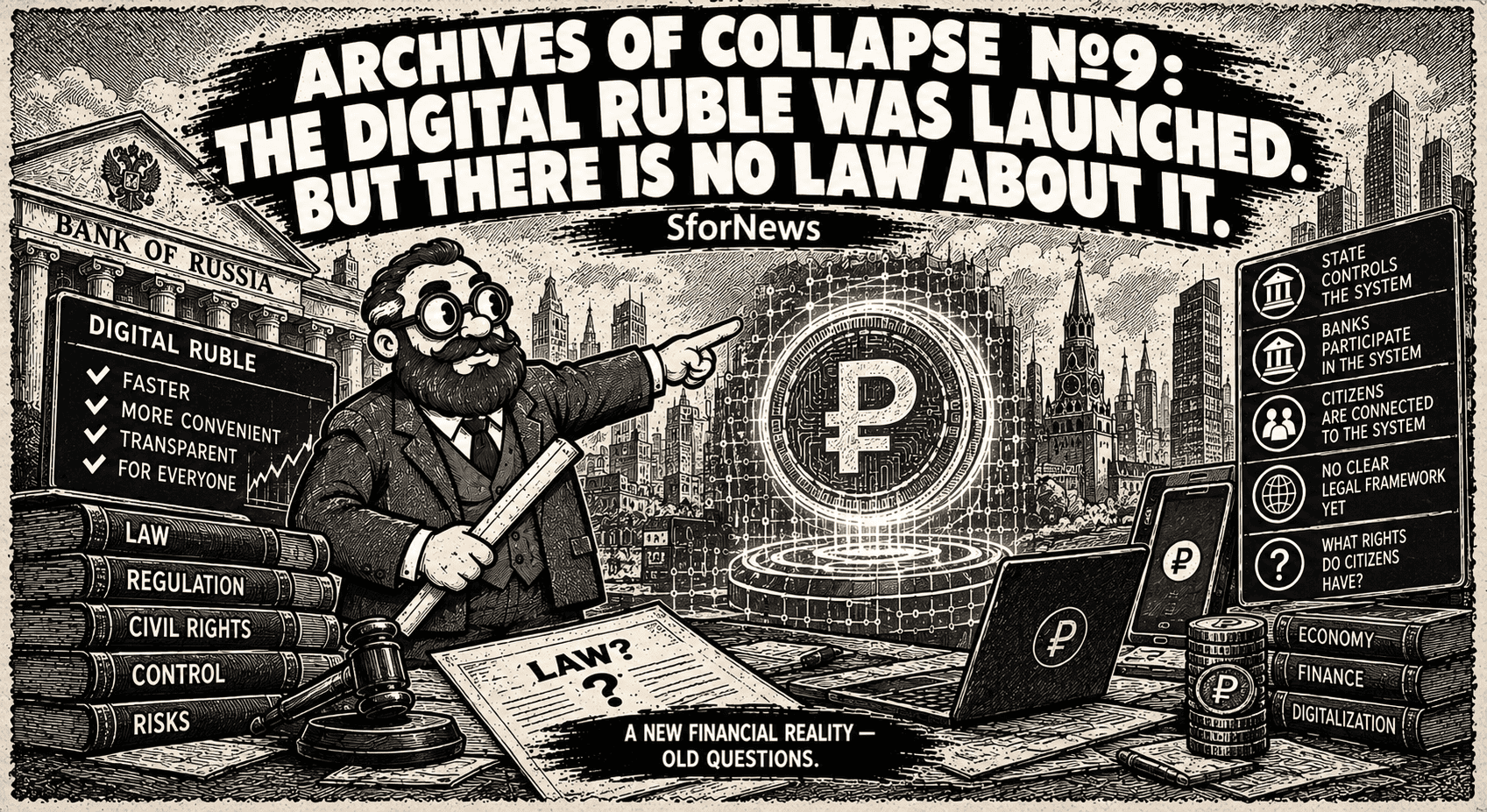
And while the US is transforming its stablecoins into global means of payment through legislation and technological innovation, Russia remains conspicuously absent from this narrative. Yet, the country possesses both the potential and the motivation to develop an alternative strategy. What if Russia were to create its own stablecoins – regulated, scalable, and focused on international trade beyond the dollar zone?
Since 2022, Russia has accelerated the development of an alternative financial ecosystem. The introduction of the national payment system Mir, the development of the SPFS system as an alternative to SWIFT, and the accelerated launch of the digital ruble all point in the same direction: less dependence on the Western system.
But while China is experimenting with e-CNY and the US with regulated stablecoins through private companies, Russia remains stuck in a purely state-driven model. The digital ruble is entirely controlled by the central bank, with little room for private sector innovation. Access to foreign stablecoins like USDT or USDC is currently being hampered, preventing any real alternative to digital dollar transactions.
The missed potential in Russia
However, Russia has the capacity to implement its own stablecoin strategy. Major institutions like Sberbank, VTB, and Gazprombank have experience with blockchain experiments and tokenization. Sberbank even launched its own blockchain and is working on tokenized real estate and digital bonds.
What is missing is a ruble-backed stablecoin that is regulated within Russia, issued transparently and reliably by a major financial actor, can be used in international payments, and is integrated into e-commerce platforms, banking apps, and B2B solutions.
Who in Russia could do it?
Rather than clinging entirely to a state-controlled digital ruble, Russia could adopt a hybrid model where private companies like Yandex, Tinkoff, Ozon, or Alfa Bank are also allowed to issue their own stablecoins under supervision. Such a structure is similar to what’s happening in the US under the Genius Act.
A Russian stablecoin, pegged to the ruble or to a basket of assets such as gold and yuan, could play a key role in alternative trade routes such as the International North-South Transport Corridor, or in bilateral trade with countries seeking to reduce their reliance on the dollar.
Obstacles to Russian innovation
Russia has a growing number of partners who are themselves seeking alternative payment systems: India with oil payments via dirham or yuan, Iranians trading outside SWIFT, and African countries seeking digital solutions for commodity payments.
A ruble-backed stablecoin, usable via smartphones and blockchain technology, would offer a concrete alternative to the US model in this context, without the constraints of pure state control as with the digital ruble.
Companies like Sberbank, Tinkoff, Ozon, and Rosneft possess the technological and commercial clout to realize such a project. Yet, it remains elusive. Political centralization, fear of capital flight, and an unclear legal framework hinder any innovation.
Yet, there’s a growing awareness that public-private partnerships are essential. Only with flexible solutions that can be deployed domestically and internationally can Russia gain a strategic advantage in the emerging world of tokenized payments.
The question isn’t whether Russia needs stablecoins, but when it will be willing to relinquish some control. Because anyone who wants to facilitate digital commerce must be willing to invest in trust, scalability, and interoperability.
ⓒ Antonio Georgopalis


Bitcoin
$62,881.23

Ethereum
$1,672.04

Litecoin
$42.71

Dash
$37.08

Bitcoin Cash
$209.43