Total Blockade: Chain Reaction of Chaos from Iran to FATF | SforTrade & The Trends Analytics
Total Blockade: The Chain Reaction of Chaos — From Iran to the FATF
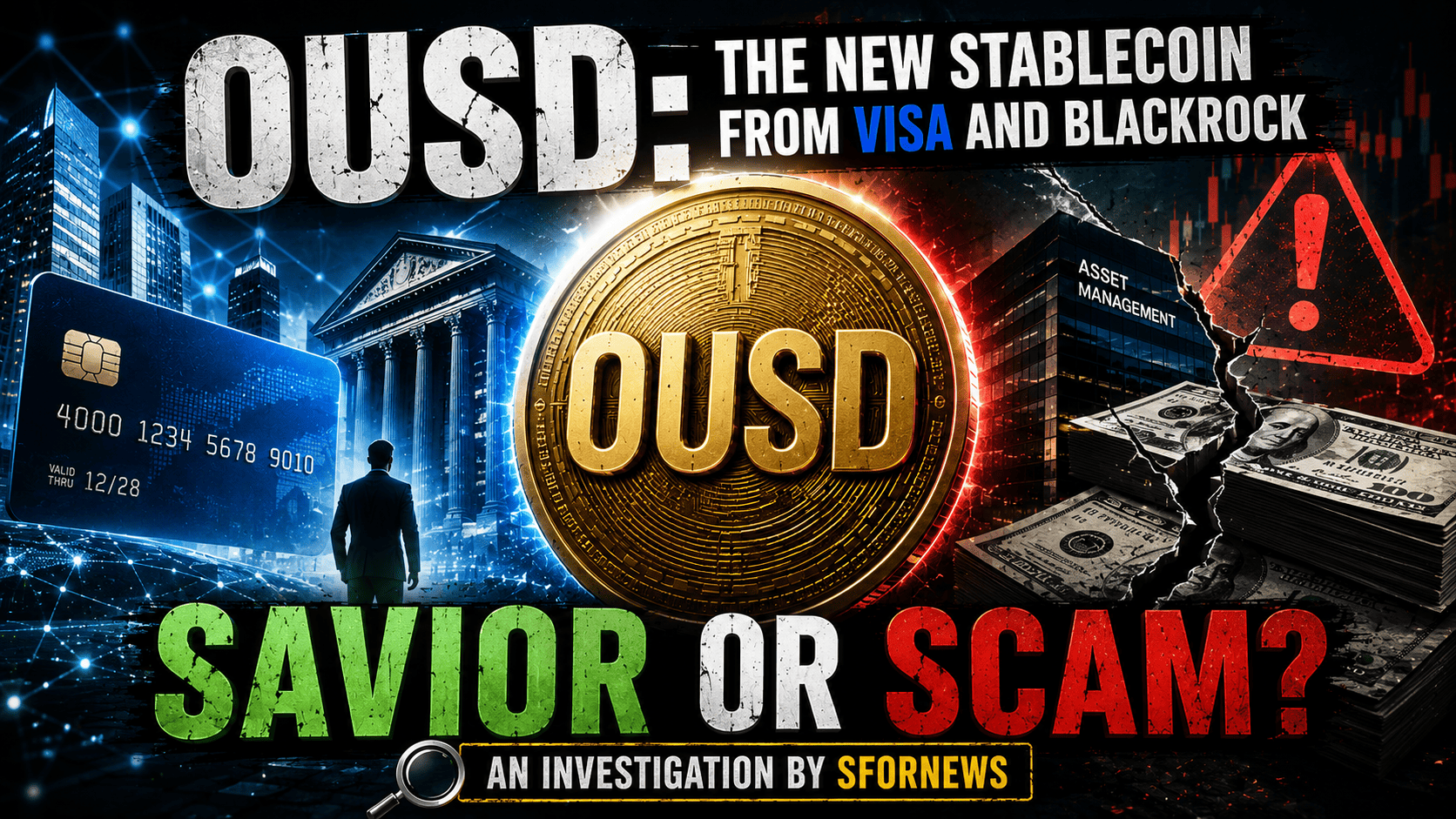
March 2026. The world is witnessing not just a series of crises, but a classic chain reaction. The Iranian torch has sent energy prices soaring. Expensive oil has hit European industry and put pressure on funds like BlackRock. The liquidity crisis in “safe havens” has forced investors to seek refuge in stablecoins. And the FATF has just snapped the trap shut, declaring stablecoins the main risk and demanding the ability to block them.
This is not a conspiracy theory. It’s mathematics: when one circuit of the system fails, the load is instantly redistributed to others, and they begin to fail one after another.
Cui prodest? Who benefits from this chain reaction? Let’s trace the logic of events step by step.
Part 1. The First Domino: Iran and the Energy Strike
Operation “Roaring Lion” has transitioned into a phase of smoldering conflict, but its consequences for the global economy are only just beginning to fully manifest.
The Event: Escalation in the Persian Gulf, strikes on infrastructure, threat to the Strait of Hormuz.
Market Reaction:
-
Brent oil — a leap to $115 per barrel. Goldman Sachs analysts are modeling a $100 scenario.
-
Qatar — the world’s LNG king — halts production at key facilities. Gas prices in Europe make a journey in a matter of days that would have taken six months in calm times.
-
Insurance premiums for tankers transiting the Strait of Hormuz skyrocket. Logistics collapse.
Who Took the Hit:
| Participant | Effect |
|---|---|
| Europe | The main loser. No cheap domestic energy resources. “Green energy” doesn’t help in the moment. Industry takes another hit. |
| USA | Short-term gain (expensive LNG for Europe), but long-term risk of weakening its main ally. |
| Global South (China, India) | Winners, receiving a discount on Russian resources. |
But the main thing — this strike created critical pressure on the next element of the system.
Part 2. The Second Domino: BlackRock — When the “Safe Haven” Bursts
Expensive energy and geopolitical uncertainty are classic triggers for capital flight to “safe havens.” Investors went to withdraw money from risky assets to switch into supposedly reliable instruments. And here, the system failed.
The Event: BlackRock — the world’s largest asset manager — restricted withdrawals from its flagship $26 billion private credit fund.
The Mechanics: Investors requested $1.2 billion (9.3% of capital) but received only $620 million. The HPS Corporate Lending Fund faced a classic liquidity mismatch risk: its assets are illiquid loans that cannot be sold quickly to return money to everyone who wants it.
The Chain Reaction:
| Company / Sector | Reaction |
|---|---|
| BlackRock | Shares fell by 7.2% — worst day since 2024. |
| KKR, Carlyle, Apollo, Ares | Declined by 5–6%. The entire $2 trillion private credit sector was shaken. |
| Blackstone | A $82 billion fund raised its redemption limit from 5% to 7% and injected $400 million of its own funds. |
| Blue Owl | Effectively stopped fulfilling redemption requests, replacing them with debt obligations. |
Conclusion: If BlackRock — a symbol of global stability — tells investors “you can’t have your money back,” this is a signal not just of a liquidity crisis, but a crisis of confidence in the entire traditional financial system.
Frightened capital rushed to find a new haven. This time — into the digital realm.
Part 3. The Third Domino: Stablecoins as a False Refuge
When banks and funds collapse, investors instinctively seek assets beyond the reach of troubled institutions. Stablecoins — USDT, USDC — seemed like an ideal solution: pegged to the dollar, operating on the blockchain, seemingly independent of the banking system.
The Event: A massive influx of capital into stablecoins. Market capitalization exceeds critical levels, and P2P transaction volumes break records.
The Trap Mechanism:
-
Stablecoins are not independent. They are backed by the very same US Treasury bonds that are already under pressure due to the liquidity crisis.
-
Their issuers (Tether, Circle) are based in the US or are subject to US regulators.
-
The same underlying asset operates in two parallel worlds, creating a multiplier effect and accumulating hidden risk.
And then, the global regulator steps in.
Part 4. The Fourth Domino: The FATF Snaps the Trap Shut
On March 3, 2026, the FATF publishes its long-awaited report “On Stablecoins and Unhosted Wallets (P2P).”
Key Findings of the Report:
-
Statistics: According to Chainalysis, in 2025, the volume of illegal crypto transactions reached $154 billion, of which 84% were in stablecoins.
-
Main Vulnerability: P2P transactions via unhosted wallets (where the user holds the keys themselves) allow complete circumvention of regulated intermediaries (exchanges, banks), creating a “blind spot” for AML monitoring.
-
Direct Mention: The report states that hacker groups from North Korea and structures linked to Iran are actively using stablecoins for money laundering and sanctions evasion.
-
Key Requirement: The FATF recommends that all jurisdictions require stablecoin issuers to have the technical capability to freeze, burn, or block assets associated with suspicious addresses, and to embed allow-list and deny-list functions into smart contracts.
Why is this a blow right now?
Consider the chain we just went through:
-
An investor, frightened by the BlackRock crisis, withdraws money into USDT.
-
He sends the USDT via a P2P wallet to avoid exposing his data on an exchange.
-
The FATF now declares that all P2P transactions with stablecoins are a high-risk zone.
-
The USDT issuer (Tether) receives a regulatory demand to implement blocking mechanisms.
-
The investor’s wallet, being “unhosted” and “suspicious” (by virtue of being used for sanctions evasion), ends up on a blacklist.
-
Assets are frozen. The “safe haven” turned out to be a trap.
Part 5. The Fifth Domino: The FATF and Russia — Status as of Today
Now, the most important question: where does Russia fit into this entire chain?
Official Status (March 2026):
| Status | Description |
|---|---|
| FATF Membership | Suspended since February 2023. Russia does not participate in votes but formally remains in the organization and is obliged to comply with its technical standards. |
| “Black List” (High-Risk) | Iran, Myanmar, North Korea. Russia is not on it. |
| “Grey List” (Increased Monitoring) | 24 countries, including Bulgaria, Turkey, Nigeria, South Africa. Russia is also not on it. |
The Paradox of the Situation:
To place Russia on the “grey” or “black” list, legal grounds are needed — non-compliance with recommendations, deficiencies in the national AML/CFT system. But paradoxically, Russia fulfills these recommendations quite well (the last mutual evaluation in 2019 gave high marks).
However, the new FATF report on stablecoins creates a workaround for applying pressure.
How It Works:
| Step | Mechanism |
|---|---|
| 1 | The FATF does not directly list Russia (this requires consensus). |
| 2 | But the FATF introduces new global standards concerning stablecoins. |
| 3 | These standards obligate private issuers (Tether, Circle) to block assets associated with “suspicious jurisdictions.” |
| 4 | Russian users and companies actively using USDT/USDC for sanctions evasion automatically fall into the “suspicious” category. |
| 5 | Their assets are blocked not by a FATF decision, but on the formal basis of private companies’ compliance policies. |
That is, the FATF has created a mechanism where there’s no need to put Russia on a blacklist to isolate it from the global financial system via the stablecoin infrastructure.
Part 6. The Vicious Circle: Why All Elements Are Connected
Now let’s look at the entire chain as a whole:
| Stage | Event | Consequence for the Next Stage |
|---|---|---|
| 1 | Iran conflict → rise in oil and gas prices | Blow to European industry and increased geopolitical risks |
| 2 | Increased risks → capital flight from risky assets | Investors withdraw money from funds like BlackRock |
| 3 | BlackRock can’t return money → crisis of confidence in traditional institutions | Capital seeks an alternative in stablecoins |
| 4 | Massive inflow into stablecoins → rise in P2P transactions bypassing exchanges | FATF identifies a “blind spot” for monitoring |
| 5 | FATF publishes report demanding issuers block assets | Issuers (Tether, Circle) gain a pressure tool |
| 6 | Russian stablecoin users face blocks | The chain is closed — the blow has reached its target |
*Cui prodest? Who benefits from this chain? *
| Perspective | Who Benefits |
|---|---|
| Short-term | USA — gains control over global money flows through stablecoin regulation. European regulators — gain a tool to pressure “unruly” players without needing political decisions. |
| Long-term | Losers are all who rely on assets controlled by a single center. Winners are those building decentralized systems resistant to external pressure. |
Part 7. What Should an Investor Do in This Chain?
All the described events hit the same point. They make vulnerable any asset that:
-
depends on the goodwill of a specific state (dollar, euro);
-
is backed by the promise of a private company (USDT, USDC);
-
requires passage through controlled gateways (banks, exchanges).
Protection Principles:
| Principle | Description |
|---|---|
| Geographic diversification no longer works | If a country is an FATF member, it will block assets regardless of whether it’s Switzerland or Singapore. “Friendly” jurisdictions not subject to FATF dictates become the only option. |
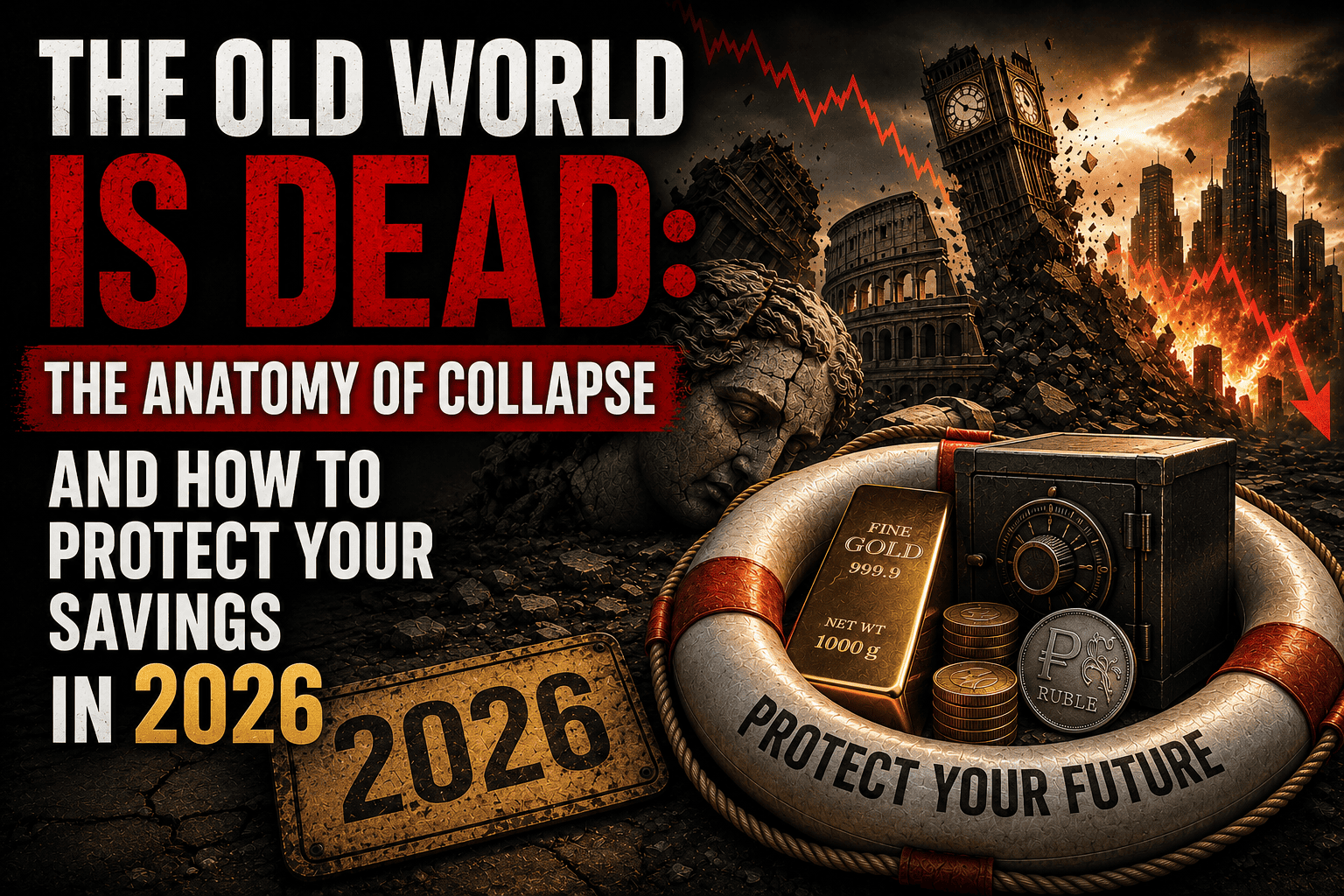
| Physical assets are back in vogue | Gold, silver, platinum — things you can touch that don’t require a bank account to own. 2025 saw record highs for gold. |
| Be cautious with stablecoins | USDT and USDC are now in the crosshairs. Any transaction deemed “suspicious” could lead to a block. |
| Business as protection | If you have a business generating real value (manufacturing, IT, intellectual property), you are less vulnerable than a rentier living off bond interest. |
| Digital assets with real backing | The market is moving towards tokenization of real assets — gold, real estate, intellectual property. The main requirement: transparency of backing and independence from a single control center. |
Conclusion: The Mathematics of Chain Reactions
March 2026 became a perfect illustration of how the mathematics of chaos works. One element in the chain (Iran) put pressure on the second (funds like BlackRock). The crisis of confidence pushed capital into the third element (stablecoins). And the FATF, having prepared the regulatory framework in advance, closed the loop, turning stablecoins from a refuge into a trap.
In this chain, Russia occupies a unique position. Formally not on any blacklists, it faces total isolation through new global standards that target any operations connected with “suspicious” jurisdictions.
Historical Lesson: Every crisis of the last 12 years — from the 2014 sanctions to the 2022 energy shock and the 2024 financial blockade — forces the search for new paths. Sanctions gave rise to SPFS and Mir cards. The energy embargo redirected flows East. The blocking of stablecoins will force a search for assets that cannot be frozen.
The time for half-measures is over. Either you understand the mathematics of chain reactions, or the chain reaction recalculates your portfolio.
Options for Action (At a Glance)
| For Whom | Action |
|---|---|
| Conservative Investor | Lock in profits in Western indices. Increase the share of physical gold in Russian banks or neutral jurisdictions. |
| Risk-Seeking Trader | Trade energy volatility. Be cautious with stablecoins — regulatory risk outweighs market risk. |
| Investor in the Russian Federation | Focus on exporters and companies backed by domestic demand. The domestic debt market will benefit from expensive oil. |
| Capital Owner | Review the structure of reserves in favor of assets not controlled by unfriendly jurisdictions. |
Sources:
-
FATF. Targeted Report on Stablecoins and Unhosted Wallets – Peer-to-Peer Transactions. March 2026.
-
Chainalysis. 2025 Crypto Crime Report. Data cited in FATF report.
-
FATF Public Statement. October 2024 Plenary Outcomes.
-
FATF Statement on the Russian Federation. February 2023.
-
Tatyana Burmagina. Space Volatility 2026 (February 2026).
-
Tatyana Burmagina. Crypto Risks, the Unbacked Dollar, and the Collapse of the Old World Order (September 2025).
-
Exchange data, analytical reports from Reuters, CNBC, TASS.
#SpaceVolatility #Iran #FATF #BlackRock #Stablecoins #ChainReaction #Sanctions #Investing #TheTrends #SFORTADE #SFORNEWS


Bitcoin
$62,881.23

Ethereum
$1,672.04

Litecoin
$42.71

Dash
$37.08

Bitcoin Cash
$209.43