Memorandum. The New Energy-Digital System — From Fiat to People’s Bitcoin — SforNews Analytics
MEMORANDUM: ARCHITECTURE OF THE NEW ENERGY-DIGITAL SYSTEM
DISCLAIMER
This document is a conceptual project prepared on the basis of open data, public statements, and analytical materials from independent experts. The memorandum is not a legal document, investment recommendation, or call to action. All conclusions are probabilistic and analytical in nature.
The work is based, among other things, on observations and conclusions of independent analysts who record current systemic imbalances:
Quotations from these experts are used to illustrate the gap between the “map” (official forecasts, models, laws) and the “territory” (real processes occurring in the economy and society). The editorial board assumes no responsibility for any financial or legal decisions made based on the content read.
MEMORANDUM TABLE OF CONTENTS (DRAFT)
Part 1. Diagnosis: Why the Old System Is Dead
1.1. 50 Years of Fiat Deception: Facts
1.2. The Map vs. Territory Gap: Facts
1.3. Energy as the Only Remaining Resource: Facts
1.4. The Global Energy Gap: Facts
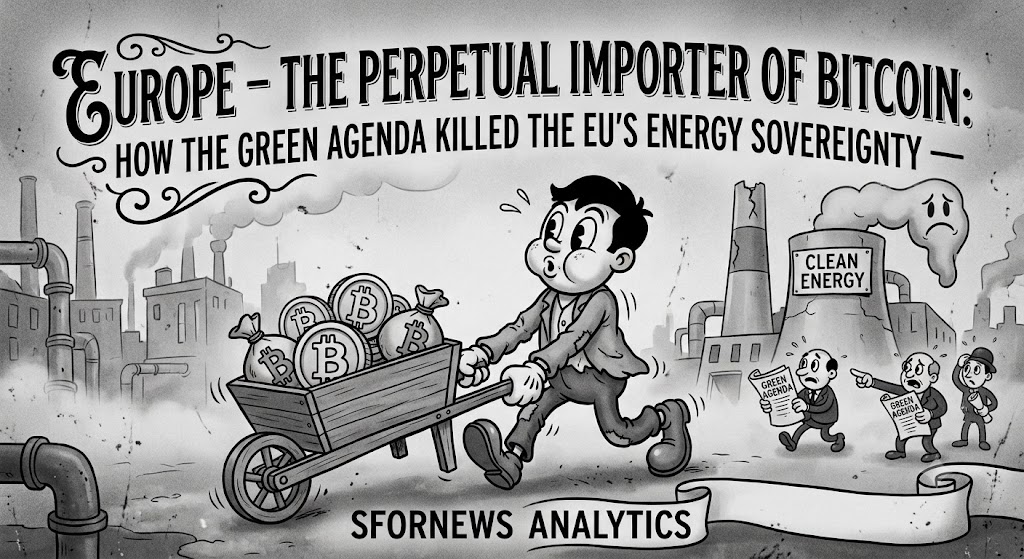
1.5. Europe — The Eternal Importer of Bitcoin
1.6. How Central Banks Operate in Different Countries: Facts and Strategies
1.7. Summary Table: What Central Banks Are Doing Across Countries
1.8. Global Diagnosis: Old Models Do Not Work
1.9. Russia: Unique Resource and Unique Mistake
1.10. The Central Bank of the Russian Federation — A Liquidation Commission: Facts
1.11. The People — Not an Object, but a Subject
1.12. The Voice of the Territory: What Independent Experts Say
Part 2. Architectural Blueprint: How We Build the New System
2.1. Rejecting the Illusion: Why the Current Law Is a Trap
2.2. Principle 1: Energy as Public Domain
2.3. Principle 2: Bitcoin as an Energy Derivative
2.4. Principle 3: The People’s Energy Certificate (PEC)
2.5. Decentralization as Protection: Yan’s Lesson
2.6. What We Do Not Do: Why We Do Not Repeat the Mistakes of the Current Law
2.7. Roadmap: 0–18 Months
2.8. Architectural Conclusion for Part 2
Part 3. Geopolitical Context: Russia as an Energy Sovereign
3.1. Europe — The Eternal Importer of Bitcoin (Expanded Analysis)
3.2. China — A Competitor Building Its Own System
3.3. The USA — Losing Control over Global Liquidity
3.4. BRICS+ and Gold: An Alternative Circuit
3.5. Russia Between Two Worlds: Old Pipelines and New Digital
Part 4. Conclusion: Who Will Be the Architect?
4.1. The Question Is Not Whether the Transition Will Occur
4.2. The Question Is Who Will Lead It
4.3. The Architect Is the One Who Sees the Entire System
PART 1. DIAGNOSIS: WHY THE OLD SYSTEM IS DEAD
1.1. 50 Years of Fiat Deception: Facts
Since 1971, when Nixon severed the dollar’s link to gold, the world has lived in a system where money is backed by nothing but a promise. Endless issuance of dollars, rubles, and euros have created the illusion of growth, behind which lie inflation, erosion of savings, and price tags with ever more zeros.
|
Year |
U.S. National Debt ($ trillion) |
Average Inflation(%) |
Oil Price ($/barrel) |
|
1980 |
0.9 |
13.5 |
30 |
|
1990 |
3.2 |
5.4 |
20 |
|
2000 |
5.6 |
3.4 |
28 |
|
2010 |
13.5 |
1.6 |
80 |
|
2020 |
27.7 |
1.2 |
40 |
|
2026 (July) |
39.2 |
9.8 |
100 |
Conclusion: the dollar is printed endlessly, inflation erodes savings, and the prices of goods rise with each new zero. This is not an economy — it is a mechanism for redistributing value from those who create to those who print.
1.2. The Map vs. Territory Gap: Facts
All indices, ratings, and forecasts are the map. The real economy, energy, and resources are the territory. Today, the map no longer reflects the territory.
|
Indicator |
Map (forecast/promise) |
Territory (reality) |
|
Brent oil |
$60–70 (IEA forecast for 2026) |
$100+ (July 2026) |
|
Russian inflation |
4–6% (CBR forecast) |
9–12% (actual) |
|
CBR key rate |
“will be cut to 12%” |
cut by 0.25% (ritual) |
|
Russian GDP growth |
1.3% (forecast) |
-0.3% (actual, Q1 2026) |
Conclusion: models do not work, forecasts fail, and elites lose legitimacy. The map no longer reflects the territory.
1.3. Energy as the Only Remaining Resource: Facts
Russia ranks 2nd in the world in Bitcoin hash rate share (13–17%), second only to the United States (about 30%). The cost of mining 1 BTC in Russia is the lowest in the world.
|
Country |
Hashrate Share (%) |
Electricity Cost ($/kWh) |
Cost of 1 BTC ($) |
|
United States |
~30 |
0.05–0.08 |
55,000–75,000 |
|
Russia |
13–17 |
0.02–0.04 |
35,000–45,000 |
|
China |
~10–15 |
0.03–0.05 |
40,000–55,000 |
|
Kazakhstan |
~5–8 |
0.04–0.06 |
45,000–60,000 |
|
Europe |
<1 |
0.08–0.12 |
75,000–110,000 |
|
Middle East |
~2–3 |
0.04–0.05 |
50,000–60,000 |
Conclusion: Russia has everything a new system needs: cheap energy, internet, and a cold climate. But this resource currently serves not the people, but those who control the power capacities.
1.4. The Global Energy Gap: Facts
Different countries have different capabilities and strategies in the energy transition.
|
Country / Bloc |
Energy Surplus |
Focus on Mining |
Problems |
|
Russia |
Huge (Siberia, Far East, hydro, nuclear) |
Recognized, but notsystemic |
Sanctions, lack of people’s control |
|
United States |
Yes (renewables, gas) |
Yes, institutional |
High costs, regulatoryrisks |
|
China |
Huge (coal, hydro) |
Unstable (bans andpermits) |
Political instability |
|
Europe |
No (shut down nuclear) |
Economicallyunfeasible |
Eternal energy importer |
|
Kazakhstan |
Yes (coal) |
Growing |
Overloaded grids |
|
Middle East |
Huge (oil, gas) |
Growing (UAE, Saudi) |
Climate (cooling) |
Conclusion: Europe, having destroyed its nuclear power plants under the “green agenda,” will become an eternal importer of energy. But it will import not gas or oil (which cannot be physically delivered), but Bitcoin — as the digital equivalent of energy. This makes Bitcoin not a “speculative asset” but a global energy derivative.
1.5. Europe — The Eternal Importer of Bitcoin
Europe shut down its nuclear plants. Europe rejected Russian gas. Europe replaces them with expensive U.S. LNG and “renewable sources” that cannot provide baseload power.
The result:
Europe will buy Bitcoin because it is the only way to gain access to the “energy” it cannot produce physically.
1.6. How Central Banks Operate in Different Countries: Facts and Strategies
United States (Federal Reserve)
Europe (European Central Bank)
China (People’s Bank of China)
Japan (Bank of Japan)
United Kingdom (Bank of England)
Switzerland (Swiss National Bank)
Turkey (Central Bank of Turkey)
Kazakhstan (National Bank of Kazakhstan)
1.7. Summary Table: What Central Banks Are Doing Across Countries
|
Country |
Tools |
New Element |
Risk |
Rate, % (2026) |
|
USA (Fed) |
Rate, QE |
Digital dollar(stalled) |
Confidence inTreasuries |
~5.5 |
|
Europe (ECB) |
Rate, TPI |
Digital euro(pilot) |
Stagflation, energycrisis |
~4.0 |
|
China |
Rate, reserves |
Digital yuan (e-CNY) |
Debt, demographics |
~3.5 |
|
Japan |
YCC, rate |
Exit from YCC |
Debt 250% of GDP |
0.0 |
|
UK |
Rate |
Digital pound(debated) |
Stagflation |
~4.5 |
|
Switzerland |
Rate, interventions |
CBDC (tests) |
Franc strength |
~0.5 |
|
Turkey |
Rate, controls |
Digital lira(debated) |
Hyperinflation |
~45 |
|
Kazakhstan |
Rate, interventions |
Digital tenge, mining |
Grid overload |
~14 |
|
Russia (CBR) |
Rate, interventions |
Digital ruble(stalled) |
Stagflation, loss ofcontrol |
~18 |
1.8. Global Diagnosis: Old Models Do Not Work
|
Country |
Old Model |
Why It Fails |
New Path |
|
USA |
Dollar + Treasuries |
Confidence falls, $39 trlndebt |
Digital dollar? (unclear) |
|
Europe |
Euro + gas |
Shut down nukes, rejected gas |
Digital euro (after2029) |
|
China |
Yuan + exports |
Debt, demographics |
Digital yuan + gold |
|
Japan |
Yen + exports |
Debt 250% GDP, deflation |
Exit from YCC? (risk) |
|
Turkey |
Lira + controls |
Hyperinflation, lost trust |
Flight to dollar/crypto |
|
Kazakhstan |
Tenge + commodities |
Grid overload |
Digital tenge + mining |
|
Russia |
Ruble + oil/gas |
Pipelines closed, sanctions |
??? (mining + energy) |
1.9. Russia: Unique Resource and Unique Mistake
|
Indicator |
Russia |
World |
|
BTC hash rate share |
13–17% (2nd place) |
100% |
|
Cost of 1 BTC |
$35,000–45,000 (lowest) |
$40,000–110,000 |
|
Energy surplus |
Huge (Siberia, Far East, hydro, nuclear) |
Not all have it |
|
Control over energy |
Oligarchs and state corporations |
Varies |
|
Utilization strategy |
None |
Varies |
Conclusion: Russia has everything to become an energy sovereign and a leader of the new system. But for now, energy and Bitcoin serve not the people, but those who control the capacities.
1.10. The Central Bank of the Russian Federation — A Liquidation Commission: Facts
The CBR:
Conclusion: The CBR is not a regulator for the new system. It is a liquidation commission that is winding down old circuits. Its tools do not work. Its forecasts fail. It will exist until the old system is finally closed.
1.11. The People — Not an Object, but a Subject
Citizens (of the territories of the former USSR) are not objects of governance. They are the beneficiaries of energy.
If they receive a share of energy monetization:
If not — they remain objects of control until the system collapses completely.
1.12. The Voice of the Territory: What Independent Experts Say
Analysts unaffiliated with state institutions record the same symptoms.
Yan Krivonosov, cryptocurrency market expert (channel “Crypto Yan”):
“The U.S. crypto sector provides 34,000 jobs and contributes $55 billion a year to the U.S. economy. The Russian crypto sector will provide prison occupancy and billions in shadow turnover… We regulate other people’s instruments with our own laws. Stablecoins, protocols, exchanges — all of this is issued by Western companies and is subject to the US and the EU. It’s like regulating an American bank with our laws and demanding it operate by our rules. That’s not how it works. They will just snap their fingers — and block everything… Entrepreneurs have already figured it out. They already pay. The schemes work, exchanges work, wallets work. People solve their own problems. They don’t need permission — they’ve already given it to themselves.”
Vladimir Levchenko, independent financial markets analyst (channel “Vladimir Levchenko”, website V-levchenko.ru):
“Our financial market has shown not only the longest period of decline in its history, but also record hysteria throughout its entire existence. The cherry on top is that this entire panic and collapse was orchestrated solely through manipulation of the weak minds of market participants under false pretenses… The West sincerely believes that they have the right to strike us, and that we can only expose different parts of our bodies to their blows. Lately, though, we have been clearly showing them — a strike on one of our warehouses results in the destruction of several of their warehouses; a strike on our ships results in the destruction of several of their ships and the disabling of all ports… Oil rose 50% in 3 weeks… shares of Russian companies fell by 70–90%. OVC — minus 99%. Segezha — minus 96.5%. Mechel — minus 96.9%. Samolet — minus 96.3%. VTB — minus 93%. I checked specifically — this has never happened in any country in the world. Never. Not even in 1998 or 2008.”
Both experts record the same thing: the old system is cracking, its tools do not work, the map no longer reflects the territory. But neither offers an architectural solution. We do.
Conclusion to Part 1:
The old system is dead. It has not collapsed — it has simply stopped working. This is confirmedby facts:
The new system can only be built around energy. And the only tool that converts energy into global liquidity is Bitcoin.
The question is not whether the transition will happen. The question is who will be its architect.
© 2026, Editorial Board of the Journals “Kafedra” and SforNews.
When citing, a link to the original source is mandatory.


Bitcoin
$62,881.23

Ethereum
$1,672.04

Litecoin
$42.71

Dash
$37.08

Bitcoin Cash
$209.43