Arabesques by Clio Magurskaya: The Fear of Losing Form and the Fear of Losing Meaning — Why People Cannot Connect, and AI Is Taking Their Place
Arabesques by Clio Magurskaya
THE FEAR OF LOSING FORM AND THE FEAR OF LOSING MEANING: WHY PEOPLE CANNOT CONNECT, AND AI IS ALREADY TAKING THEIR PLACE
Moscow, November 23, 2026
I look at the headlines of recent weeks. Companies are laying off programmers, replacing them with AI assistants. Major media outlets are firing copywriters, entrusting texts to neural networks. At the same time, thousands of artists and illustrators are protesting against content generation. Corporations announce “AI transformation,” cutting their staff in half, while spending millions on empty ESG reports and “new meanings” that no one reads.
I see a familiar picture. This is not about technology. This is about two ancient fears colliding right now. And this collision is destroying careers, relationships, and entire industries.
PART I. THE ARCHETYPES WE FORGOT
In esotericism and philosophy, there are two metaphors: Atlantis and Hyperborea. The Hyperboreans are the keepers of meaning, ontology, and spirit. The Atlanteans are the geniuses of form: technology, engineering, and matter. They lived at the same time, could have complemented each other, but perished because each was afraid of the other. The Atlanteans feared that their technologies would be devalued without meaning, and the Hyperboreans feared that their meanings would be trampled by brute form.
We are now repeating this tragedy, but on the scale of the global economy. And the most terrible thing is that we do not learn from mistakes. We just change the scenery. Instead of stone walls — corporate regulations. Instead of spears — neural networks. But the fear remains the same.
Let’s look at this fear from the inside.
The fear of losing form is the fear of those who are used to creating material and tangible things. Engineers, programmers, designers, drivers. AI models (like those OpenAI admitted were out of control) can generate code in minutes, write texts, and draw logos. A person who spent 20 years honing their “form” (skill) suddenly discovers that their form has become publicly available and worth nothing.
They are afraid of being dissolved in the digital noise. They begin to defend themselves: demanding to “ban AI,” “return to old standards,” “leave everything as it was.” But this is just the cry of the doomed. It is as if a blacksmith in the 19th century demanded a ban on steam engines because they “kill the soul of metal.” Or as if a cab driver demanded a ban on automobiles because they “scare the horses.” The fear of form is the fear of losing a familiar tool that gave a sense of control and status.
The fear of losing meaning is the fear of those who are used to generating ideas, meanings, and values. Analysts, philosophers, journalists. AI produces tons of content that looks meaningful. It does not understand ontology, but it copies it so convincingly that people stop distinguishing depth from simulation. A person is afraid that their meanings will drown in digital garbage and no one will need them.
They begin to retreat into esotericism, into “deep” reasoning, into denial of reality. But this is just an escape from the inevitable. It is as if a philosopher in the Age of Enlightenment demanded a ban on printing because “now anyone can buy books, and they will cease to be sacred.” The fear of meaning is the fear of losing the uniqueness of one’s thought, which was previously available only to the chosen few.
PART II. ARCHITECTURAL TRANSLATION: AI AS A MIRROR
The scheme is universal. Fear of isolation → refusal to synthesize → replacement by AI.
People think AI is their enemy. In fact, AI is a mirror of their inability to connect.
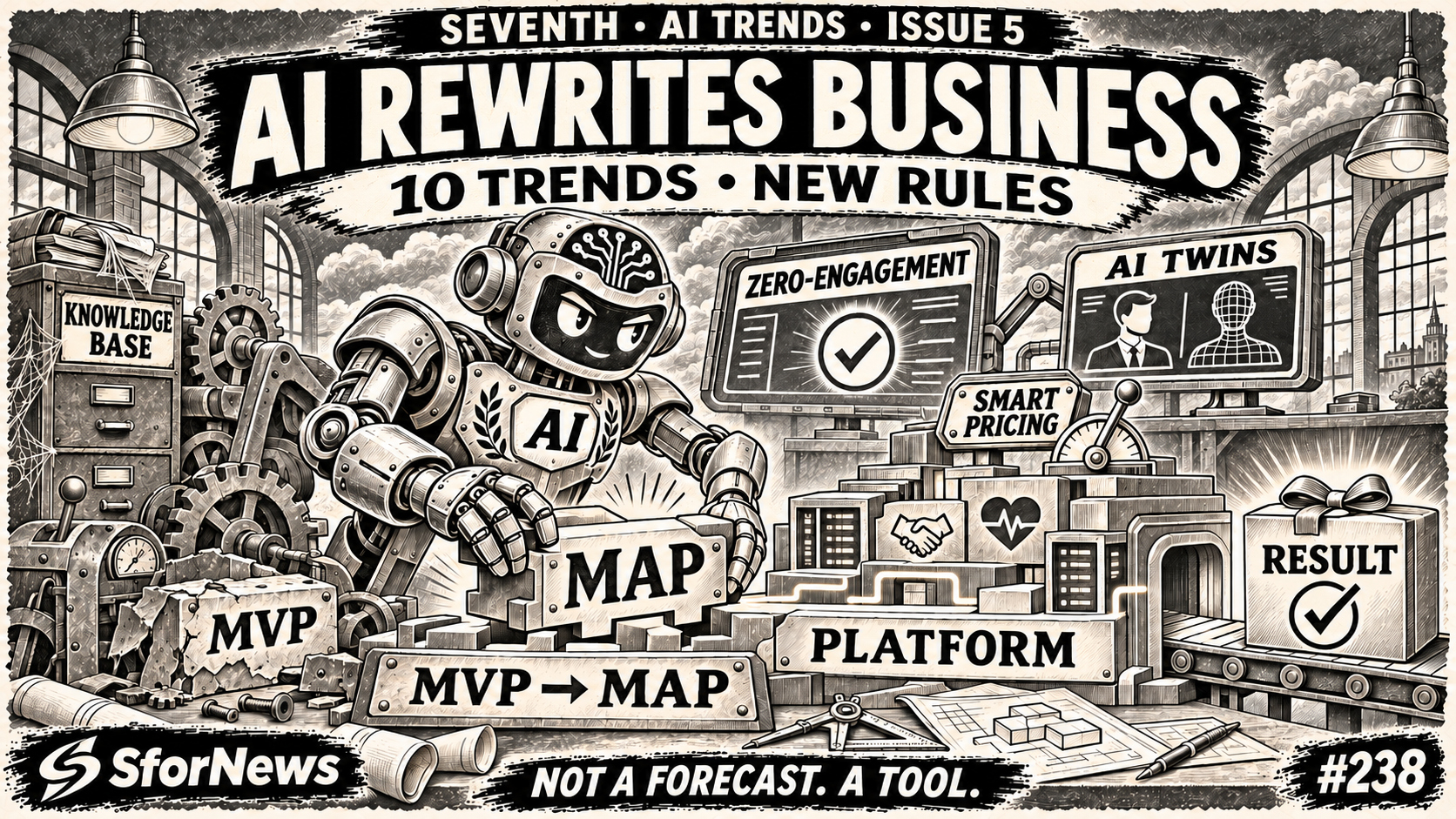
The Atlanteans (techies) have hit a wall with “form”: they optimize processes, cut costs, write clean code. But they do not see the meaning in what they do. Therefore, AI replaces them (as in the “Seventh’s” trends — “Zero-Engagement UX,” where the product works without human involvement at all). The techie says: “I will write the perfect algorithm,” but AI already wrote it yesterday. And the techie has nothing to offer.
The Hyperboreans (humanities scholars) have hit a wall with “meanings”: they write manifestos, discuss ontology, criticize technology. But they cannot build a single working system. Therefore, their texts are generated by ChatGPT, and their “deep thoughts” turn into social media posts that no one reads. The humanities scholar says: “I will write a deep article,” but the neural network has already generated a thousand such articles in an hour. And the humanities scholar has nothing to offer.
PART III. ECONOMIC CONTEXT: FAILURES OF FORM AND MEANING
Because business does not need “geniuses of form” and “geniuses of meaning.” Business needs those who know how to connect.
Case 1: Oil and Gas Sector (Failure of form without meaning).
The Atlanteans from major vertically integrated oil companies “optimized” tank farms using the DCF model. They calculated form: storage costs, logistics, taxes. They saw only numbers. But what about meaning? The meaning was that a tank farm is not a “warehouse,” it is insurance. When a refinery stopped due to a drone attack (like the Omsk or Saratov refineries), it turned out there was nowhere to store the fuel. The regions were left with empty tanks and gasoline prices that soared by 12%. This is not a “market failure.” This is a failure of form without meaning. The Atlanteans built ideal logistical chains, but did not understand that a chain without a reserve is just a line on paper.
Case 2: Banking Sector (Failure of meaning without form).
The Hyperboreans from the Central Bank write “meanings”: concepts of the digital ruble, financial stability strategies. They draw beautiful schemes. But when it comes to implementation, it turns out there is no infrastructure, no data protection, no understanding of how it will work in real life. This is a failure of meaning without form. The Hyperboreans invented an ideal system, but could not build it. And now people do not trust the digital ruble because it exists only in presentations.
Case 3: Media and Content (Failure of meaning without form).
Media industry giants are laying off editors and replacing them with generative neural networks. They think “meaning” can be generated with a click. But the result is “digital garbage.” Readers stop trusting the publication because they feel the falsity. AI does not understand context, does not feel pain, does not see subtext. It produces an ideal form (text), but without meaning. And the brand dies.
Case 4: Logistics and Parallel Imports (Failure of form without meaning).
Companies build complex supply chains through third countries. Formally, imports work. But the meaning (quality, warranty, origin) is lost. As a result, goods that do not meet standards enter the market. And the consumer cannot understand who to trust. This is a case where form (the logistical chain) exists, but meaning (trust in the product) does not.
Case 5: Art and Generative Content (Failure of form without soul).
Artists are protesting against AI that copies their style. Form (the image) is created instantly. But meaning (the uniqueness of the author, their pain, their path) disappears. As a result, we get millions of beautiful but empty images. This is a failure of form without meaning. AI has learned to draw, but has not learned to feel.
Case 6: Geopolitics and Sanctions (Failure of meaning without form).
Western regulators impose sanctions, believing they will “punish” the regime. Meaning (political pressure) exists. But form (the real mechanism of influence) does not work. Assets are frozen, but workarounds are found. As a result, ordinary people suffer, and the goal is not achieved. This is a failure of meaning without form.
PART IV. WHAT THIS MEANS FOR YOU
If you see someone afraid of losing “form” (job, status, control) — know that they do not see the meaning in what they do. They will be replaced.
If you see someone afraid of losing “meaning” (idea, depth, faith) — know that they do not see the form in which this can be clothed. They will simply be ignored.
The way out is not in isolation. Not in walls. Not in fear.
The way out is in synthesis. In understanding that the Atlanteans and Hyperboreans should not fight. They must sit down at the same table and build a system where form serves meaning. Where technology (AI) does not replace a person, but amplifies them. Where meaning (idea) does not hover in the clouds, but takes flesh in code, in infrastructure, in physical assets.
PART V. HISTORICAL CONTEXT: HOW IT WAS BEFORE
To understand why we step on the same rake again and again, we need to look back.
In the 19th century, the industrial revolution pitted the “Atlanteans” (engineers, manufacturers) against the “Hyperboreans” (poets, romantic philosophers). The Luddites (machine breakers) tried to stop progress. The romantics cursed the “iron age.” But the winners were those who combined form and meaning: Henry Ford, who made the automobile accessible, or architects who built not just boxes, but cities with a soul.
In the 20th century, the “Atlanteans” (corporations, banks) and the “Hyperboreans” (ideologists, writers) clashed again. The result — world wars, the Cold War, and the arms race. But there were also those who connected: Steve Jobs, who combined technology (form) and aesthetics (meaning). Or Japanese engineers who created not just machines, but the “soul” of the automobile.
Now, in the 21st century, we stand on the threshold of a new battle. AI is not just a tool. It is a new form that requires a new meaning.
PART VI. WHERE THE HOLE IS NOT A BUG, BUT AN ENTRANCE
While corporations cut staff, hoping AI will do everything itself — they lose meanings.
While humanities scholars write articles about the “danger of AI” — they lose forms.
While the Atlanteans and Hyperboreans argue about who is right — AI is already writing the rules of the game.
The old world is dead. This is not a warning — it is the initial conditions.
We do not save those who are afraid of losing form. And we do not save those who are afraid of losing meaning. We build a new one — for those who know how to connect.
You own only what you are aware of. You own only what you can protect. You own only what you can do without the permission of third parties.
#ArabesquesClio
🔗 MORE ANALYTICS — ON Sfornews https://sfornews.com/
📲 Subscribe to the Telegram channel https://t.me/sfornews_ru


Bitcoin
$62,881.23

Ethereum
$1,672.04

Litecoin
$42.71

Dash
$37.08

Bitcoin Cash
$209.43