Bitcoin and Gold: Is Bitcoin Really Becoming Digital Gold?
Bitcoin and Gold: Is Bitcoin Really Becoming Digital Gold?
By Antonio GEORGOPALIS
Expert Financial European Affairs
August 12th, 2026
Bitcoin is often called digital gold. The phrase is attractive because both assets are scarce, globally traded and independent of the monetary decisions of a single government. Yet the market picture in August 2026 makes the comparison harder to accept without qualification. Gold has continued to trade near historically exceptional levels, around $4,400 per troy ounce, while Bitcoin has been far more volatile and is hovering close to $64,000 after a difficult first half of the year. The contrast is not merely a change in price. It raises a more important question: is Bitcoin becoming a modern store of value, or is it behaving more like a high-risk macro asset whose price depends on liquidity and investor confidence?
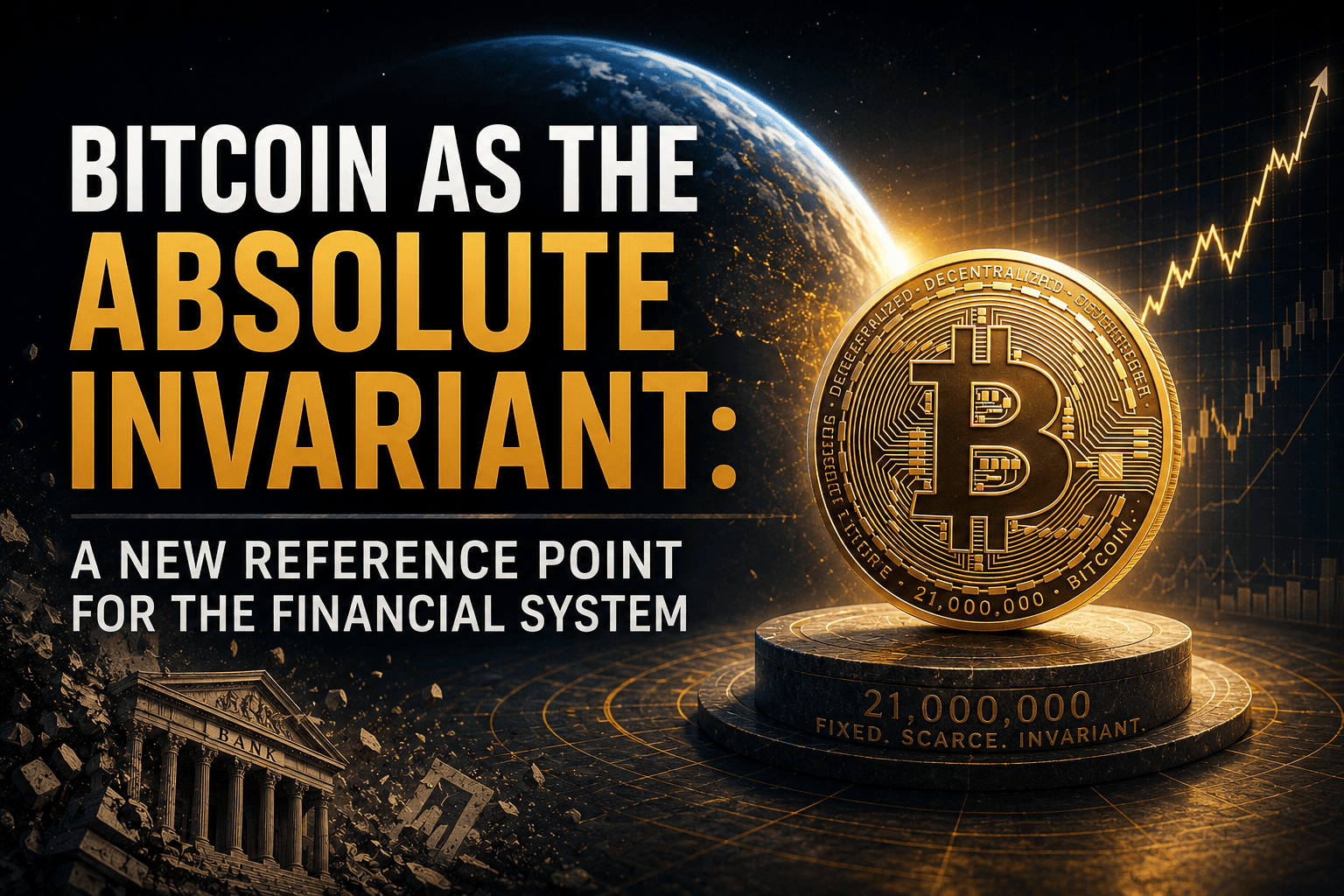
The evidence does not support a simple answer. Bitcoin has acquired characteristics that its early advocates imagined. It has a fixed maximum supply of 21 million coins, can be transferred across borders without a central issuer and is now available through regulated investment products. At the same time, it still has a short history compared with gold, a much higher volatility profile and no established role in central-bank reserves. Those differences matter most when markets become nervous.
Gold’s recent strength illustrates the point. Its price has been supported by a mixture of geopolitics, persistent concern about inflation and currency debasement, investment demand and purchases by central banks. These forces do not guarantee that gold will keep rising, but they show why investors still treat it as a long-established reserve asset. Gold’s role is reinforced by deep physical and financial markets, broad official-sector ownership and a history that survives individual business cycles.
Bitcoin has a different support structure. Its principal source of demand is not monetary authorities but investors, companies and institutions willing to accept large price swings in exchange for potential upside. That distinction does not make Bitcoin inferior; it makes it different. Scarcity alone is not the same as safe-haven status. A scarce asset can still trade like a risk asset if its marginal buyer is sensitive to leverage, funding costs and shifts in market mood.
The ETF Effect
The arrival of US spot Bitcoin exchange-traded funds changed the market’s plumbing. Investors who previously needed to manage wallets, private keys and exchange risk can now buy Bitcoin exposure in an ordinary brokerage account. BlackRock’s iShares Bitcoin Trust and competing funds have brought the asset into the same allocation discussions as equities, bonds and commodities. Farside Investors’ flow data show that US spot Bitcoin ETFs had accumulated more than $51 billion in net inflows by late July 2026, although that total masks sharp reversals in daily and monthly flows.
This is an important factual development, but the interpretation needs care. ETF inflows are not a vote of confidence from every institution, nor do they mechanically determine the Bitcoin price. They are one observable measure of demand in a market that also includes long-term holders, miners, derivatives traders and offshore exchanges. Still, the size and speed of fund flows can amplify the cycle. When investors add shares, authorised participants create new ETF shares and the fund acquires Bitcoin. When investors redeem them, the process can work in the opposite direction. The result is a closer connection between Bitcoin and the portfolio decisions of traditional finance.
That connection has made macroeconomic conditions more important, not less. The Federal Reserve kept its target range for the federal funds rate at 3.50% to 3.75% at its July 29 meeting, while acknowledging elevated uncertainty and inflation still above its long-run objective. Higher real yields, a stronger dollar or a reduction in available risk capital can make non-yielding and volatile assets less attractive. Easier financial conditions can have the reverse effect. Bitcoin therefore tends to respond not only to crypto-specific events but also to inflation releases, rate expectations and the broader appetite for risk.
Liquidity Is the Missing Link
Liquidity is the useful bridge between the Bitcoin story and the gold story. It is not simply the amount of cash in the system. It also reflects how easily investors can borrow, trade and take risk. A more accommodative environment can support both gold and Bitcoin, but it need not affect them in the same way. Gold can attract buyers seeking protection from uncertainty. Bitcoin often benefits most when investors are prepared to increase exposure to volatile assets. In a risk-off period, that difference can become decisive.
This explains why Bitcoin’s relationship with gold is neither fixed nor meaningless. Both can react to concern over government debt, the dollar or inflation. Both are also limited in supply in very different ways. But their market behaviour is not interchangeable. Gold is usually bought as a hedge precisely because its role has been tested repeatedly. Bitcoin remains a relatively young asset whose price can be moved sharply by ETF flows, futures positioning, regulatory headlines and changes in leverage. Calling it digital gold may describe an aspiration and some of its design features, but it does not yet describe its behaviour in every market regime.
Scenarios, Not Price Prophecies
This is also why Bitcoin downside levels should be treated as scenarios rather than forecasts. Technical analysts may identify previous trading ranges or on-chain cost bases as potential support zones, including areas below the current price. Such work can help investors understand where buying or selling interest could emerge. It cannot establish a reliable floor. A weaker global growth outlook, tighter liquidity or renewed ETF redemptions could test lower levels, while a sustained return of inflows and easier financial conditions could challenge that bearish case. The direction depends on conditions that no chart can fully predict.
The more durable conclusion is that Bitcoin is no longer only a cryptocurrency story. The ETF era has integrated it more deeply into the financial system, and that is a sign of institutional progress. Yet integration also exposes it more directly to the same forces that move other high-beta assets. In August 2026, gold is behaving more like a traditional safe haven, while Bitcoin is behaving more like a sensitive expression of macroeconomic optimism or caution.
Bitcoin may eventually earn a more stable role beside gold in diversified portfolios. Its scarcity, portability and growing institutional infrastructure give the argument real substance. But investors should not confuse a compelling narrative with proof. For now, the decisive question is not whether Bitcoin can be called digital gold. It is whether it can retain value when liquidity tightens and confidence disappears. Until that test is met more consistently, Bitcoin is best understood as a distinctive and increasingly institutionalised asset, but still a high-risk one.
Reporting note
Market figures were checked on August 12th, 2026. The discussion of US spot Bitcoin ETF flows is based on Farside Investors data, the structure and holdings of IBIT are described by BlackRock, and the policy-rate reference comes from the Federal Reserve’s July 29th statement. Gold pricing is an indicative spot-market reference and can move during the trading day. The conclusions in this article are interpretation, not investment advice.
Bitcoin & Gold | Antonio GEORGOPALIS | August 12th, 2026


Bitcoin
$62,881.23

Ethereum
$1,672.04

Litecoin
$42.71

Dash
$37.08

Bitcoin Cash
$209.43