Daily Summary, June 13-14
## 📰 Digest for June 13–14, 2026
### 🎯 Top Stories
– 📝 Iran vs US: Trump announced an agreement signed on June 14, Iran denies. Strait of Hormuz remains a flashpoint.
– 🛢 Oil: Brent crashes to $87.33 (-3.37%) – lowest since early March.
– ₿ Bitcoin: rebounds to $64,500 on hopes for peace; market optimism outpaces reality.
– 🚀 SpaceX: historic IPO, market cap $2.1 trillion (+19% on first day), Musk becomes world’s first trillionaire.
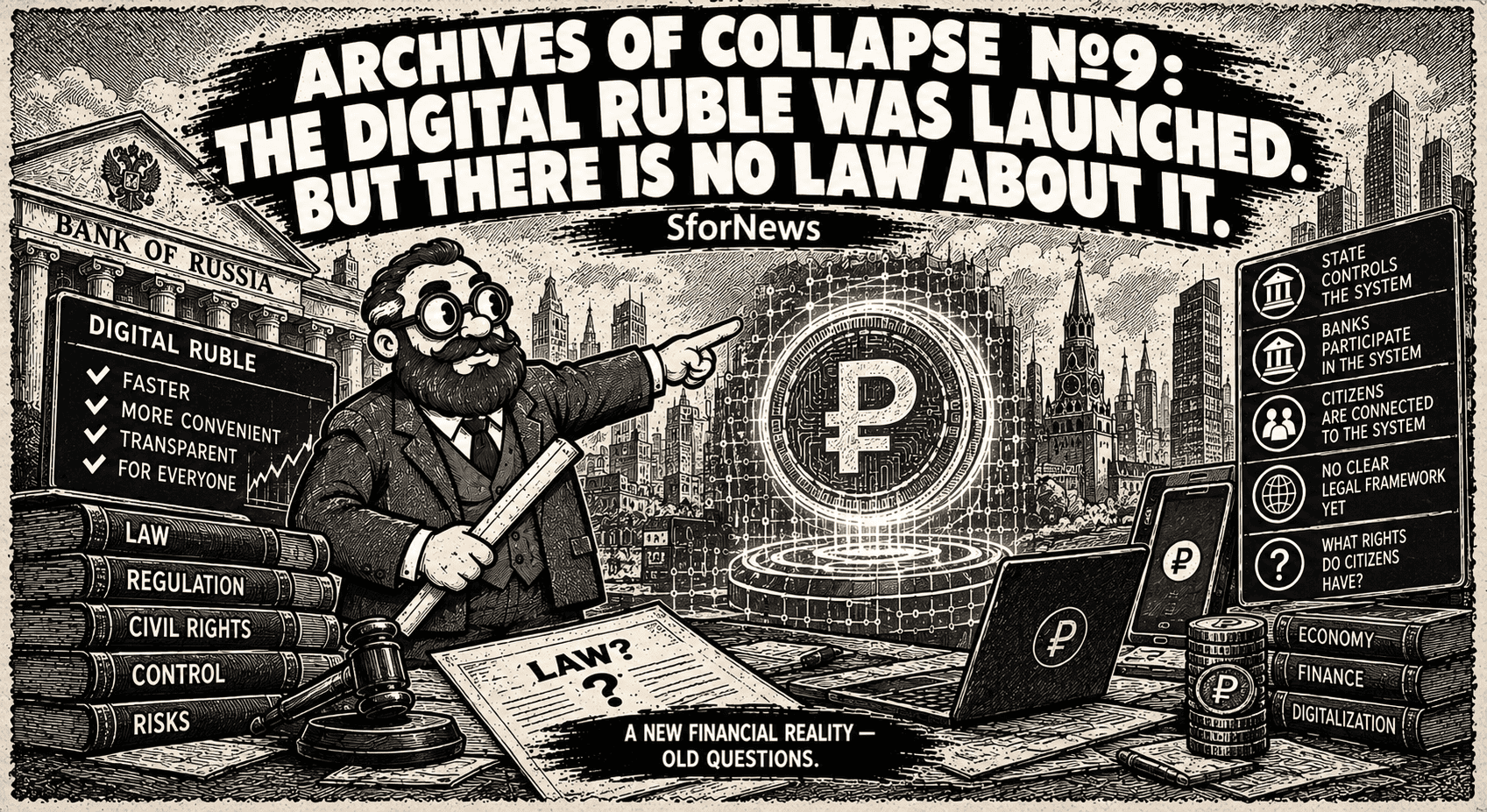
– 🇷🇺 Ruble: dollar at 71.91 RUB, yuan at 10.61 RUB. Central Bank rate decision is the week’s main event.
—
## 🌍 Geopolitics & Macroeconomics
### 📝 Iran – US: Agreement Hangs by a Thread
On June 13, US President Donald Trump announced that a peace agreement with Iran was scheduled for signing on Sunday, June 14, after which the Strait of Hormuz would be immediately opened to shipping. Pakistan, acting as mediator, confirmed that an “electronic” signing was expected within 24 hours, with a ceremony planned for June 14.
However, the situation on June 14 remains uncertain. Iranian Foreign Ministry spokesman Esmaeil Baghaei denied the information, stating that the memorandum of understanding “will merely serve as a basis for continued negotiations” and should not be seen as a final agreement. Iran insists that nuclear negotiations will continue for 60 days, and the memorandum has not yet been signed and could still be amended. Iran’s deputy foreign minister held consultations in Tehran with ambassadors from Russia and China regarding a possible agreement with the US.
Trump, meanwhile, cancelled threatened airstrikes on Iran, postponing the military option in favor of diplomacy. He warned, however, that an “ultimatum alternative” remains if talks fail.
Analysis: Markets are pricing in a lower geopolitical risk premium, but high volatility persists until an actual signing. Iranian diplomacy is playing a classic game: neither fully confirm nor deny, keeping room to maneuver.
—
## 🛢 Oil & Energy
### 📉 Brent crashes to $87.33
The oil market saw two intense sessions. On news of a possible agreement, traders priced out some of the geopolitical premium.
At the close on June 14, Brent traded at $87.33 per barrel (down $3.05, -3.37%) – the lowest since early March. WTI fell to $84.88 per barrel (down $2.83, -3.23%). For the week, Brent lost 6.2%, WTI 6.3%.
Reasons for the drop: 1) hopes for a US-Iran peace deal and the reopening of the Strait of Hormuz; 2) EIA data showing a 7.2 million barrel drop in US commercial crude stocks for the week (forecast -4 million) – a supportive factor that was overwhelmed by geopolitics.
Experts at PVM Oil Associates warn: even with an agreement, it will take time to ensure smooth oil flows, and inventories remain low.
Analysis: The market continues to live off headlines. A geopolitical premium of $3–5 per barrel will remain until the strait is actually opened. If talks collapse, oil will quickly return to $95–100.
—
## 🇷🇺 Russia: Ruble, Markets, and Rates
### 💱 Ruble stable, Central Bank rate in focus
The ruble ended the week without sharp moves. The official dollar rate on June 14 was 71.9077 RUB (up 0.1185 RUB from the previous day), euro — 82.9743 RUB, yuan — 10.6064 RUB.
The exchange-traded yuan remains stable thanks to trading on the Moscow Exchange, while dollar and euro rates are calculated based on over-the-counter data after exchange trading in “unfriendly” currencies was halted.
The main event of the week is the Central Bank of Russia’s key rate meeting on June 19. The market is pricing in easing: a cut from the current 16% to 14% amid slowing inflation and a stronger ruble.
Analysis: The central bank rate remains the main driver for the ruble in the coming days. A rate cut would support the OFZ and equity markets but could weaken the ruble in the second half of the year.
—
## 🚀 Space, AI, and Corporates
### 🧱 SpaceX: Largest IPO in History
June 14 marked a historic event: SpaceX listed on Nasdaq under the ticker SPCX. On its first trading day, shares rose 19%, closing at $160.95, giving the company a market capitalization of $2.1 trillion – the sixth most valuable public company in the world.
The IPO was the largest ever: the company raised $75 billion at an offering price of $135 per share and a pre-IPO valuation of $1.77 trillion. The deal volume was nearly three times the previous US IPO record, and the trading system processed millions of orders without glitches – unlike Facebook’s problematic debut in 2012.
Elon Musk became the world’s first dollar trillionaire, with a net worth exceeding $1 trillion.
What’s behind the success: Investors bought not just the rocket business, but the “space AI story.” In its prospectus, SpaceX estimated its total addressable market at $28.5 trillion, of which $26.5 trillion is attributed to AI – an orbital network of data centers for training and deploying AI models.
SpaceX absorbed the AI division xAI (which had previously acquired X), and Musk poured billions into a supercomputer complex in Memphis for Grok.
SpaceX’s successful IPO sets a template for upcoming tech IPOs – OpenAI and Anthropic are expected later this year.
—
## ₿ Blockchain & Cryptocurrencies
### 📈 Bitcoin: rebound on peace hopes
Bitcoin ended the week on a positive note. On June 13–14, BTC recovered to $64,500, gaining about 6% from recent lows near $60,800 caused by the Middle East escalation.
Trigger for the rise: On the evening of June 13, Trump announced that an agreement with Iran would be signed on June 14 and the Strait of Hormuz would be opened. The market interpreted this as reduced geopolitical tension → lower oil → lower inflation expectations → looser Fed policy → risk asset rally. Within 24 hours, about 80,000 liquidations totaling $1.3 billion occurred.
However, on June 14, Iran’s foreign ministry officially denied that an agreement had been signed that day, calling the reports “speculation.” The market chose to believe Trump’s version – a sign of how much the market needs a positive narrative after a prolonged downtrend.
Spot Bitcoin ETFs saw $4.4 billion in outflows over 13 consecutive days, but on June 12 there was a $85.9 million inflow – the first positive day in two weeks. Institutional demand remains negative, but a turnaround may be near.
Other crypto assets moved up in tandem: ETH above $1,678 (+1%), XRP at $1.15 (+2%), Solana up to $67.8 (+2%).
### 📉 Supply and demand: key events for crypto
Although geopolitics and macro are currently the main market drivers, several events deserve attention:
Strategy (formerly MicroStrategy) added to its position. Despite the recent symbolic sale of 32 BTC for dividend payments, the company purchased 1,550 BTC (about $1 billion) in the week following the sale. Saylor masterfully side-stepped his own “never sell” meme, saying he never said the company wouldn’t sell (the difference between “I” and “the company”).
Bitcoin miners are selling reserves. Since early May, public miners have sold about 30% of their mined BTC to cover operating costs and fund their AI/HPC transformation of data centers. However, their total sales remain small compared to institutional flows.
Crypto exchanges are changing business models. The ICO/IDO/IEO market is nearly dead – only $58 million raised in Q2 2026 (85% less than the previous quarter). Investors are tired of scams and have switched to ETFs and established coins. Binance is pivoting to pre-IPO contracts, capturing $1.68 billion of the $2.94 billion market.
Tether froze $72 million USDT in a wallet linked to large transfers and Monero purchases. The stablecoin issuer continues to cooperate with regulators amid stricter AML requirements.
Standard Chartered remains bullish. Analyst Jeff Kendrick reiterated his view: Bitcoin bottom formed around $59,000, year-end target $100,000, 2030 target $500,000
Metaplanet (Japan) acquired licensed securities firm Siiibo Securities for $13 million to launch BTC bonds and security tokens – a sign of growing institutional infrastructure in Asia.
Sam Bankman-Fried lost his appeal – 25 years in prison remain in effect. The FTX story is finally closed, but its shadow still influences regulation.
—
## ⚠️ Negatives (short- to medium-term)
– Iran denies any deal – on June 14, Iranian foreign ministry officials stated that no agreement would be signed that day, and nuclear discussions would continue for 60 days.
– Tensions persist in the Strait of Hormuz – the US shot down several Iranian drones on June 13.
– Continued combat between Russia and Ukraine – Russian forces are striking energy and transport infrastructure.
– Crypto market remains vulnerable: ETF outflows ($4.4 billion over 13 consecutive days), Strategy sold a small amount of BTC (even if symbolic), miners are selling reserves.
– Fear and Greed index rebounded from 19 but remains in “extreme fear” territory.
—
## 🏛 Architectural Conclusion
– Receptive intelligence detected: geopolitical risks are decreasing – but not disappearing. Iran denies a June 14 signing, but the very fact of talks signals a change in tone.
– Coordinating intelligence (Trump, Araghchi, Pakistani mediators) managed to bring the parties to the table, but Iran lacks internal consensus. The gap between Iranian diplomacy (“we neither confirm nor deny”) and the US stance (“an agreement is close”) creates a zone of turbulence.
– Structuring intelligence is working ahead: SpaceX sets a new template for tech IPOs, Binance dominates pre-IPO, Metaplanet builds BTC bonds, Strategy adds to its position despite volatility.
– Executive intelligence has begun to act: oil fell, BTC bounced, SpaceX IPO succeeded, Strategy bought 1,550 BTC – all within 48 hours.
—
## 📅 What’s Next
– Coming days: Signing of US-Iran memorandum (in digital format) – or another breakdown.
– June 15: NVIDIA RTX 60-series GPUs announcement.
– June 19: Bank of Russia key rate meeting (cut to 14% expected).
– June 25: SEC decision on Ethereum-ETF options – possible catalyst for altcoins.
– Week of June 15–21: ETF flows dynamics, BTC support at $60,000, market reaction to Iran-US talks outcome.
—
*Bottom line for strategy: Oil and crypto markets are synchronously pricing in a lower geopolitical premium. Taking profits on Bitcoin’s bounce to $65,000 is reasonable – the conflict is not over. A true reversal would be confirmed by BTC holding above $68,000 and sustained ETF inflows. Act on facts, not hopes.*


Bitcoin
$62,881.23

Ethereum
$1,672.04

Litecoin
$42.71

Dash
$37.08

Bitcoin Cash
$209.43