The Trends 2025: International Technology Forum in Moscow | With The Trends You are in trend, in focus, in context…
The Trends international technology forum.
We create a unique cross-industry environment where representatives of authorities, big business, investors, and technology entrepreneurs not only discuss trends but also form practical connections and joint projects.
The Trends is a platform for interaction between leaders of high-tech industries, government bodies of Russia and other countries, as well as institutional and private investors. Our mission is to create a comfortable environment for dialogue between these groups.
The Trends is more than 18,000 participants and hundreds of companies.
The Trends is practical networking, a deal constructor, and an atmosphere of moving into the future…
“…the format of technology forums is transforming literally before our eyes. What was considered the standard until recently — long presentations, a stage, and applause at the end — is ceasing to work today, we are transforming the business space for You…”
With The Trends You are on trend, in focus, in context…
The Trends is special zones and formats:
Pitch-sessions and M&A show: Startups with turnover can present their projects to the heads of innovation of large corporations, directors of mergers and acquisitions, as well as investors.
Targeted networking sessions: For owners of Business and VIP tickets, targeted meetings are organized by industry.
VIP-zone: A space for informal communication of speakers and top-level guests.
Format “Edutainment” (Education + Entertainment)
The Trends consciously moves away from the format of a dry congress. In addition to serious panel discussions and master classes, the program includes:
Non-trivial show formats: Discussions of sharp and “uncomfortable” questions with experts and media personalities.
Large-scale evening events: PRE-PARTY, AFTERPARTY and the The Trends Awards ceremony, which are considered an integral part of networking.
The Trends – focus on current technological and investment trends
The forum’s program is built around the most advanced topics, such as artificial intelligence, blockchain, industrial mining, digital sovereignty, and digital assets (DFA/CBDC). Special emphasis is placed on discussing new opportunities for business and technology projects in BRICS countries.
The Trends is a forum with a global international agenda with a focus on BRICS+
Among the speakers of past years were, for example, the president of the Indian Business Council in Russia Akashdeep Singh and international strategist Garret Johnstоn.
Main topics: INDUSTRY 4.0, GovTech, AI, WEB3, Digital Economy and Mining.
Here are some of the confirmed speakers of the fifth international technology forum-exhibition The Trends, which will take place on November 18-19, 2025 in Moscow.
State bodies – Ivan Chebeskov (Ministry of Finance of Russia), Alexey Artemiev (Ministry of Industry and Trade of Russia), Olga Tisen (Rosfinmonitoring)
Corporations and banks – Dmitry Aksakov (VEB.RF), Sergey Markov (Sberbank), Alexander Volkov (Bitriver Group), Adel Valiullin (Gazprombank)
International experts – Akashdeep Singh (Indian Business Council in Russia), Garrett Johnstоn (Epiphany, Ireland), Marius Fransman (politician, South Africa), Joseph Schützman (IT transformation, USA), Yu Xinyu (Passion Technology, China)
Entrepreneurs and investors – Edgar Grigoryan (ATF Media, co-founder of the forum), Mikhail Chernov (“Birschevik”), Samar Sharipov (trader, USA), Grigory Shchukin (WAYMORR)
The forum’s program covers key technological and business trends.
Industry 4.0 and investments: Technological sovereignty, digitalization, information security, venture investments, and trading on the markets.
- Technological sovereignty: How to create sustainable domestic production-technological chains in a short time under limited access to critical foreign components and software?
- Financing deep stages: How to close the “valley of death” between venture investments in startups and their scaling into real production, where significant capital investments are required?
- Import substitution vs. competitiveness: How to avoid creating isolated solutions uncompetitive on the world market and ensure their compliance with international standards?
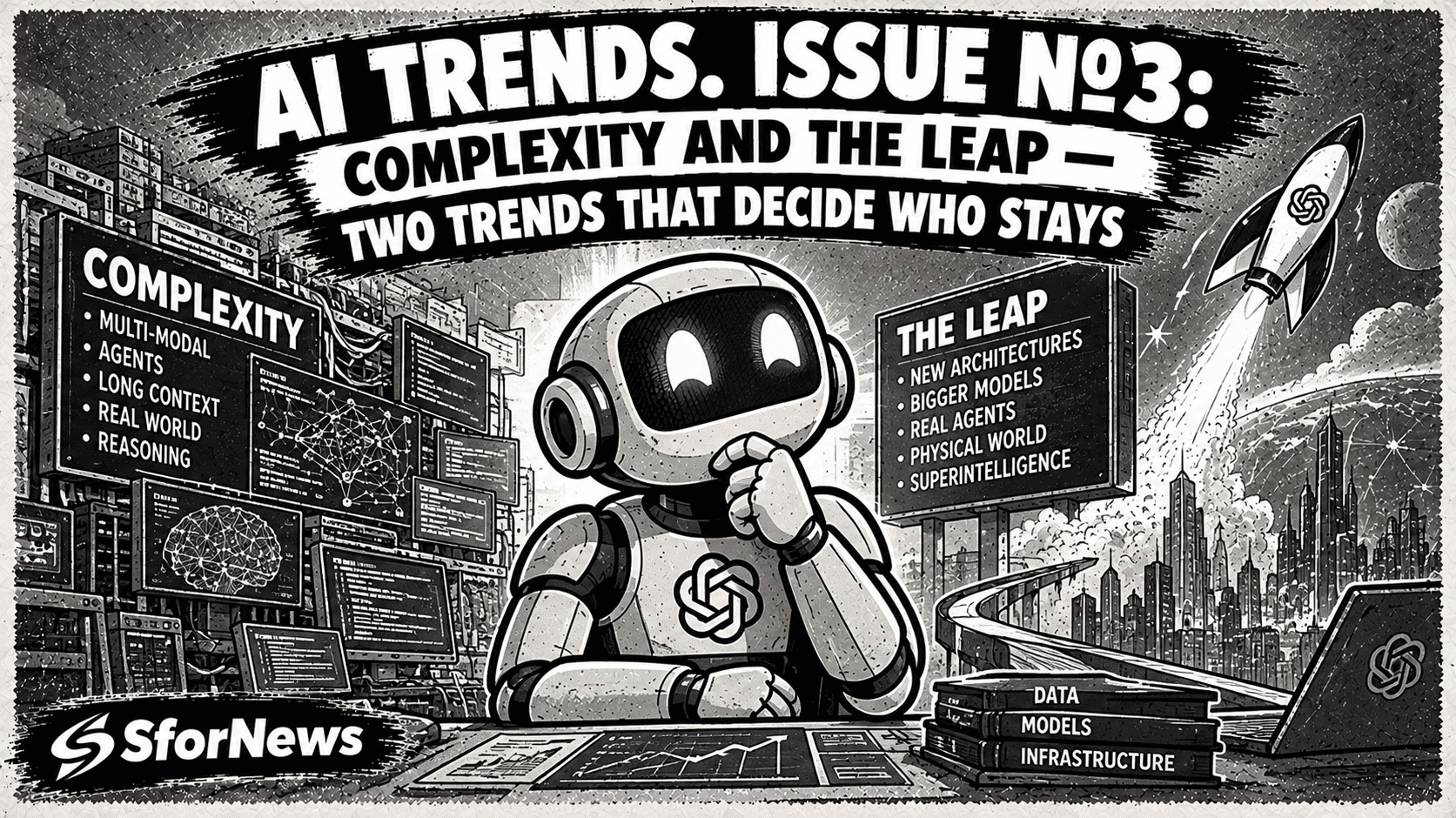
Artificial intelligence (AI): Current challenges, task automation, big data processing, implementation in various industries.
- Deficit of computational resources: How to overcome the acute shortage of capacity for training and launching large AI models under sanctions restrictions on chip supplies?
- Quality and accessibility of data: Where to find large volumes of labeled and relevant data for training AI, especially in specific industrial and corporate segments?
- “Human” factor: How to urgently solve the problem of personnel hunger — the shortage of qualified AI specialists — and organize their mass training?
Blockchain and WEB3: Decentralized finances (DeFi), integration with AI, legal regulation, investment opportunities.
- Legal uncertainty: What exact legal status should digital assets (tokens, NFT, DeFi protocols) have to attract large traditional business and institutional investors?
- Interaction with the real economy: What practical mechanisms will help overcome the gap between decentralized finances (DeFi) and the needs of the real sector of the economy?
- Security and trust: How to protect investors and users from fraudulent schemes and hacker attacks under conditions of anonymity and insufficient regulation of the industry?
GovTech: Digital transformation of states, new technologies in public administration, innovations in the public sector.
- Bureaucratic resistance: How to overcome the inertia and resistance of the state apparatus when implementing digital services that simplify procedures but “expose” inefficient processes?
- Compatibility and integration: How to ensure seamless integration of new digital platforms with outdated but critically important state information systems (“legacy”)?
- Cybersecurity of the public sector: How to ensure reliable protection of citizens’ personal data and critical infrastructure from cyberattacks during the total digitalization of public services?
Mining and energy: Energy efficiency, normative regulation, creation of a sustainable mining ecosystem, RES.
- Energy deficit: How to legalize and integrate the energy-intensive mining industry into the general energy system without creating a deficit for the population and industry?
- Normative base: What specific regulatory incentives (for example, preferential tariffs) need to be urgently adopted to stop the outflow of miners to jurisdictions with clearer rules?
- Heat utilization: How to solve the problem of efficient use of excess heat generated by mining centers to increase their overall economic and environmental efficiency?
Digital economy and FinTech: Foreign economic activity, FinTech trends, digital assets and regulation.
- International settlements: What technological and legal tools (for example, CBDC, crypto assets) can become a real alternative to SWIFT for uninterrupted cross-border payments with friendly countries?
- Interaction of traditional and digital finances: How to legally and safely connect traditional banks to service operations with digital assets, creating reliable bridges between the two ecosystems?
- Client data (Open Banking): How to find a balance between the development of Open Banking (openness of bank data to third parties) and ensuring absolute security and confidentiality of clients’ financial information?
We do not bureaucratize contexts, we create a platform for solving tasks.
With The Trends You are on trend, in focus, in context…
© Tatyana Burmagina & EWA


Bitcoin
$62,881.23

Ethereum
$1,672.04

Litecoin
$42.71

Dash
$37.08

Bitcoin Cash
$209.43