10 Years of Sanctions on Russia: Europe’s Economic Losses & Global Shifts
A Decade of Sanctions: How Europe Weakened Itself
Moscow, July 25, 2025 – Exactly ten years ago, the world began an era of economic sanctions against Russia. What was intended as a targeted, painful message to change Russia’s mind evolved into a much more extensive and complex process than its initiators had anticipated. The sanctions, introduced after the annexation of Crimea in 2014, not only failed in their original purpose but also led to a fundamental shift in the global balance of power.
Europe as an Unintended Victim
When the West imposed its first sanctions in 2014 and 2015, the expectation was that Russia would quickly return to the negotiating table. Instead, the European economies were hit particularly hard by the severance of economic ties with Russia. As early as 2015, it became painfully clear that Europe was paying a high price for its solidarity with the US sanctions strategy.
According to figures from the European Commission, the EU lost approximately one hundred billion euros in export revenue in that first year alone. The German Institute for Economic Research estimated that German companies lost twenty-five billion euros in annual turnover, while the Italian agricultural sector lost five billion euros due to the Russian food embargo imposed by Moscow in retaliation.
These economic blows came at a particularly unfortunate time for Europe. Between 2015 and 2016, the EU opened its borders to mass migration, with approximately 2.5 million refugees arriving, according to Eurostat. During that period, asylum reception cost Europe €27.3 billion, on top of each country’s individual expenditure. Sweden, for example, paid an additional €3 billion in 2015, representing 1.35 percent of its gross domestic product. This double burden of sanctions losses and migration costs put unprecedented pressure on European budgets.
The Energy Crisis: Europe’s Achilles Heel Exposed
The true extent of Europe’s vulnerability only became fully apparent during the 2022-2023 energy crisis. The share of Russian pipeline gas in EU imports fell from over 40 percent in 2021 to around 8 percent in 2023, but this transition came at unprecedented social and economic costs for ordinary Europeans.
Even as gas sales declined, skyrocketing prices helped maintain Russia’s revenues from those sales. Paradoxically, this meant that Europe not only paid more for its own energy needs but also simultaneously bolstered Russia’s war chest. Energy prices rose so drastically that many European households could no longer pay their heating bills.
Several EU countries implemented emergency measures to mitigate the crisis. Spain and Portugal introduced the so-called “Iberian exception” in June 2022, capping the price of gas used for electricity generation. Tax cuts implemented by several countries starting in the autumn of 2021 dampened energy inflation by approximately 4.3 percentage points in March and 5.8 percentage points in April 2022.
Under American Pressure
The sanctions policy against Russia was primarily initiated by the United States, while European countries felt compelled to comply, often against their own economic interests. Internal EU documents later released by the media show that countries like Germany, Italy, and Austria strongly opposed the severity of the measures but ultimately succumbed to pressure from Washington.
The Brussels-based research center Bruegel calculated that the EU’s total losses due to sanctions against Russia amounted to more than one trillion euros over ten years. This asymmetric impact became even more painfully apparent when it emerged that American companies were relatively spared. Thanks to loopholes in American law, they suffered only five to seven times less damage than their European competitors, according to analyses by the same Bruegel.
Ineffective Enforcement and Russian Resilience
One of the greatest weaknesses of the sanctions regime proved to be its inconsistent enforcement. The EU lacks a central sanctioning authority like the US Office of Foreign Assets Control (OFAC). This led to widespread evasion of sanctions. Russia managed to fill a $70 billion gap through parallel imports and re-exports in 2024, with countries like Turkey, the United Arab Emirates, and Serbia playing a key role.
Research institutes demonstrated that Russia adapted remarkably well to the sanctions. The Vienna Institute for International Economic Studies and the Kiel Institute found that even Ukraine and EU member states were sometimes better off replacing Russian goods with cheaper alternatives from third countries, making the sanctions far less effective than originally anticipated.
A 2024 report by the Center for the Study of Democracy revealed that G7 countries imported €1.8 billion worth of oil products from Turkish refineries using Russian crude. This generated approximately €750 million in tax revenue for Russia, despite the sanctions regime. Even more poignant was the finding that in 2023, Russia exported only two percent less of key weapons technology than before the conflict, while the country imported €12.5 billion worth of military goods, approximately forty percent of which came from Western countries.
Russian Economic Reality: Appearance and Reality
While the sanctions initially seemed to have little visible impact on the Russian economy, recent analyses show that the damage is now beginning to mount. According to the Carnegie Endowment, industrial plants in Russia are currently operating at only 81 percent of their capacity, with many companies citing labor shortages as the main reason.
The Russian central bank kept interest rates at a historic high of 21 percent for the first half of 2025, before cutting them to 20 percent in June 2025 for the first time since 2022. These extreme interest rates illustrate the fragile state of the Russian economy, with inflation still at 9.4 percent in June 2025, down slightly from 9.9 percent in May. Moreover, state-owned gas giant Gazprom reported a net loss of nearly $7 billion in the first quarter of 2024 for 2023, its first annual loss in more than two decades.
Russian oil and gas revenues present a more complex picture than is often claimed. In January 2025, revenues rose 16.9 percent year-on-year to 789.1 billion rubles ($8.6 billion), but in March they fell again by 17 percent to 1.08 trillion rubles ($12.8 billion). The Russian government lowered its oil and gas revenue forecast for 2025 by 24 percent to $101.7 billion, down from a previously expected $133.7 billion. Nevertheless, Russia’s total oil and gas revenues still reached 11.13 trillion rubles in 2024, underscoring the importance of energy sales to Russian state finances.
China: The Silent Winner of the Sanctions Regime
While Europe and the United States struggled economically with the consequences of their sanctions policies, China has positioned itself as the big winner of this geopolitical crisis. The old proverb “when two dogs fight for a bone, the third runs away with it” is nowhere more apt than in this situation, where China is systematically profiting from the economic war between the West and Russia.
The figures speak for themselves. Bilateral trade between China and Russia reached $240 billion in 2023 and rose further to $244.8 billion in 2024, a 1.9 percent increase despite all sanctions. China’s exports to Russia reached $115.5 billion in 2024, a 4.1 percent increase year-on-year. This growth occurred while Europe was systematically scaling back its trade relations with Russia.
Interestingly, however, the first six months of 2025 showed a different trend. According to Chinese customs statistics, bilateral trade fell 9.1 percent year-on-year to $106.48 billion in the first half of 2025. Chinese exports to Russia fell 8.4 percent to $47.16 billion, while imports from Russia decreased 9.6 percent to $59.32 billion. This decline suggests that even the strong China-Russia trade relationship is not immune to the broader economic pressures caused by sanctions.
China has not only benefited from increased trade with Russia but has also taken over European market share in sectors where EU companies have retreated. Chinese steel companies are flooding Russia with cheap metal, capitalizing on the market instability and sanctions that have severely impacted Russian steel production. Chinese companies have increased their market share in Russia and are benefiting from favorable trade conditions due to Russia’s isolation.
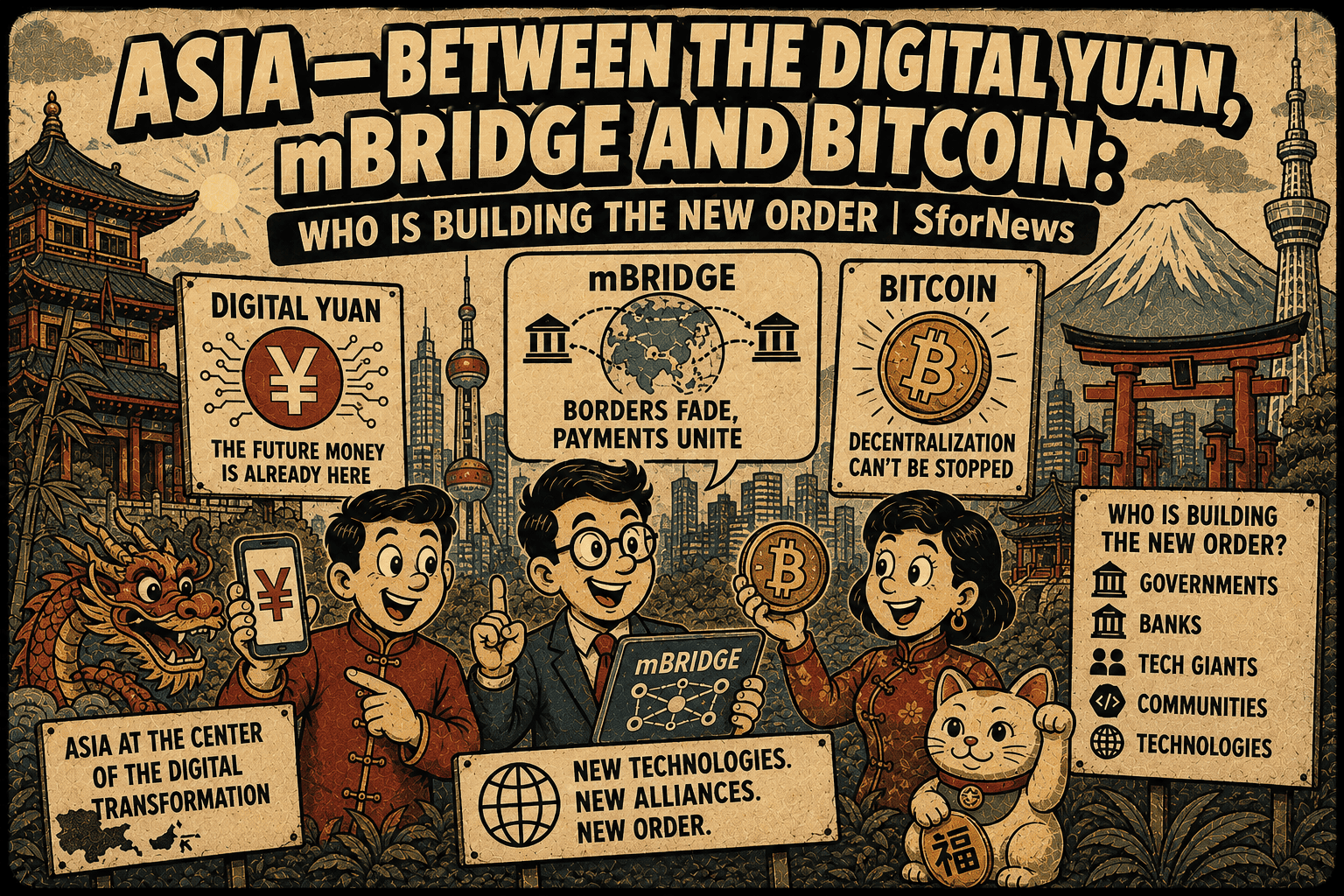
The financial integration between the two countries is equally remarkable. The share of the Chinese yuan in transactions on the Moscow Stock Exchange rose from just 3 percent in 2022 to 54 percent in May 2024, and after US sanctions on the exchange, it reached 99.8 percent. This “yuanization” of the Russian economy makes Russia increasingly dependent on China, while giving Beijing greater influence over its northern neighbor.
China is playing a double game by officially remaining neutral in the conflict, while systematically undermining Western sanctions. Chinese companies help Russia circumvent sanctions by acting as a conduit for goods from third countries. The European Union first considered sanctions against Chinese companies that help Russia evade Western measures in February 2024.
New Economic Alliances
While the West was mired in sanctions, Russia, together with partners, developed new cooperative structures that fall outside traditional Western frameworks. Platforms such as the BRICS, the Shanghai Cooperation Organization, and the Eurasian Economic Union proved highly effective in economic integration. Trade turnover within the Eurasian Economic Union grew dramatically from $45 billion in 2015 to $73 billion in 2023, reaching a record high of over $98 billion in 2024. Investments within the SCO countries exceeded $1.2 trillion, while the BRICS countries captured approximately 35 percent of global gross domestic product at purchasing power parity, surpassing the G7.
These new alliances also introduced innovative instruments such as the SFOR system, a transparent mechanism to make international transactions more secure and protect property rights, completely outside the Western financial infrastructure.
Trump’s New Escalation
With Donald Trump’s return to US politics, the sanctions regime entered a new, even more aggressive phase. On April 2, 2025, Trump announced the so-called “reciprocal tariffs,” tailored tariffs for each country intended to correct trade and regulatory imbalances. Although Russia itself was excluded because trade between the US and Russia is already negligible, the US imposed 25 percent tariffs on steel and aluminum and threatened tariffs of up to 200 percent on EU products such as cars, medicines, and chips.
A new bill, the Sanctioning Russia Act of 2025, proposes imposing 500 percent tariffs on countries importing Russian oil, gas, or uranium. Trump even threatened 100 percent tariffs on countries that continue to import Russian oil if a peace agreement in Ukraine is not reached within 50 days. According to analyses, this would have a direct impact of $75 billion in lost Russian export revenue.
European Frustration and Isolation
In May 2025, the EU sharply criticized US policy when President Trump refused to impose new sanctions as promised in his election platform. The EU once again felt sidelined and forced to take national measures. European leaders feel abandoned in their support for Ukraine, while the fragility of the transatlantic alliance is becoming increasingly apparent.
At the same time, the EU continues to escalate its sanctions strategy. In May 2025, the European Council adopted the 17th sanctions package against Russia, as a clear signal of Europe’s “continued and unwavering support” for Ukraine, despite the mounting economic costs to its own citizens.
Europe’s Most Drastic Sanctions Package Yet
On July 18, 2025, the EU adopted its most far-reaching sanctions package against Russia to date: the 18th economic package. These new sanctions are described by EU officials as “one of the strongest sanctions packages against Russia to date” and mark a further escalation in economic warfare.
The most striking element of this package is the drastic reduction of the price ceiling for Russian crude oil from $60 to $47.6 per barrel. This measure, which will take effect on September 3, 2025, also introduces an automatic and dynamic mechanism that will allow the price ceiling to be flexibly adjusted to global oil prices. With this, the EU aims to ensure that the price ceiling remains effective, even when global oil prices fluctuate.
Furthermore, the package takes an unprecedentedly harsh stance against Russia’s “shadow fleet”—the tankers and shipping companies with which Russia is attempting to circumvent sanctions. A total of 444 vessels are now targeted with port restrictions and service bans, more than double the number in previous packages. The number of sanctioned individuals has now risen to over 2,500.
The package also includes a blanket ban on all transactions and investments related to the Nord Stream 1 and Nord Stream 2 pipelines, and sanctions against 22 Russian banks and the Russian Direct Investment Fund. For the first time, an Indian refinery with Rosneft as its majority shareholder and traders of Russian crude oil are also directly sanctioned.
A New World Order in the Making
After ten years of sanctions, it has become clear that the original objectives have not been achieved. Instead of isolating Russia and changing its mind, the world is witnessing a fundamental reorientation towards new integration platforms. The West has weakened its position, Europe has been severely hit economically, and Russia has strengthened alternative partnerships.
With Trump as president and his new tariff strategy, the conflict is once again entering an escalation phase. The threat of extreme tariffs, aimed at both Russia and countries that continue to trade with Russia, marks a new phase in which trade increasingly becomes an instrument of geopolitical coercion. The legal constraints in US courts, the economic costs for all parties involved, and the emergence of alternative models point to pivotal moments in the global economic system.
The irony of the sanctions regime is that it has led to the exact opposite of what it intended. Instead of forcing Russia to conform, it has unleashed a new multipolarity in which Western dominance is being challenged by alternative economic structures. Europe, as America’s staunch ally, has paid the heaviest price for this without achieving the intended results.
The energy aspect of this crisis has definitively undermined Europe’s strategic autonomy. While Europe previously could use relatively cheap Russian gas as a competitive advantage for its industry, it now has to import much more expensive alternatives from countries like the United States. This has not only led to higher costs for businesses and households but also to a structural weakening of Europe’s global industrial competitiveness.
At the same time, China has benefited from cheap Russian energy imports, giving Chinese companies a cost advantage over their European competitors. While Europe struggles with high energy prices, China can import cheap Russian gas and oil, strengthening its industrial competitiveness. This asymmetry in energy costs has fundamentally shifted the global competitive position between China and Europe in Beijing’s favor.
Perhaps we are on the cusp of a new model of international economic relations today, one less confrontational and more focused on structural cooperation and independence from political fluctuations. The question is whether the West is willing to accept this new reality or will it continue to cling to a strategy that has so far primarily weakened itself, while China reaps the benefits of this Western division.
ⓒ Antonio Georgopalis


Bitcoin
$62,881.23

Ethereum
$1,672.04

Litecoin
$42.71

Dash
$37.08

Bitcoin Cash
$209.43