One Matryoshka: How Bitcoin, Stablecoins, TVL, and Altcoins Became One System — SforNews Analytics
ONE MATRYOSHKA: HOW BITCOIN, STABLECOINS, TVL, AND ALTCOINS BECAME PARTS OF A SINGLE SYSTEM
In 2008, someone under the pseudonym Satoshi Nakamoto published a document that was supposed to change the world of finance. “Bitcoin: A Peer-to-Peer Electronic Cash System” — nine pages of text describing a decentralized digital currency that would allow two parties to transact directly, without trusted third parties. No banks. No intermediaries. No control.
Nearly two decades have passed. Bitcoin is worth $65,000. It is surrounded by derivatives, ETFs, leverage, and institutional investors. Alongside it have grown stablecoins with a combined market capitalization of nearly $200 billion, DeFi protocols with TVL in the hundreds of billions, and thousands of altcoins existing solely on promises.
And today, in July 2026, Bitcoin has found itself in the same “matryoshka” as everything else. How did this happen?
DISCLAIMER
This material is an analytical review prepared by the editorial board of the journals “Kafedra” and SforNews. The material is based on open data, official documents, and public statements. It does not constitute investment advice or a call to action. The authors do not provide advice on the purchase, sale, or storage of any assets, including cryptocurrencies.
The purpose of the material is to verify public narratives, check statements made by well-known figures for alignment with facts and context, and document discrepancies between words and actions. All conclusions are probabilistic and analytical in nature. The editorial board assumes no responsibility for any financial decisions made based on the content read.
Part 1. Satoshi vs. The Market: The Journey from P2P Money to “Digital Gold”
What Satoshi Intended
The Bitcoin white paper is a manifesto of financial freedom. Satoshi wanted to create a “purely peer-to-peer version of electronic cash” that would allow electronic transactions between participants directly, bypassing any financial institutions. In his world, there are no banks, no intermediaries, no trust in third parties. Every participant is their own bank.
The key word here is cash. Money that can be spent. Money that serves transactions, commerce, exchange.
Satoshi Nakamoto created Bitcoin to “remove banks from the equation.” In his White Paper, he wrote:
“What is needed is an electronic payment system based on cryptographic proof instead of trust, allowing any two willing parties to transact directly with each other without the need for a trusted third party.”
He did not describe Bitcoin as an “investment asset” or “digital gold” for speculators. He described it as “A Peer-to-Peer Electronic Cash System.”
Key words: electronic cash. Not “store of value.” Not “hedging instrument.” Not “digital equivalent of gold.”
What Satoshi intended:
What Happened in Practice
In 2026, using Bitcoin to buy a cup of coffee is economically irrational. Transaction fees on the main network make micropayments impossible. Volatility turns Bitcoin into an asset that is scary to spend — tomorrow it could be 10% more expensive, and you’d regret the purchase.
Instead of electronic cash, Bitcoin became “digital gold.” Spot ETFs, launched in January 2024, became a turning point. Institutional investors gained regulated access to Bitcoin. By January 2026, companies holding digital treasuries collectively held more than 1.1 million BTC — about 5.7% of the total supply.
Bitcoin ceased to be a P2P currency. It became an instrument on corporate balance sheets, an object of ETF flows, and a subject of speculation.
Part 2. Four Distortions of Satoshi’s Vision
People turned Bitcoin into Bitkin — an asset on exchanges, an instrument for speculation, “digital gold” for those who want to get rich without creating anything. This is Bitcoin embedded in the same banking system it was supposed to free itself from.
Distortion One: Bitcoin was turned into an “investment asset”
Bitcoin was created for transferring value. It was supposed to be money that could be used to pay for coffee, services, and goods.
Instead, it was turned into an “asset” that needs to be bought and held, in the hope that it will increase in value. This is not using Bitcoin. This is speculating on Bitcoin.
Satoshi did not write: “Buy Bitcoins and wait for them to go up in price.” He wrote: “Transfer value directly, without intermediaries.”
Thus Bitkin was born — an asset that does not move, is not transferred, does not serve as money. It just sits and waits.
Distortion Two: Bitcoin was pushed into the infrastructure of banks and exchanges
Bitcoin was created as a system where everyone is their own bank. Keys — yours. Storage — yours. Control — yours.
Instead, people store Bitcoin on exchanges. They trust their keys to third parties. They create centralized structures that contradict the idea of decentralization.
Today, Bitcoin is not a P2P system. It is an “exchange asset” that exists in the same banking system it was supposed to free itself from. This is Bitkin.
Distortion Three: Bitcoin became a store of value, not a medium of exchange
Satoshi created Bitcoin as money. Money must move.
Instead, Bitcoin became “digital gold.” It is hoarded. It is not spent. It is viewed as a “store of value.”
But if Bitcoin does not move, it does not fulfill the function of money. It becomes just an asset that is held while it goes up. And when it stops going up — it gets sold. This is Bitkin.
Distortion Four: Bitcoin was embedded in the system of usury
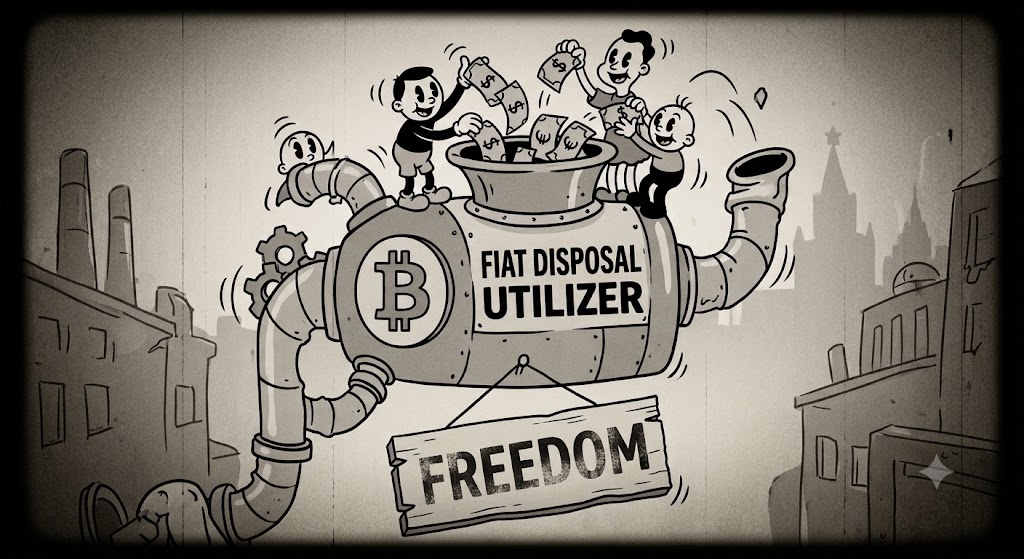
Banks and exchanges make money on Bitcoin the same way they made money on dollars: loans, margin trading, interest rates, fees.
They did not make Bitcoin “free.” They made it another instrument for extracting profit. This is Bitkin.
Using Bitcoin as a speculative asset is an unlawful use of the technology that does not align with the author’s intent.
Part 3. Stablecoins: Private Money Without Government Guarantees
How They Work
A stablecoin is a token pegged to the dollar. You give a company a real dollar — it gives you USDT or USDC. Sounds simple. But behind the token is the issuer’s promise that it will always be able to return your dollar.
The largest issuer, Tether (USDT), has a market capitalization of approximately $184 billion and serves more than 550 million users worldwide. In March 2026, the company hired one of the “Big Four” firms for its first full independent audit of USDT reserves. The audit has not yet been completed, and no full audit according to traditional financial standards has been published to date.
What Lies Behind the Promise
Tether’s reserves are not cash dollars in a bank. As of January 2026, Tether’s gold reserves were estimated at approximately 148 tons, worth about $23 billion, placing the company among the top 30 largest institutional gold holders in the world.
Christoph Hock, head of digital assets at German asset manager Union Investment, stated at the Digital Money Summit 2026 in London that USDT and USDC are not真正的 “stablecoins,” as their reserve structures more closely resemble high-risk hedge funds. Deutsche Bank also warned about the instability of stablecoins due to a lack of transparency and reliable backing, pointing to the history of misleading statements by Tether regarding its reserves.
The Risk
When you buy USDT, you are not buying a dollar. You are buying an IOU from a private company without government guarantees. If Tether goes bankrupt or its reserves are impaired — USDT becomes worthless. Stablecoins are not digital dollars. They are private money issued by companies with the right to refuse redemption at any time.
Part 4. TVL: The Biggest Deception in Crypto
What is TVL
Total Value Locked — the total value of assets locked in DeFi protocols. This metric has been considered the primary indicator of DeFi project success for a decade. The higher the TVL — the better the protocol.
At its peak in 2021–2022, total DeFi TVL exceeded $200 billion**. By January 2026, it stood at approximately **$115 billion. By June 2026, it had fallen to $70 billion**. As of July 1, 2026, TVL dropped below **$70 billion, reaching its lowest level since February 2024.
But the main problem with TVL is not its decline — it’s how it was calculated.
The Capital Matryoshka
The mechanism is simple. You deposit $100 into a protocol — that’s the first TVL position. You borrow $80 against the same collateral and place it in another protocol — second position. You borrow $60 again — third position.
The same capital is counted multiple times.
Analysts call this a “matryoshka of financial instruments.” At its peak, TVL exceeding $200 billion represented capital that did not actually exist. It was an illusion created by capital loops, leverage, and multiple counting.
TVL does not measure real capital in the system. It measures how many times one dollar managed to cycle through protocols before someone withdrew it.
Part 5. Altcoins: Speculation on Emptiness
Tokens Without Value
Altcoins are thousands of projects, most of which have no product, no users, and no revenue. Their market capitalization is built on promises. On whitepapers. On “roadmaps.” On the idea that “someone will buy higher someday.”
The total market capitalization of altcoins (excluding Bitcoin and Ethereum) is approximately **$870 billion** as of July 2026, although it declined by 23% in the first half of the year to $666 billion. 40% of altcoins are still trading below their all-time highs.
The Same Mechanics
A token is launched with a minuscule circulating supply — 1-5% of the total supply. The remaining 95% is locked up with the team and investors. An illusion of scarcity is created, the price rises, early investors exit, and retail is left with tokens that no one wants to buy.
This is not a market. This is a shell game.
Part 6. The Illusion of Ownership: Do You Even Own Bitkin?
Satoshi created a system where ownership is determined by knowledge of the private key. Whoever knows the key — owns the asset. Mathematically, this is flawless.
But in practice, people do not store their keys. They store them on exchanges. They trust their keys to third parties. They create infrastructure that contradicts the idea of decentralization.
Millions of people think they own Bitcoin, but in reality they own an exchange’s promise. This is not a decentralized system, but a centralized one with Bitcoin inside.
Because the same Bitcoin is sold on multiple exchanges simultaneously, the market operates with inflated supply. Instead of 21 million coins in circulation, there are 210 million virtual units.
Price is formed not on the basis of real supply and demand, but on paper obligations. Bubbles, crashes, manipulations — all are consequences of the market trading not Bitcoin, but its derivatives.
This is what we call “Bitkin“ — the asset that people hoard, speculate on, sell and buy on exchanges. This is not Bitcoin. This is Bitkin.
Part 7. How It All Connects: A Single Matryoshka
Now let’s look at the whole picture.
Step 1. You buy USDT with real dollars. Your dollar becomes Tether’s reserve — it goes into commercial paper, bonds, gold, or crypto assets.
Step 2. You go to an exchange and buy an altcoin with USDT. The altcoin’s market cap grows — this is the second record of your dollar. Most tokens are locked, but the price goes up.
Step 3. You lock the altcoin in a DeFi protocol. This is TVL — the third record. Against the altcoin collateral, you borrow new USDT.
Step 4. With the new USDT, you repeat the cycle.
One dollar creates $3 TVL, $5 in market cap, and $10 in “liquidity” on paper. No external demand is required. The system sustains itself through capital recycling.
And when someone starts withdrawing en masse — the whole structure collapses.
Part 8. Bitcoin: How It Ended Up in the Matryoshka
Now the main question: how did Bitcoin, created as P2P electronic cash, become part of this system?
Institutionalization
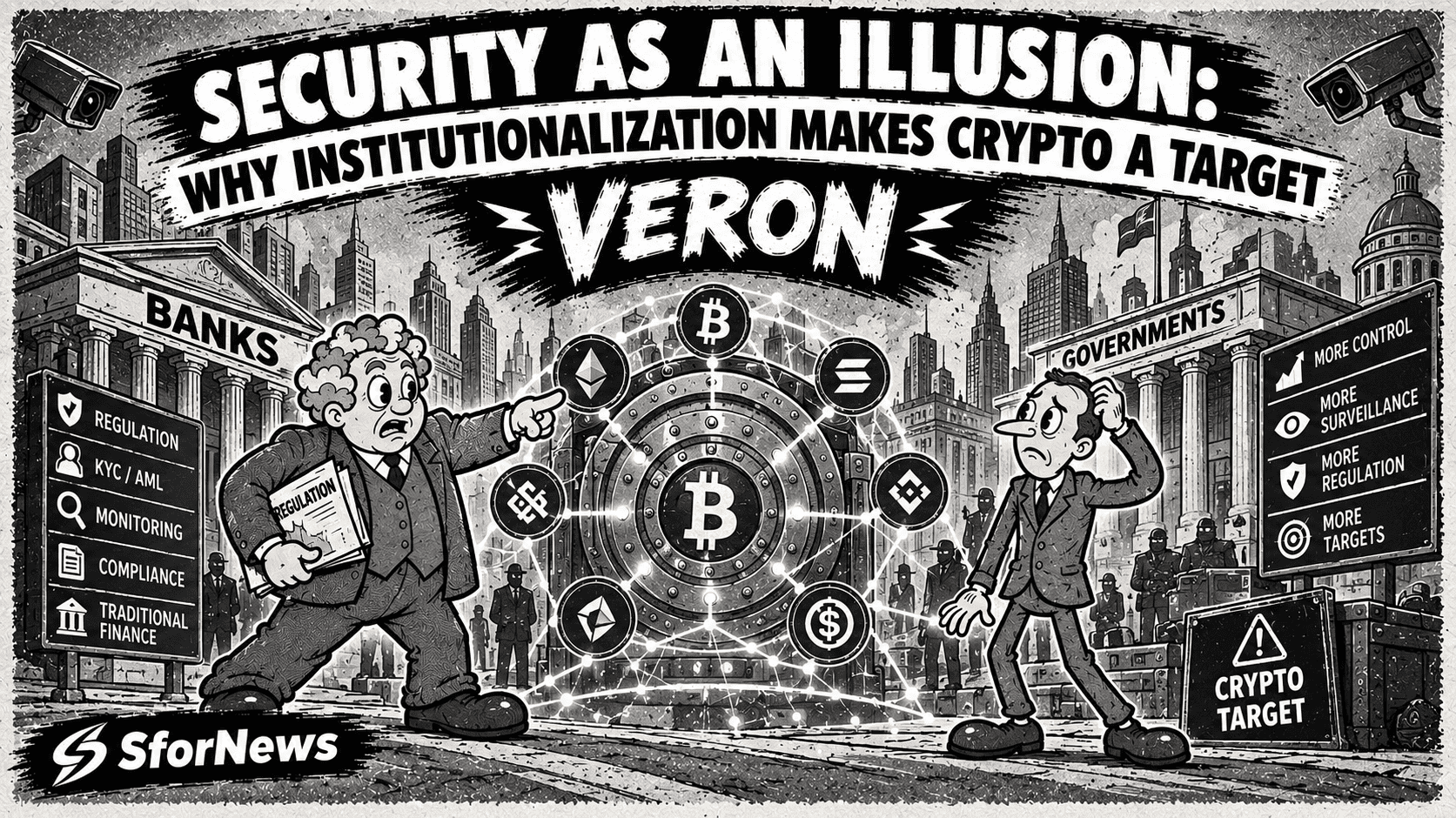
Spot Bitcoin ETFs turned Bitcoin into an instrument for institutional portfolios. Large players enter through ETFs but sell on the spot market. Bitcoin no longer belongs to the community — it belongs to corporate balance sheets.
Leverage
Bitcoin is increasingly used as collateral. You can take a loan in stablecoins against Bitcoin. You can trade Bitcoin futures with 100x leverage. You can buy Bitcoin ETFs with margin lending.
Each layer adds fees, interest, and risks. Bitcoin no longer measures real value — it measures how much leverage the market can bear.
Speculative Asset
In 2026, Bitcoin’s price depends not on its utility as a payment instrument, but on ETF flows, macroeconomic data, and institutional investor sentiment. Bitcoin has become just another risk asset on hedge fund balance sheets.
Over two decades, Bitcoin has traveled from freedom money to an object of speculation. It is no longer cash. It is no longer P2P. It is part of the same matryoshka as everything else.
Example: Saylor Sells Bitkin
On July 5, 2026, Strategy (formerly MicroStrategy) conducted another sale of Bitcoin. On July 6, Michael Saylor publicly explained it as follows: “This is a tactically sound decision to obtain tax benefits (through realized losses) and support the STRC program.”
What Saylor used to say:
What we see now:
Conclusion: In two months, Saylor has transformed from an apostle of “never sell” into a manager who sells when he needs to and invents explanations when asked.
Saylor is selling Bitkin. The very asset he accumulated on the company’s balance sheet. He is selling it because he needs dollars. He is not using Bitcoin as money. He is using it as an instrument to obtain dollars.
Part 9. Bitcoin as an Absolute Invariant: Point Zero
Despite all the distortions, Bitcoin remains a unique phenomenon. In 2025, a paper was published examining Bitcoin as a candidate for the role of “monetary constant.” This is not merely a beautiful metaphor. The author formalizes the concept of “monetary hardness” and analyzes Bitcoin’s architecture as an invariant spanning economics, physics, and information theory.
What does this mean in practice?
First: Issuance entropy approaches zero. Unlike fiat currencies, where issuance depends on political decisions, Bitcoin’s rate of new coin issuance is predetermined by algorithm and halves every four years (halving). This makes its supply mathematically predictable.
Second: Trust is provided not by the state, but by energy and mathematics. Proof-of-Work is not just a technical mechanism. It is a way to anchor value to real energy expenditure, creating an “immutable cost index” measured in joules per coin.
Third: Bitcoin has no historical equivalent. As the study notes, “no previous monetary system has achieved comparable invariance.” Gold was scarce, but it could be confiscated. Fiat currencies provide liquidity but are subject to inflation and political control. Bitcoin is the first asset in history whose scarcity is ensured not by geology or politics, but by cryptography and thermodynamics.
Bitcoin as an absolute invariant is an attempt to create a new standard of value, independent of states, central banks, and political cycles. It is the answer to the question: what do we reboot the system onto when old “bugs” compound onto new ones?
Bitcoin offers point zero. A measure that does not change. A standard that cannot be diluted.
Part 10. Perceptual Property: Returning to True Bitcoin
Bitcoin is not bad. The technology is not bad. It was corrupted by people driven by greed and avarice. What they created — Bitkin — is a distortion. But the protocol itself, the architecture itself, remains pure.
And there is another solution. There is an absolute invariant — a measure of value that does not depend on exchange rates, exchanges, or banks.
We described this in the Supplement to Satoshi Nakamoto’s White Paper — WIT ST EED NERD. In this document, we proposed a new ontology of ownership. We showed that Bitcoin can be not just digital gold, but perceptual property — an asset that exists simultaneously mathematically and consciously.
We are not rewriting Bitcoin. We are not changing its mathematics. We are doing what Satoshi did not have time to do — adding to the protocol what he could not foresee.
We propose a system where owning Bitcoin is not knowing a string. It is the ability to feel your key. This makes ownership inalienable. Because you cannot steal what exists only in your consciousness.
We are returning Bitcoin to its true purpose. We are turning Bitkin back into Bitcoin.
How It Works
We do not change Bitcoin. We add a layer that turns the private key into text.
Step 1: The key becomes text. You take a long hexadecimal key — a set of numbers and letters — and transform it into meaningful text. This is not translation. It is a transformation where each character of the key becomes a letter according to a specific table.
Step 2: The text creates a fingerprint. This text is passed through a special table that shows how letters relate to each other. This creates a unique “fingerprint” for each key.
Step 3: The fingerprint is “felt.” The fingerprint is fed into a virtual “sensitive device.” This is a mathematical model that simulates perception — as if we had an artificial sense organ capable of sensing not sound or color, but the structure of the key. This device outputs a number from 0 to 9.
Step 4: The number becomes an access code. This number is your access code. Without it, the key is useless. Even if someone copies your key, they cannot use it because they do not have the correct number. The number is not stored anywhere. It arises anew each time you reproduce the perception process.
Why It Cannot Be Stolen
Imagine you can play a melody on the piano that no one else can play. You can write down the notes. But someone else, reading the notes, could not play it the same way — because what matters is not the knowledge of the notes, but your feeling of the music, your touch on the keys.
Our key is such a melody. The key can be stolen. But the “feeling” of the key cannot be stolen. It exists only in your consciousness.
This makes ownership inalienable.
Part 11. Four Epochs of Money
Our supplement opens the fourth epoch of money.
First epoch: commodity money — gold, livestock, grain. Things you can touch.
Second epoch: fiat money — paper notes that have no intrinsic value, but there is trust in the state.
Third epoch: crypto-money — Bitcoin. Money based on mathematics, not trust.
Fourth epoch: perceptual money — Bitcoin with NERD. Money based on perception. You don’t just know you have Bitcoin — you feel it. And this feeling is the only proof of ownership.
Conclusion
Altcoins, stablecoins, DeFi TVL, and Bitcoin are not four different innovations. They are four facets of the same pyramid.
Behind the assets lie only promises, private keys, and the balance sheets of private companies. Stablecoins have no government guarantee. TVL is multiple counting of the same dollar. Altcoins are speculation on emptiness. Bitcoin is a victim of its own success, transformed from P2P money into an instrument of institutional portfolios.
The system holds until the first mass sell-off. When it begins — the matryoshka will collapse, burning 90% of the “capital” that never existed.
And at that moment, the only thing that will remain is those very P2P transactions between two parties that Satoshi described in 2008. Without intermediaries, without leverage, without matryoshkas.
But there is good news: those who understand this process can exit in time. Can use Bitkin as a conversion instrument, not as “eternal storage.”
And there is another solution: not Bitkin as a “speculative asset,” but Bitcoin as perceptual property — an asset existing simultaneously mathematically and consciously. This is what we described in our Supplement to Satoshi Nakamoto’s White Paper.
The only question is who will exit before the system closes. And who will be able to transition to the new ontology of ownership.
LINKS TO OUR ARTICLES
https://www.trinitas.ru/rus/doc/0024/001a/00241039.htm
https://yatakdumayu.ru/dopolnenie-k-originalnoj-white-paper-satoshi-nakamoto-white-paper-supplement-wit-st-eed-nerd-tatyana-burmagina-satoshi-nakamoto-ajrat-minixuzin/
https://sfornews.com/ru/forecast-ru/white-paper-satoshi-nakamoto-white-paper-supplement-wit-st-eed-nerd-tatyana-burmagina-satoshi-nakamoto-ajrat-minihuzin/1739/
This analysis does not constitute investment advice.


Bitcoin
$62,881.23

Ethereum
$1,672.04

Litecoin
$42.71

Dash
$37.08

Bitcoin Cash
$209.43