A New Era of Sanctions: Why Bitcoin Surged to $80,000 as the U.S. Declared War on Iran’s Crypto Pipelines | SforNews
MACRO VIEW. VERON. Issue №2
A NEW ERA OF SANCTIONS: WHY BITCOIN SURGED TO $80,000 AS THE U.S. DECLARED WAR ON IRAN’S CRYPTO PIPELINES
On August 24, 2026, U.S. Treasury Secretary Scott Bessent announced the launch of “Operation Economic Outcast” — a new phase in the economic campaign against Iran [1][3]. But that is not the main point. The main point is what exactly came under attack.
Bessent named five “economic arteries” of Iran: digital assets, technology, gold, aviation, and shipping [1][4]. For the first time in history, a U.S. sanctions regime has so directly and systematically targeted cryptocurrencies as a financing channel. The Treasury Department stated that it had compiled a detailed map of the intermediaries and networks Iran uses to evade sanctions [2][3].
The market reacted instantly. Bitcoin exceeded $80,000 that same day for the first time since May, rising more than 30% over the previous 10 days [6]. Gold and other safe-haven assets strengthened. The dollar, by contrast, remained under pressure.
A paradox? Not at all. This is the architectural logic of the new system.
WHAT ACTUALLY HAPPENED
The new sanctions do not target Iran directly — it has been under a multiyear blockade. They target international intermediaries that help Iran evade sanctions. Bessent warned: “Any organisation that facilitates money laundering or sanctions evasion on behalf of Iran risks being cut off from the U.S. financial system” [1]. “The countdown starts now” [3].
As part of the operation, OFAC imposed sanctions on nearly 60 organisations, individuals, and vessels [1][4]. Among them is Ukrainian national Ivan Obukhov, based in the UAE. More than $100 million in cryptocurrency passed through his crypto wallet, linked to sales of Iranian oil for the IRGC [2][12].
OFAC expanded its sanctions coverage to Iran’s digital sector, authorising actions against foreign nationals working in or supporting it [2][3][4]. Crypto activity is now a formal target within the U.S. sanctions architecture. As Bessent stated: “The Iranian regime increasingly uses cryptocurrencies as a preferred sanctionsevasion tool” [1][2].
Iran, in turn, finds itself in an extremely vulnerable position. Oil shipments to China — its main buyer — fell from 823,000 barrels per day in July to approximately 534,000 in August [5]. This sharp drop followed the U.S. reimposition of a blockade on Iranian shipping on July 13 [5]. Food prices rose 128% yearonyear [11]. The rial collapsed to 2 million per dollar — an alltime low [9]. Tomatoes rose 71%, chicken 74%, and sunflower oil 177% [11]. Insulin prices skyrocketed 642%, paracetamol 93%, and baby formula 95% [11].
Crucially, the U.S. did not touch major Chinese banks [1]. This is no accident. It signals that Washington understands the limits of its power and is not ready for a fullscale confrontation with Beijing. The blow is aimed at vulnerable nodes — cryptointermediaries, exchange offices, gold traders, and shipowners.
WHY BITCOIN ROSE RATHER THAN FELL
The market logic is straightforward. The new sanctions are not a “ban on cryptocurrencies.” They are recognition of their significance. The U.S. has officially confirmed that cryptocurrencies have become such an important financing channel for Iran that they must be targeted. According to Chainalysis, in Q4 2025, more than 50% of the total value received in Iran’s crypto economy (over $3 billion) was linked to IRGCaffiliated wallets [3].
For the market, this means two things.
First. Cryptocurrencies are no longer a “peripheral asset.” They are part of the global financial architecture that regulators are forced to account for. Sanctions against Iran now include digital assets on a par with gold, aviation, and shipping. This is legitimation at the highest level. OFAC has for the first time applied sectoral sanctions to Iran’s digital assets — a precedent that creates new risks for global crypto businesses [2][4].
Second. The current week brought three macrocatalysts: Nvidia’s earnings report, PCE data, and Fed Chair Kevin Warsh’s speech at Jackson Hole. Markets are bracing for volatility, and bitcoin is acting as a hedge against it.
The mechanism that triggered the rally was technical. The yield on 30year U.S. Treasury bonds jumped to 5.33% — the highest since 2007 [8]. The U.S. national debt exceeded $40 trillion for the first time in history [7].
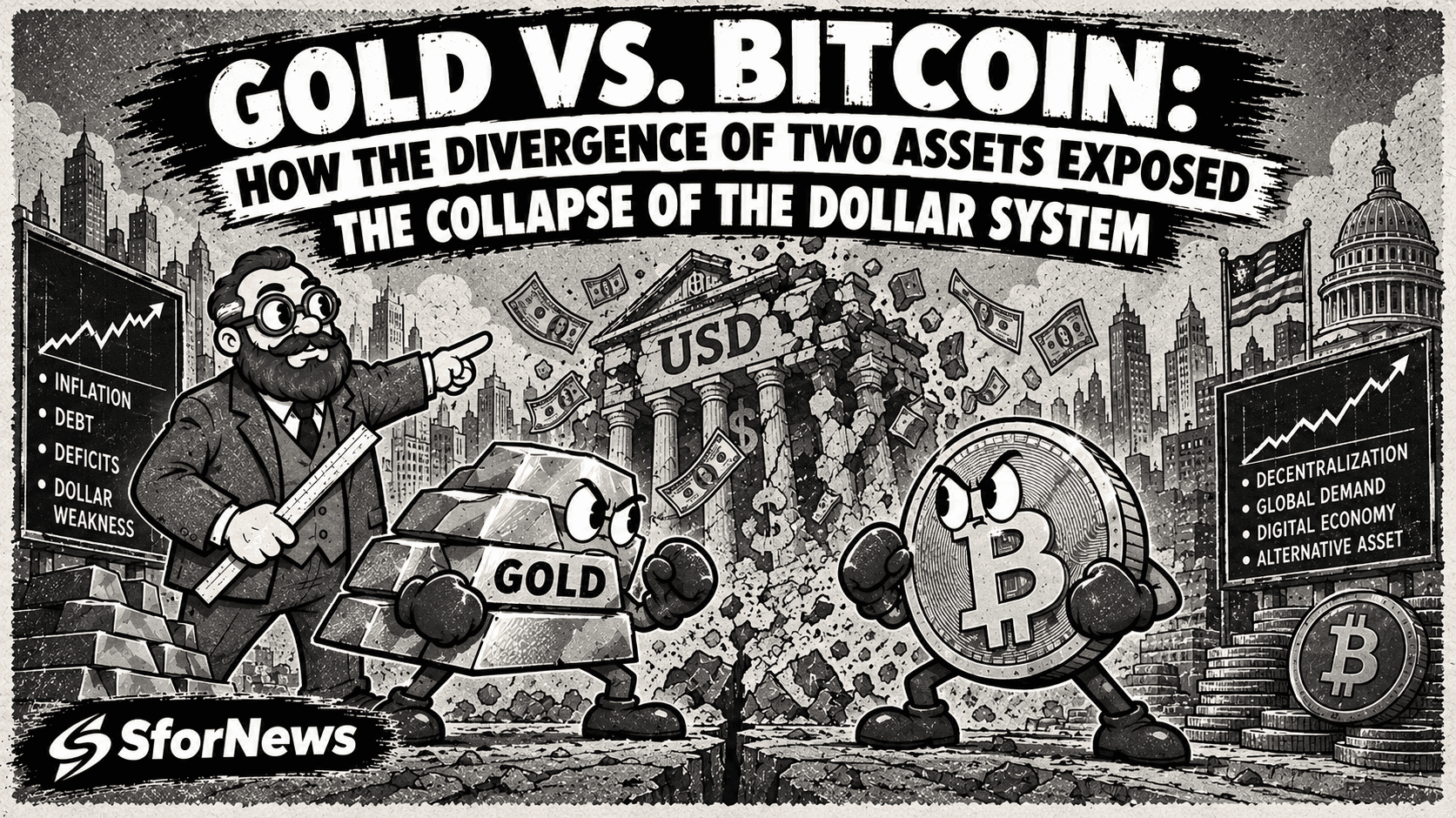
The dollar weakened. Bitcoin and gold rose. This is a classic reaction to a loss of confidence in the fiat system.
WHAT THIS MEANS FOR THE NEW SYSTEM
The conflict over Iran’s crypto channels is not just an episode in the sanctions war. It is recognition that the old system no longer works [10].
Iran has lived under sanctions for decades. It built complex networks of intermediaries, exchange offices, crypto transfers, and shadow shipping companies. These networks worked because the dollar system could not control them.
Now the U.S. is trying to close these channels. But it cannot stop the phenomenon itself: countries cut off from SWIFT will use any available tools to survive. And one of the main such tools is bitcoin.
Iran is not an exception. It is a prototype. If the U.S. sanctions regime expands, other pariah states — and not only them — will seek alternative payment channels. Bitcoin, stablecoins, decentralised exchanges — all of this is becoming part of a parallel financial system [3][10].
Notably, unlike stablecoins (such as USDT, which the issuer can freeze), bitcoin is decentralisedand has no single issuer — it cannot be blocked. This is precisely why it is becoming the instrument of choice for countries seeking to evade sanctions [3].
ARCHITECTURAL CONCLUSION
This week revealed three things.
First. U.S. sanctions against Iran have officially included cryptocurrencies in the list of targets. This is recognition of their systemic significance [1][2][3].
Second. The market interpreted this as confirmation that bitcoin is not a “speculative bubble” but a global asset that reacts to macro events in the same way as gold [6][7].
Third. Iran’s crypto infrastructure has become a battleground between the old system (the dollar, sanctions, OFAC) and the new (decentralised assets, evasion channels, parallel finance). The U.S. strikes at intermediaries. Iran seeks new routes. Bitcoin remains.
The question is not whether Iran can survive under new sanctions. The question is how long the old system can control what is inherently uncontrollable.
This analysis is for informational purposes only and does not constitute investment advice. The material is based on open data.
🔗 MORE ANALYTICS — AT Sfornews https://sfornews.com/
FULL LIST OF SOURCES
[1] Incrypted — U.S. Treasury announces new sanctions against Iran under “Operation Economic Outcast”, August 25, 2026
[2] Blockchain.News — OFAC Expands Iran Sanctions to Crypto Sector Under New Campaign, August 25, 2026
[3] Bitcoin Magazine — US Opens A New Front Against Iran’s Crypto Economy, August 25, 2026
[4] CoinPaprika — US targets Iran’s cryptocurrency industry in “Economic D-Day” sanctions wave, August 26, 2026
[5] Reuters — Iranian oil offers to Chinese buyers fall as US blockade bites, August 21, 2026
[6] Yahoo Finance — U.S. Expands Iran Sanctions as Bitcoin Breaks $80,000, August 25, 2026
[7] BBC — America’s $40 trillion debt, August 20, 2026
[8] Perforum — US government bond yields hit highest since 2007, August 18, 2026
[9] Al Jazeera — One US dollar now costs 2 million rials in Iran, August 26, 2026
[10] DW — The new sanctions against Iran’s shadow economy, August 25, 2026
[11] Mixnews — Iran promises to respond to new US sanctions, August 25, 2026
[12] Gate News — US Treasury expands crypto sanctions against Iran and blocks $100M payment network, August 26, 2026


Bitcoin
$62,881.23

Ethereum
$1,672.04

Litecoin
$42.71

Dash
$37.08

Bitcoin Cash
$209.43