Global Crisis 2026: US Inflation, Real Estate Crash & New Opportunities | Yan Krivonosov
“This Isn’t the End of the World, But New Opportunities”: Why We Are Entering the Worst Crisis in 100 Years and What to Do About It
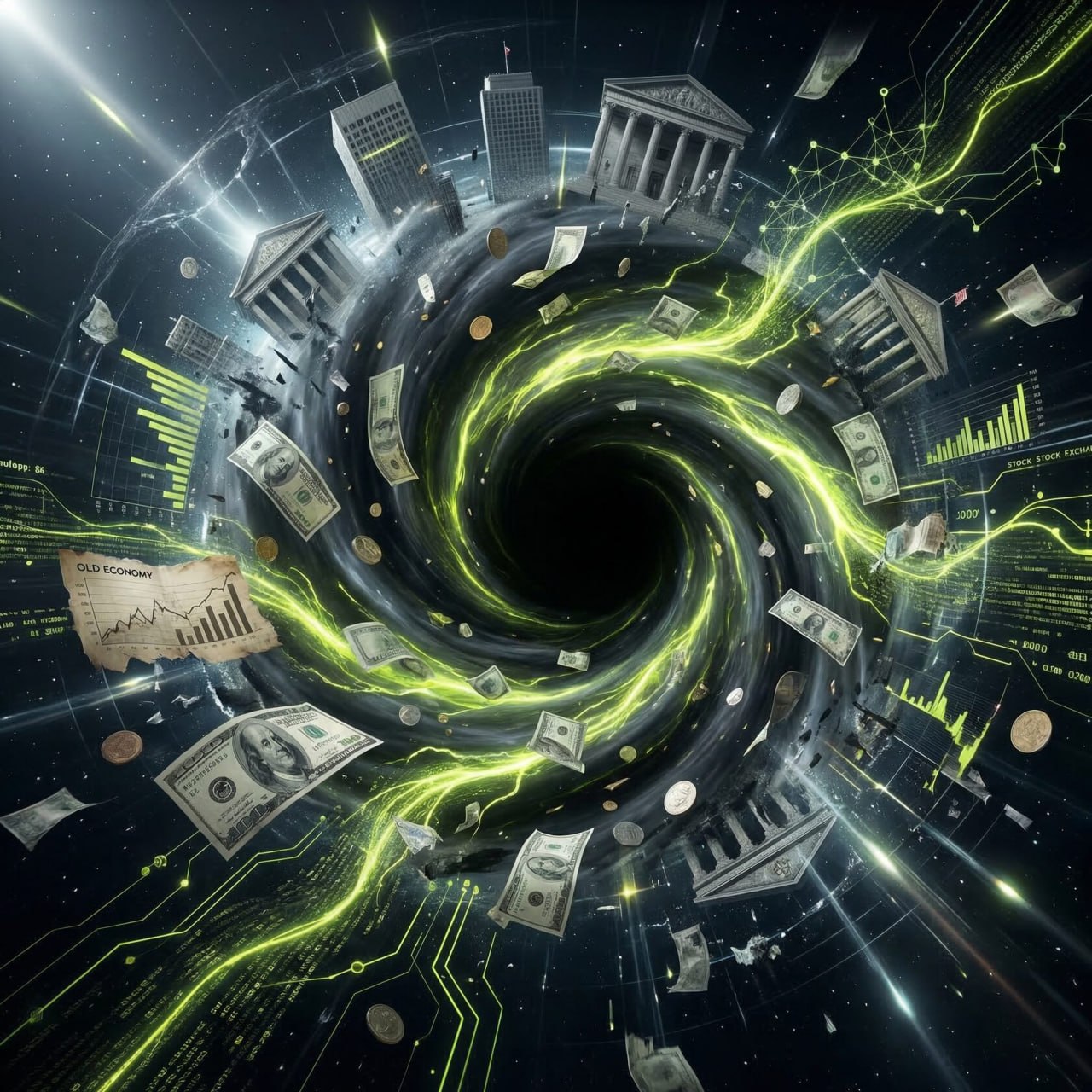
We are used to looking at America. It has always been this way: where the US goes, there lies the epicenter of the global storm. The Great Depression, the oil crisis of the ’70s, the dot-com bubble, the mortgage collapse of 2008… The American market sneezes, and the world economy catches pneumonia. Today, we stand on the brink of that very moment again, and it seems this time we are facing the most serious crisis in the last 100 years. But let’s be clear from the start: this is not a panic report. It is an attempt to understand where we find ourselves and why a crisis always brings new opportunities.
Inflation: The American Pump and Global Chaos
It all starts with money. On February 25th, staff at the International Monetary Fund (IMF) published a report that should have shaken investors but passed rather routinely. Fund specialists predict that US inflation will not return to the Federal Reserve’s target 2% until early 2027. The reason? A gigantic budget deficit (7-8% of GDP) and a national debt that is projected to reach 140% of GDP by 2031.
It’s a deadlock. If inflation doesn’t recede, the Fed cannot lower rates (currently at 4.25%-4.50%). A high rate strengthens the dollar and makes US bonds attractive, with yields hovering around 4.69%. This is the classic “safe haven” scenario, where money flows out of risky assets like cryptocurrencies and into US government debt.
And if the US fires up the printing press again to plug budget holes (as they’ve done many times before), the world will drown in inflation. The dollar will become more expensive for everyone else, commodities will surge in price, and emerging markets will take a huge hit.
Generation Z and the “Silent” Cities of China
But a crisis isn’t just about numbers in Fed reports. It’s about people. Let’s face the truth: Generation Z is trapped. They have nowhere to go for work. And it’s not about laziness—the world has changed too fast.
In Russia, for example, the number of vacancies requiring AI skills grew by 31%, and the number of resumes highlighting neural network expertise skyrocketed by 167%. That seems like growth. But that’s a story for those already “in the know.” What about those just leaving university, where they were taught to work the old way? The situation is global: even in the US, young professionals aged 22 to 25 find themselves vulnerable. Companies are increasingly investing in AI instead of hiring newcomers. A quarter of top managers worldwide believe that neural networks can perform tasks previously assigned to interns. AI has already “killed” 50% of routine work in various professions—and it’s practically free.
Now add real estate to the mix. In the US, office buildings are 35-40% vacant. In Chicago, a 22-story tower in the city center sold for eight times less than it did eight years ago—the new owner paid just $41 million instead of the previous $318 million. There are no tenants, but the loans taken out to build these skyscrapers still need to be paid. Construction companies and banks aren’t generating income, so they cut staff and salaries. And without stable jobs and savings, Zoomers can’t buy homes. The market is spiraling.
Amidst this backdrop, there’s silence in China. Literally. China’s cities are switching to electric vehicles so fast that you no longer hear the noise of engines. Gasoline and oil are ceasing to be commodity number one. The Chinese get their electricity from solar panels, which have become dramatically cheaper over the last five years. This is a global tectonic shift that hits the wallets of oil exporters, including Russia. The only factor that could push commodity prices up right now is escalation in the Middle East. As sad as that sounds.
China on the Brink? And the New Reality of Banks
However, not everything is smooth in China either. Some analysts seriously suggest the country is teetering on the brink of bankruptcy. The bubble in China’s real estate market (amounting to trillions of dollars) still hasn’t been fully deflated. Corporate external debt is enormous, and the demographics are challenging—the population is aging, and the workforce is shrinking.
Chinese companies are desperately in need of AI specialists (a shortage of about 5 million people), but the economy is slowing down. The pressure is immense.
In this chaos, the old financial system is cracking at the seams. The banking system as we’ve known it for the last 50 years will be unrecognizable in five years. The world is changing right now, and the main driver of change is blockchain. Just think about it: the Aave protocol, a tool in decentralized finance (DeFi), has already facilitated over $26 trillion in transactions! Banks that once looked down on crypto now want to use this liquidity. They are lining up to enter DeFi instruments.
What to Do and Where Does Bitcoin Fit In?
This kind of scenario—inflation, geopolitics, a crisis of confidence in fiat—has always been the best environment for Bitcoin. This isn’t financial advice; it’s simply knowing history and math. Bitcoin is finite. It cannot be printed by government decree. In moments when America fires up the printing press, and real estate and stocks fall, capital seeks refuge in a truly hard asset.
But let’s look broader. A crisis is always an opportunity. Yes, we are entering a storm, perhaps the most powerful in a century. Yes, it’s tough for Zoomers, physical businesses haven’t fully recovered from COVID, the labor market is reshaped by AI, and the geopolitical map is being redrawn by wars and new technological alliances.
But right now, before our very eyes, blockchain, stablecoins, and Real World Assets (RWA) are becoming part of our daily lives. This isn’t the end of the world—it’s a reset. The world is shedding the old and inefficient, preparing for a new leap forward.
Hunkering down won’t work. There’s only one way out: keep your head up, look around for new niches, and integrate into the new reality. If you understand which way the wind is blowing, the crisis will become not a catastrophe for you, but a launching pad.
Everything I’ve written here is just food for thought. The decision is yours. But the time to act is now.
Yan Krivonosov


Bitcoin
$62,881.23

Ethereum
$1,672.04

Litecoin
$42.71

Dash
$37.08

Bitcoin Cash
$209.43