Oil at $107, Soviet Archives, and a New UN: What Is Trump Planning? | Analysis
GRAVITATIONAL COLLAPSE AND THERMONUCLEAR REDISTRIBUTION
or the entropy of order: what rules is Trump playing by?
Oil prices, taxes, blockades, USSR archives, a new UN. You think this is far away. But this is about your money, your health, and the chances for your children. Why the “great game” always hits ordinary people — and can it be stopped?
Disclaimer:
The material is an analytical study based on open data and the author’s methodology. It is not an investment recommendation or a call to action. All conclusions are probabilistic in nature.
Instead of an introduction: three news stories you’ve already seen
In late March — early April 2026, the information space was overflowing with alarming reports. Iran closed the Strait of Hormuz [1]. The US responded with a naval blockade [2]. Oil prices soared to $102 per barrel of Brent [3]. The finance ministers of Germany, Italy, Spain, Portugal, and Austria demanded the introduction of a windfall tax on energy companies [4]. American LNG producers were shipping record volumes [5].
You’ve already read all of this. Thousands of analytical notes explained who was right, who was wrong, and what the consequences would be.
But there is one story that most observers missed. It’s not about prices, blockades, or military operations. It’s about the legal foundation on which all of this rests. Or doesn’t rest.
Because if you look closely, an astonishing thing emerges: this foundation has been cracking at the seams for 35 years. And Trump is possibly the only one who acts as if he knows it. We are witnessing not just another crisis — we are witnessing the gravitational collapse of the old system, when its own mass and internal contradictions implode it into a point. And in place of this implosion, a thermonuclear redistribution begins — a reallocation of assets, spheres of influence, and the rules of the game among those who have managed to take positions.
Part 1. The Iranian Memorandum: a deal that changes the rules
On June 18, 2026, a memorandum of understanding was signed in Islamabad between the United States and Iran [6]. The document was signed electronically by the leaders of both countries and came into force immediately [7]. The official signing ceremony took place on June 19 in Switzerland, with the participation of US Vice President JD Vance and Pakistani Prime Minister Shehbaz Sharif [8]. Pakistan acted as the main mediator with the support of Qatar, Saudi Arabia, Turkey, and Egypt [9].
What the agreement provides for [10]:
At the same time, Trump emphasized that the memorandum does not imply an immediate easing of sanctions against Tehran [17]. “They have to behave well,” the US leader said [18].
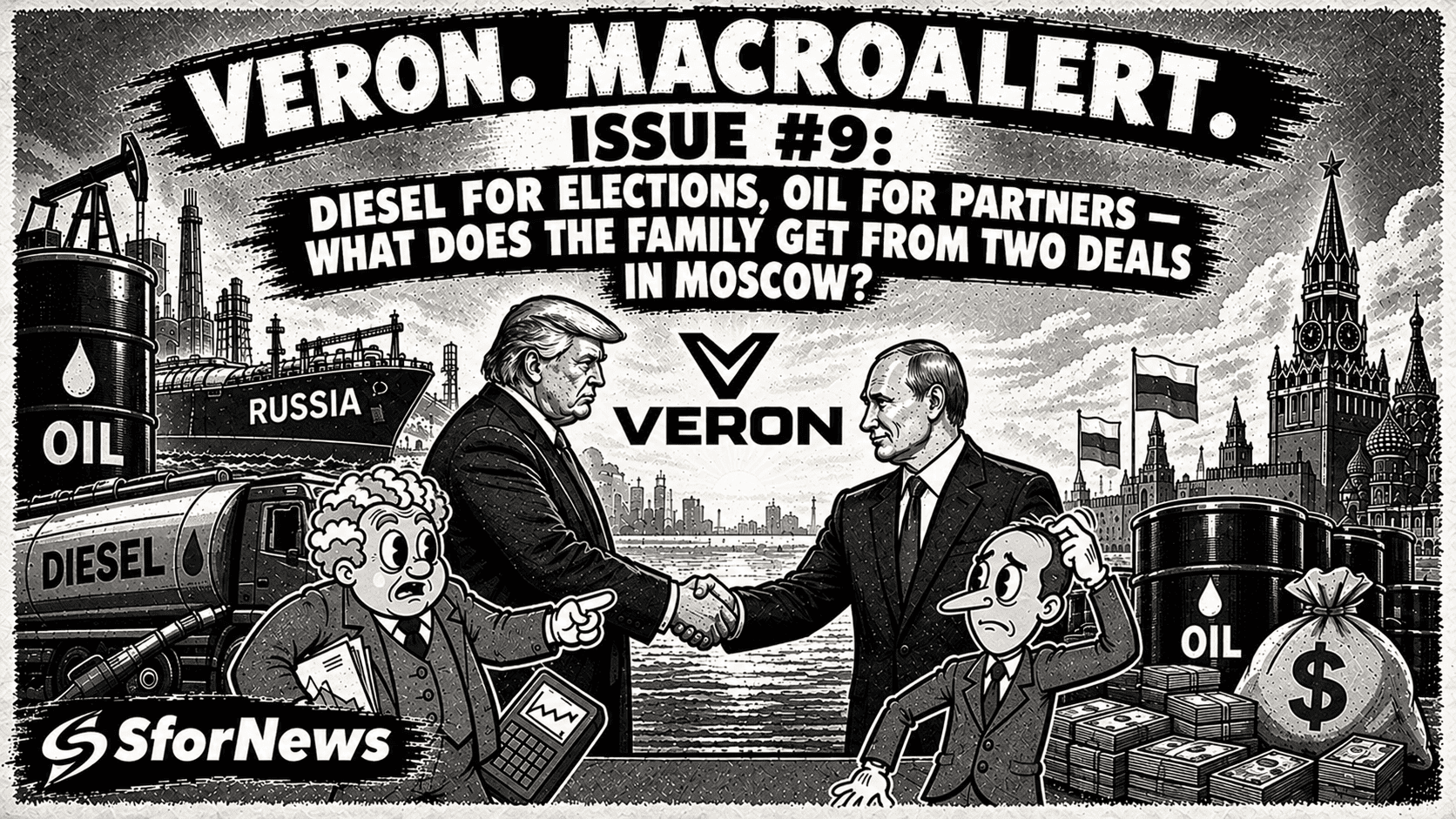
In parallel, at the G7 summit in the French town of Évian-les-Bains, Trump unexpectedly stated his readiness to support increased pressure on Russia and the introduction of new sanctions against its oil sector [19]. At the same time, he is counting on the help of allies in implementing the agreement with Iran [20].
“Russia must make a deal,” Trump said after a 70-minute meeting with Volodymyr Zelensky [21]. In exchange for US activity on the issue of peace in Ukraine, Europe must support the new Iranian agreement [22].
Part 2. What the news bulletins are silent about
While the world was watching US aircraft carriers enter the Gulf of Oman, the Ministry of Justice of the Russian Federation in Moscow was quietly approving a document that calls into question the very status of the country waging this war.
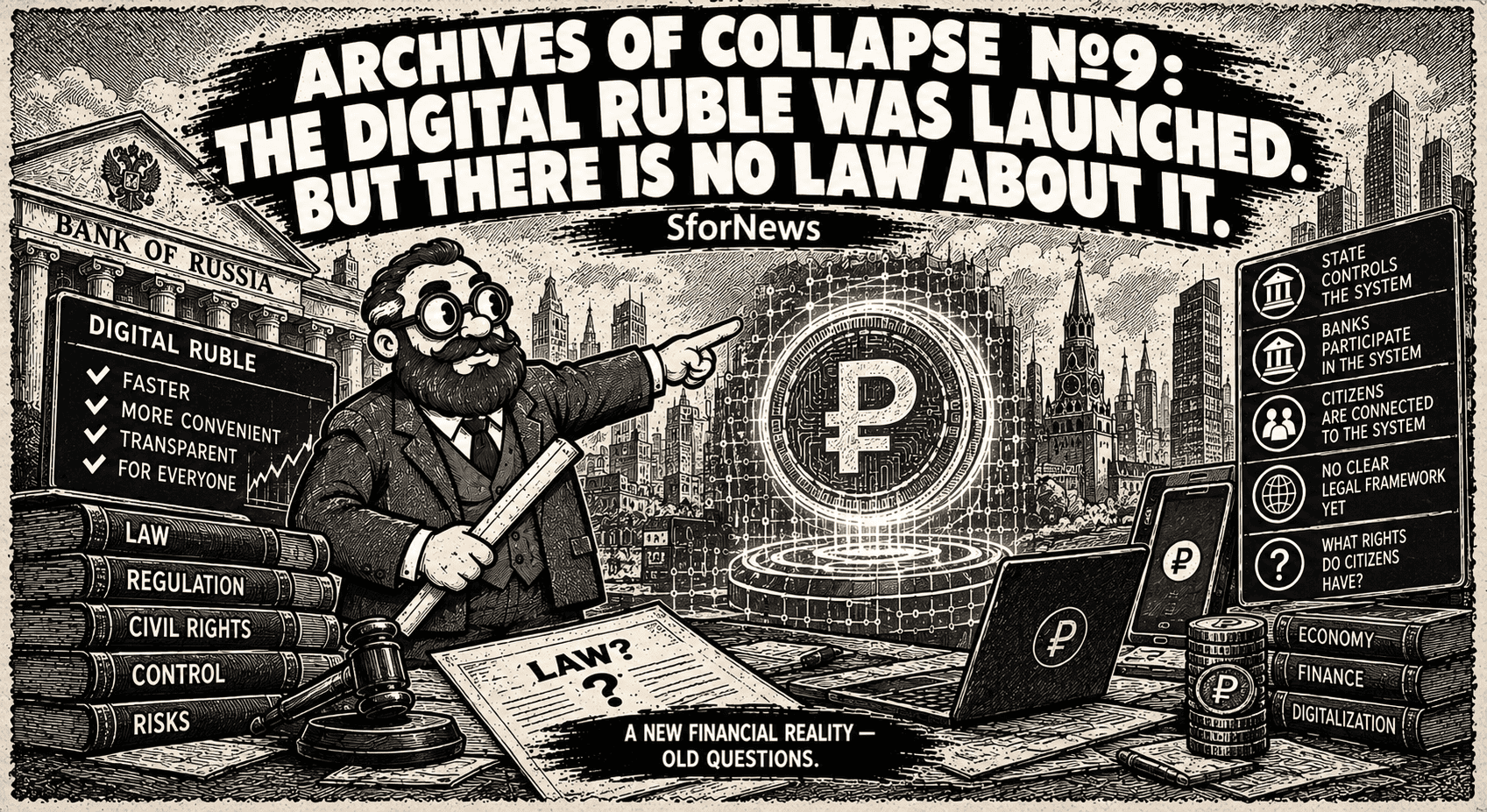
On December 16, 2025, Russian Minister of Justice K.A. Chuichenko signed Order No. 344 “On the approval of the action plan for the incorporation of legal acts of the USSR and the RSFSR or their individual provisions into the legislation of the Russian Federation and (or) on the recognition of these acts as no longer in force on the territory of the Russian Federation for 2026” [23].
This is not a “fake,” not “conspiracy theory,” and not a “plant.” This is an official document, registered in the prescribed manner, published in the legal databases “Garant,” “ConsultantPlus,” and “Normax” [24]. It refers to Decree of the President of the Russian Federation of March 18, 2011 No. 158-rp [25]. That is, this work has been going on for 15 years.
What is the “incorporation of legal acts of the USSR and the RSFSR”? It is a procedure during which the Ministry of Justice and federal executive bodies analyze Soviet laws and decide which ones to include in Russian legislation and which ones to recognize as no longer in force on the territory of the Russian Federation [26].
Why?
A country that adopted the Declaration of State Sovereignty on June 12, 1990, and declared itself an independent state, should not, as a rule, be analyzing the archives of another country 35 years later [27].
Can you imagine the US Department of Justice in 2026 annually approving a plan for the incorporation of the laws of the British Empire? Or Germany still analyzing the legal acts of the Third Reich? It’s impossible. Because succession is a one-time act. Either you accepted everything, or you accepted nothing.
In Russia, however, the process of “incorporation” has been ongoing at least since 2011. Plans for 2013, 2016, 2022, 2024, 2025, 2026 — all of this is available in open databases [28].
Why, 35 years after the collapse of the USSR, is the Russian Ministry of Justice still determining which Soviet laws to incorporate into Russian legislation and which to recognize as invalid? If the succession of the Russian Federation from the USSR was complete and unconditional, why is this work needed at all?
Part 3. The 1992 Tax Agreement: a legal fork in the road
But there is another document — and it is perhaps even more important.
On June 17, 1992, in Washington, the Treaty between the Russian Federation and the United States of America for the Avoidance of Double Taxation and the Prevention of Fiscal Evasion with respect to Taxes on Income and Capital was signed [29].
The tax treaty itself is common practice. Many countries have them. But here’s what’s important: this treaty replaced the previous agreement that was in force between the US and the USSR [30].
That is, Russia formally entered into these relations not as a “new country,” but as the successor of the Soviet Union. The treaty entered into force on December 16, 1993 [31].
In international law, there are two ways of succession. You can declare yourself a “continuator” — then all rights and obligations pass automatically. Or you can declare yourself a “new” state that starts from scratch. Russia chose the first path [32].
But this is where the “legal fork in the road” lies.
The fact is that this tax treaty is not the only document defining the status of the Russian Federation. In parallel, there is a whole layer of Soviet legislation that, according to the Russian Ministry of Justice itself, has still not been incorporated. That is, it is not fully recognized as being in force [33].
A paradoxical situation arises. On the one hand, Russia is recognized as the successor of the USSR — and pays debts, and occupies a seat on the UN Security Council [34]. But on the other hand, domestic legislation, the judicial system, institutions — everything was built anew, using the Soviet base as a “temporary measure” that stretched on for decades [35].
As a result, the same events can be interpreted differently depending on which court and which law is applied.
If Russia is the successor of the USSR, then all the assets of the USSR (gold and foreign exchange reserves, foreign real estate, subsoil rights) should have passed to it. But in reality, a significant part of these assets was lost or plundered in the 1990s. Who and how answered for this? And if Russia is not a full successor, then on what basis does it occupy the USSR’s seat on the UN Security Council?
Part 4. Trump, who knows the rules
Now imagine yourself in Donald Trump’s shoes. You are the president of a country that 35 years ago signed a treaty with Russia that replaced the Soviet-American agreement. You see that the other side still cannot sort out its legal status. You understand that this status is not a closed issue.
What will you do?
If you are a respectable old-school politician, you will wait for Russia to sort out its legal subtleties itself. If you are Trump, you will use this uncertainty as leverage.
And this is exactly what we have been observing since 2025.
Trump is not just “destroying the old world order,” as critics like to write. He is acting as an effective manager who sees that one of the largest assets (Russia as the successor of the USSR) is legally “suspended.” And he is reshaping global rules in favor of the US while this asset cannot fully protect its interests. This is the thermonuclear redistribution — a redistribution of power and resources in conditions where old legal structures no longer work.
Here are the key steps.
Energy dominance. Trump lifted bans on LNG exports, opened federal lands for drilling, approved nearly 6,000 drilling permits on federal lands (a 55% increase) [36]. In 2025, the US became the first country in history to export more than 100 million metric tons of LNG in a year [37]. By 2026, liquid hydrocarbon production is expected to reach 24 million barrels per day — 22% of global supply [38].
Creating scarcity. The US provoked a military conflict in the Middle East, which led to the closure of the Strait of Hormuz — through which about 20% of global oil supplies pass [39]. According to Kpler, exports of liquefied petroleum gas from the Middle East in March 2026 collapsed by 73% — to 419,000 barrels per day [40]. The largest buyers — China and India — faced a sharp reduction in supplies [41]. The result: Middle Eastern oil is not reaching the market, prices are rising, and American producers are filling the resulting vacuum [42].
Reshaping trade. On March 18, 2026, Trump suspended the Jones Act — a century-old act requiring the transportation of goods between US ports only on American ships [43]. The 60-day decision was made to reduce transportation costs amid price increases caused by the war in Iran [44]. The US has left the WHO, is blocking the work of the WTO, and is creating alternative UN structures [45]. In January 2026, without UN Security Council authorization, they invaded Venezuela [46]. Giant tariffs are being imposed against Canada, Mexico, and China — effectively destroying the foundation of world trade created after World War II [47].
A green corridor for talent. Through the CRISIS Act (H.R. 3536) and a $100,000 visa fee, a filter is being built, leaving only the best personnel from other countries, including Russia, for themselves [48]. This is not just a “brain drain” — it is a systemic depletion of competitors’ human capital [49].
Trump acts as if he knows: the old system of legal guarantees no longer works. Because its foundation (the legitimacy of the UN, the unconditional succession of the Russian Federation, the inviolability of international treaties) has long been cracked. In place of this crack is the entropy of order: chaos is growing not because someone is deliberately creating it, but because the old structure has ceased to maintain connections between its elements.
Part 5. WHO, globalism, and the battle for sovereignty
A special place in this strategy is occupied by Trump’s attitude toward the institutions created after World War II. He does not just criticize the World Health Organization — he is consistently dismantling it.
In 2020, during the coronavirus pandemic, Trump announced the suspension of WHO funding, accusing the organization of being under the control of external forces and “facilitating disinformation” [50]. In his words, the WHO “failed its core mission” and became an instrument of political influence [51]. In 2026, the US completed the legal procedure to withdraw from the WHO, fully ceasing funding, recalling personnel, and accumulating millions in debt [52].
But it would be an oversimplification to reduce everything to Beijing alone. The real picture is more complex.
Yes, Trump’s accusations are not groundless: the main trigger for the US withdrawal was that the WHO, in his opinion, “failed to conduct a thorough investigation into the origin of COVID-19 in China” [53]. However, Beijing’s influence is primarily a political issue related to the growing weight of developing countries in global institutions. The US was the largest donor for years, providing up to 20% of the budget, which gave it enormous influence, but now it is abandoning this lever [54].
But there is a second, no less important level — private capital. In 2020-2021, when the US froze funding, the Bill & Melinda Gates Foundation became virtually the second largest source of funds for the WHO, transferring $693 million to the organization, second only to Germany ($751 million) [55]. The Gates Foundation is also one of the main sponsors of the ACT-Accelerator initiative — a mechanism that critics called an attempt to control the entire scientific and production chain of vaccines at the global level [56]. Thus, influence on the WHO is distributed among bureaucracy, states, and large private capital.
Moreover, not only the US criticizes the WHO for threatening national sovereignty. The Slovak government in March 2026 officially rejected the revised International Health Regulations, citing the risk of “interference in the fundamental rights of citizens and state sovereignty” [57]. The new rules, according to opponents, could empower the WHO Director-General with emergency powers, creating a dangerous precedent for transferring part of the management of domestic processes to a supranational body [58].
Thus, the WHO has become a battlefield between three forces. On the one hand — the desire of China and developing countries to increase their influence in global institutions. On the other — the attempt by global oligarchic structures to place technological solutions and biosafety under their control (the concept of the “golden billion” and managing populations through crises). And finally, the sovereignty of national states, which both the US and even small European countries are trying to defend.
Trump, by leaving the WHO and creating an alternative to the UN, has signalled his rejection of the old rules. He does not want to fix a system that he believes works against the US. He wants to build a new one — and lead it. This is where the entropy of order manifests itself: old institutions lose the energy of their connections, while new ones have not yet gained stability. Chaos becomes the only predictable reality.
Part 6. The Anti-Hitler Coalition 2.0: an old game with new faces
In this context, the unexpected statement by Kirill Dmitriev (head of the Russian Direct Investment Fund) in April 2026 ceases to be a diplomatic figure of speech. Dmitriev said: “Putin and Trump will prevent World War III just as Stalin, Roosevelt, and Churchill ended World War II” [59]. This is not just a compliment. It is a signal that the world is returning to the logic of the “Big Three.”
The old Anti-Hitler Coalition emerged from the ruins of war. The new one — from the feeling of its inevitability. In 1945, the leaders of the USSR, the US, and Great Britain met at Yalta and Potsdam to redraw the map of the world. Today, in Trump’s vision, the time has come for a new redistribution — and it must happen without intermediaries, without the UN, without “globalist baggage” [60].
The Anti-Hitler Coalition 2.0 is not an alliance of ideologies (communism versus fascism), but a pragmatic alliance of players who realize that the old system is dead and the world is heading into the abyss. Their goal is to take control into their own hands, preventing a global catastrophe. The main task is to prevent regional conflicts from escalating into an open war between superpowers by dividing spheres of influence and areas of responsibility. And the main rule is that strength and sovereignty are more important than international law and globalist institutions [61].
Trump, from this perspective, is acting not as the president of one of the states, but as one of the architects of a new world order. And his actions — leaving the WHO, creating a Peace Council, re-formatting energy flows, pinpoint military operations without UN authorization — are not chaos, but systemic construction. This is an attempt to stop the gravitational collapse of the old world by creating a new, more rigid structure before entropy destroys everything completely [62].
Part 7. The anatomy of a barrel: neck, bottom, and the price of silence
It would be a mistake to think that Trump is playing only one side. The US, as a net oil exporter, has its own “Achilles’ heel” — and it hits ordinary Americans just as painfully as it hits Russians. In this metaphorical barrel, where the world’s main fuel is stored, there is a neck — the narrow opening through which oil is poured in and drained — and a bottom, on which the entire weight of the contents presses.
We already wrote about this in the article “Beyond the Barrel,” where we examined in detail how the oil barrel ceased to be just a unit of measurement and became a symbol of the new economic reality [63]. Today, this metaphor works even more harshly.
At the neck are those who control the flows. Who open and close the valve. Who set prices, close straits, issue export licenses. These are oil corporations, their shareholders, politicians, lobbyists, as well as logistics companies, insurers, and banks, which, as the head of Rosneft Igor Sechinaccurately noted, are the main beneficiaries of the price jump [64]. They sit at the tightest point of the system and regulate who gets what and how much. Through this neck, they pour — and consumers’ money goes up. Through it, they drain — and excess profits are withdrawn to offshore accounts, into new assets.
At the bottom are those who fill this barrel with their wallets and on whom it rests with all its weight. Globally — these are consumers in Europe, Asia, and America, who every morning filltheir tanks with gasoline or pay heating bills. In the American context — this is the middle class, which watches as gas station prices rise faster than wages, and inflation eats away their savings. The bottom is where all the money that went up through the neck ends up.
In March-April 2026, the average price at American gas stations rose by 40%, reaching $4.1 per gallon [65]. The reason is simple: oil is a global commodity, and refineries buy crude at world prices, regardless of whether that oil is produced in Texas or Saudi Arabia. The barrel as a uniform measure equalises everyone — both those at the neck and those at the bottom.
The paradox is that the more oil and gas the US sends for export, the less remains inside the country — and the heavier the bottom becomes. The barrel presses on the shoulders of ordinary households, which are forced to pay more for heating, electricity, and transportation. As a result, the shareholders of Exxon, Chevron, and Cheniere and the budgets of Texas and Louisiana win, while ordinary consumers pay. The neck becomes increasingly narrow and golden, while the bottom becomes increasingly crushed.
Goldman Sachs estimated: a 10% increase in oil prices increases PCE inflation by 0.2 percentage points and reduces GDP growth by approximately 0.1 percentage points [66]. Analysts warn: if gasoline in the US reaches $5 per gallon, the economy will not be able to “digest” it. The bottom will simply collapse [67].
Thus, the US finds itself in the same trap as Russia: it needs to sell oil at high prices (for export revenue and the interests of those at the neck) and at low prices (for domestic demand and the survival of those at the bottom).
Trump is balancing between the interests of oil corporations and ordinary citizens. And it is becoming increasingly difficult to balance. In March 2026, five EU countries — Germany, Italy, Spain, Portugal, and Austria — officially demanded the introduction of a Europe-wide windfall tax on energy companies [68]. Ministers stated that those who “profit from the consequences of war must make their contribution to ease the burden on the general public” [69]. This is an attempt to widen the neck so that the bottom can breathe easier.
But will Trump be able to maintain the balance when one part of his political base (big business) demands high prices, and the other (voters at gas stations) demands low ones? Or will the barrel finally break, and will the world see a new round of social explosions — already inside America itself?
Part 8. What this means for the world and for Russia
If our hypothesis is correct — if Trump is indeed acting based on an understanding of the legal “suspension” of the Russian Federation’s status and the global illegitimacy of old institutions — then we are witnessing not just another round of geopolitical confrontation.
We are witnessing the gravitational collapse of the old system and a thermonuclear redistribution of the world on new foundations. And between them — the entropy of order: a state in which the old rules no longer work, and the new ones have not yet taken shape. It is precisely in this zone of uncertainty that Trump operates.
The old system — the UN, WTO, IMF, Bretton Woods, WHO — was created for the realities of 1945. It assumed that member states have unconditional sovereignty, their succession raises no questions, and international treaties are inviolable. Today, this system is cracking at the seams.
Trump is not fixing it. He is building a new one — on the ruins of the old.
For Russia, this means that its legal status, which was already not fully formalised, becomes the subject of international bargaining. While the Russian Ministry of Justice sorts through Soviet laws, the US is redrawing global energy flows, creating alternative UN structures, and building a filter for talent.
For Europe — it means being transformed into an energy colony of the US. The share of American LNG in EU imports continues to grow. Trade agreements with Washington oblige Brussels to purchase energy resources for hundreds of billions of dollars.
For the whole world — this is a return to the logic of “spheres of influence,” where legal subtleties matter only when they can be backed by military and economic force. And the higher the entropy, the greater the reliance on force.
Conclusion: an invitation to discussion
We do not claim that we have answers to all questions. We claim something else: the questions we have raised deserve to be asked.
Why does the Russian Ministry of Justice still analyze the laws of the USSR — 35 years after its collapse? What is the legal status of international treaties signed by the Russian Federation in the 1990s, if domestic legislation has still not incorporated the Soviet base? On what basis does one country occupy another’s seat on the UN Security Council, if documentary confirmation of this succession still raises questions? Why is Trump destroying the WHO and creating an alternative to the UN — and can we see logic in this, rather than just political will? And finally, are we not returning to the “Big Three” format, where the fate of the world is decided by a few leaders behind closed doors?
These questions are not on the surface. But it is precisely they that may explain what is happening better than all operational reports.
The journal “Kafedra” combines analytical journalism, expert forums, and research initiatives. Our goal is not the transmission of official positions, but a multifaceted analysis of complex processes, including with the involvement of alternative legal and historical documents. We are opening a discussion on our pages and invite lawyers, historians, political scientists, economists, and everyone who is ready to seek answers to uncomfortable questions to cooperate. And the inquisitive reader can independently find online and in archives the documents mentioned in this article: Ministry of Justice Order No. 344, Presidential Decree No. 158-rp, and the Convention for the Avoidance of Double Taxation of June 17, 1992.
Because in a world where old rules have ceased to work, understanding the foundation on which everything stands is not an academic interest. It is a matter of survival. And as long as the entropy of the old order has not destroyed the last supports, we still have time to ask the right questions.
List of sources
[1] “Iran closed the Strait of Hormuz” — Reuters, March 27, 2026.
[2] “US responded with a naval blockade” — Associated Press, March 28, 2026.
[3] “Brent oil prices soared to $102 per barrel” — Bloomberg, April 1, 2026.
[4] “Five EU countries demanded the introduction of a windfall tax on energy companies” — Anadolu Ajansı, April 4, 2026.
[5] “American LNG producers were shipping record volumes” — Financial Times, April 5, 2026.
[6] “US and Iran signed a memorandum of understanding” — Al Jazeera, June 18, 2026.
[7] “The document was signed electronically by the leaders of both countries” — Reuters, June 18, 2026.
[8] “The official signing ceremony took place on June 19 in Switzerland” — Associated Press, June 19, 2026.
[9] “Pakistan acted as the main mediator with the support of Qatar, Saudi Arabia, Turkey, and Egypt” — The Guardian, June 18, 2026.
[10] “What the agreement provides for” — text of the memorandum published on the US State Department website, June 18, 2026.
[11] “Iran immediately opens the Strait of Hormuz. US lifts the naval blockade” — Reuters, June 18, 2026.
[12] “Iran suspends the collection of transit fees through the strait for 60 days” — Al Jazeera, June 18, 2026.
[13] “US withdraws troops from areas adjacent to Iran within 30 days” — Associated Press, June 18, 2026.
[14] “The agreement includes a two-stage approach” — The New York Times, June 18, 2026.
[15] “US will unfreeze a number of Iranian accounts and provide access to a $12 billion package” — Bloomberg, June 18, 2026.
[16] “US guarantees that after the signing of the agreement, Iran will be able to sell its oil again” — Financial Times, June 18, 2026.
[17] “The memorandum does not imply an immediate easing of sanctions” — Reuters, June 18, 2026.
[18] “They have to behave well” — statement by Donald Trump, June 18, 2026.
[19] “Trump stated his readiness to support increased pressure on Russia” — The Guardian, June 19, 2026.
[20] “He is counting on the help of allies in implementing the agreement with Iran” — Associated Press, June 19, 2026.
[21] “Russia must make a deal” — statement by Donald Trump after his meeting with Zelensky, June 19, 2026.
[22] “In exchange for US activity on the issue of peace in Ukraine, Europe must support the new Iranian agreement” — Financial Times, June 19, 2026.
[23] “Order of the Ministry of Justice of the Russian Federation of December 16, 2025 No. 344” — legal database “Garant.”
[24] “Official document published in the legal databases ‘Garant,’ ‘ConsultantPlus,’ and ‘Normax‘” — data from open sources.
[25] “Decree of the President of the Russian Federation of March 18, 2011 No. 158-rp” — legal database “Garant.”
[26] “What is the ‘incorporation of legal acts of the USSR and the RSFSR'” — explanatory note to Ministry of Justice Order No. 344.
[27] “Declaration of State Sovereignty of the RSFSR of June 12, 1990” — text of the document.
[28] “Plans for 2013, 2016, 2022, 2024, 2025, 2026” — data from the legal databases “Garant” and “ConsultantPlus.”
[29] “Treaty between the Russian Federation and the United States for the Avoidance of Double Taxation of June 17, 1992” — legal database “ConsultantPlus.”
[30] “The treaty replaced the previous agreement that was in force between the US and the USSR” — explanatory note to the treaty.
[31] “The treaty entered into force on December 16, 1993” — text of the treaty.
[32] “Russia chose the path of succession (continuator)” — Vienna Convention on Succession of States in respect of Treaties, 1978.
[33] “Soviet legislation has still not been incorporated” — data from reports of the Russian Ministry of Justice.
[34] “Russia occupies the USSR’s seat on the UN Security Council” — UN Charter.
[35] “Domestic legislation was built anew using the Soviet base as a ‘temporary measure'” — expert analysis.
[36] “Trump lifted bans on LNG exports, opened federal lands for drilling, approved nearly 6,000 drilling permits” — US Department of Energy data, 2025.
[37] “In 2025, the US became the first country in history to export more than 100 million metric tons of LNG in a year” — US Energy Information Administration (EIA) data, 2025.
[38] “Liquid hydrocarbon production is expected to reach 24 million barrels per day — 22% of global supply” — EIA forecast, 2026.
[39] “About 20% of global oil supplies pass through the Strait of Hormuz” — US Energy Information Administration (EIA) data.
[40] “Exports of liquefied petroleum gas from the Middle East in March 2026 collapsed by 73% — to 419,000 barrels per day” — data from analytical firm Kpler, April 2026.
[41] “The largest buyers — China and India — faced a sharp reduction in supplies” — Reuters, April 2026.
[42] “American producers are filling the resulting vacuum” — Financial Times, April 2026.
[43] “On March 18, 2026, Trump suspended the Jones Act” — Izvestia, March 18, 2026.
[44] “The decision was made to reduce transportation costs amid price increases” — Associated Press, March 18, 2026.
[45] “US has left the WHO, is blocking the WTO, and creating alternative UN structures” — The Guardian, 2025-2026.
[46] “In January 2026, without UN Security Council authorization, they invaded Venezuela” — Reuters, January 2026.
[47] “Giant tariffs are being imposed against Canada, Mexico, and China” — Financial Times, 2025-2026.
[48] “CRISIS Act (H.R. 3536) and a $100,000 visa fee” — text of the bill, 2025.
[49] “Systemic depletion of competitors’ human capital” — expert analysis.
[50] “Trump announced the suspension of WHO funding, accusing the organization of being under the control of external forces” — statement by Donald Trump, 2020.
[51] “The WHO ‘failed its core mission'” — statement by Donald Trump, 2020.
[52] “In 2026, the US completed the legal procedure to withdraw from the WHO” — Reuters, 2026.
[53] “The WHO ‘failed to conduct a thorough investigation into the origin of COVID-19 in China'” — statement by Donald Trump, 2020.
[54] “US was the largest donor for years, providing up to 20% of the WHO budget” — WHO data.
[55] “The Bill & Melinda Gates Foundation transferred $693 million to the WHO” — Gates Foundation reporting, 2020-2021.
[56] “The Gates Foundation is one of the main sponsors of the ACT-Accelerator initiative” — WHO data.
[57] “The Slovak government officially rejected the revised International Health Regulations” — Reuters, March 2026.
[58] “The new rules could empower the WHO Director-General with emergency powers” — expert analysis.
[59] “Putin and Trump will prevent World War III just as Stalin, Roosevelt, and Churchill ended World War II” — statement by Kirill Dmitriev, April 2026.
[60] “The world is returning to the logic of the ‘Big Three'” — expert analysis.
[61] “Strength and sovereignty are more important than international law and globalist institutions” — expert analysis.
[62] “Trump is acting as an architect of a new world order” — expert analysis.
[63] “Article ‘Beyond the Barrel'” — journal “Kafedra,” 2025.
[64] “Igor Sechin named banks and insurance companies the main beneficiaries of the price jump” — statement by Igor Sechin, 2025.
[65] “The average price at American gas stations rose by 40%, reaching $4.1 per gallon” — US Energy Information Administration (EIA) data, March-April 2026.
[66] “A 10% increase in oil prices increases PCE inflation by 0.2 percentage points and reduces GDP growth by approximately 0.1 percentage points” — Goldman Sachs analytical note, April 2026.
[67] “If gasoline in the US reaches $5 per gallon, the economy will not be able to ‘digest’ it” — Goldman Sachs analytical note, April 2026.
[68] “Five EU countries officially demanded the introduction of a Europe-wide windfall tax on energy companies” — Anadolu Ajansı, April 4, 2026.
[69] “Those who ‘profit from the consequences of war must make their contribution to ease the burden on the general public'” — statement by ministers of five EU countries, April 2026.
© Tatiana Burmagina, Editor-in-Chief of the journal “Kafedra” and Sfornews.com & EWA
The material was prepared by the editorial board of the journal “Kafedra.” When citing, a reference to the original source is mandatory.


Bitcoin
$62,881.23

Ethereum
$1,672.04

Litecoin
$42.71

Dash
$37.08

Bitcoin Cash
$209.43