Memorandum. Volume II. Debt, the Club and Rights: Classification of Countries in the Global Debt Architecture
MEMORANDUM. VOLUME II
DEBT, THE CLUB, AND RIGHTS: CLASSIFICATION OF COUNTRIES IN THE GLOBAL DEBT ARCHITECTURE
DISCLAIMER
This document is a conceptual project prepared on the basis of open data, public statements, and analytical materials. This memorandum is not a legal document, investment recommendation, or call to action. All conclusions are probabilistic and analytical in nature.
Boundary between the volumes.
Volume I describes the physical architecture: energy as a common public asset, Bitcoin as an energy derivative, and the NES as a distribution mechanism. Volume I answers the question: what is the resource?
Volume II describes the financial architecture: what debt is, who is inside the club, who is outside it, and what this means for sovereignty. Volume II answers the question: how is this resource extracted, and how can an alternative be built?
The elements described in Volume I (NES, Bitcoin as a derivative, and the physical chain “energy → mining → pool → citizens”) are not duplicated in this volume; they are referenced instead.
This volume is addressed to all countries. Debt is not only about economics. It is about power: who has the right to extract, and who is obliged to pay.
In this volume, Russia is the flagship, but not the only player. The world is already building a new system: China, the UAE, Oman, Kazakhstan, Paraguay, Ethiopia. Russia can either join them as an architect or remain a supplier of resources for those who are building it.
PART 1. DIAGNOSIS: THE WORLD AS A DEBT PYRAMID
1.1. Three ways to measure debt
As of 2026, global public debt has reached an unprecedented level. But “debt” is not a single figure. It is three different things that must be measured differently. The system is arranged so that you look at one figure and fail to see the others.
First layer: Nominal amount
| Rank | Country | Public debt ($ trillions) |
| 1 | United States | 40,25 |
| 2 | China | 22,3 |
| 3 | Japan | 8,9 |
| 4 | United Kingdom | 4,4 |
| 5 | France | 4,3 |
| 6 | Italy | 3,8 |
| 7 | Germany | 3,5 |
| 8 | India | 3,5 |
| 9 | Canada | 2,8 |
| 10 | Brazil | 2,5 |
Source: US Treasury / JEC, October 2026 (United States: $40.25 trillion); IMF WEO for other countries [1][2].
The United States ranks first. This looks like weakness, but it is a privilege: US debt is denominated in dollars, which the United States can print.
Second layer: Relative burden
This is the ratio of debt to GDP. Here, the picture changes. If your economy is worth 100 rubles and your debt is 200, that is a heavy burden. If your economy is worth 1,000 and your debt is 500, it is easy to bear.
| Rank | Country | Debt/GDP |
| 1 | Japan | 204,4%* |
| 2 | Singapore | 171,9% |
| 3 | Italy | 138,4% |
| 4 | Greece | 136,9% |
| 5 | Maldives | 129,4% |
| 6 | United States | 125,8%** |
| 7 | France | 118,4% |
| 8 | Canada | 110,7% |
| 9 | Belgium | 109,2% |
| 10 | China | 106,9%*** |
* Japan: IMF WEO April 2026 — 204.4%; October 2026 — 199.4%; methodologies differ [3].
** United States: 125.8% is gross debt / GDP according to IMF WEO; public debt (Treasury) is about 100% of GDP [4].
*** China: IMF WEO; October 2026 — 104.4%; includes part of LGFV debt [5].
Japan ranks first. Debt equals 204% of GDP. But this debt is in yen, which Japan can print. It does not need to be paid off. It can be serviced.
Third layer: Structural risk
This is what the news does not show. It is about “in what currency” and “to whom.” If a country owes money in a foreign currency, it cannot simply print more money. It must earn that currency. And if it cannot, it falls into a debt trap. This is where you see who is inside the club and who is outside it.
The key distinction: countries with the largest nominal debt and countries with the heaviest relative burden are two different lists. The United States ranks first by nominal amount but sixth by debt-to-GDP ratio. Japan ranks third by nominal amount but first by debt-to-GDP ratio. China ranks second by nominal amount but tenth by debt-to-GDP ratio.
“Debt” is three different things:
Nominal scale: who owes the most in absolute terms (the United States). An indicator of currency power.
Relative burden: whose debt is heaviest relative to its economy (Japan). An indicator of domestic indebtedness.
Structural risk: whose debt is most vulnerable (depending on currency, maturities, and creditor structure). It determines real vulnerability.
If you look at nominal scale, you see the United States and China. If you look at relative burden, you see Japan and Italy. If you look at structural risk, you see countries outside the club. They are the ones who pay for everything. This is the architecture. And debt is the main instrument used to keep it in place.
| Country | Debt currency | Maturities | Creditor structure | Vulnerability |
| United States | Domestic (dollar) | Long-term | Domestic + foreign (Japan, China) | Low (can print money) |
| Japan | Domestic (yen) | Long-term | Domestic (pension funds) | Low (can print money) |
| China | Domestic (yuan) + external | Medium-term | Domestic + external (LGFV) | Medium (LGFV, deflation) |
| United Kingdom | Domestic (pound) | Medium-term | Domestic + foreign | Medium (Brexit, stagflation) |
| France | Domestic (euro) | Long-term | Domestic + ECB | Medium (no national currency) |
| Italy | Domestic (euro) | Long-term | Domestic + ECB | Medium (no national currency) |
| India | Domestic (rupee) + external | Medium-term | Domestic + external | Medium (energy deficit) |
| Brazil | Domestic (real) + external | Short-term | Domestic + external | High (volatility) |
| Argentina | External (dollar) | Short-term | IMF, Paris Club, private funds | Critical (9 defaults) |
| Sri Lanka | External (dollar) | Short-term | China, Japan, India, IMF | Critical (2022 default) |
1.2. External debt: another lever of pressure
Public debt is only the tip of the iceberg. External debt (debt owed to non-residents) is an obligation to those who can demand repayment at any moment. It is not merely “debt.” It is a lever. A noose that can be tightened at any time.
| Rank | Country | External debt ($ trillions) |
| 1 | United States | 30,2 |
| 2 | United Kingdom | 11,4 |
| 3 | France | 9,2 |
| 4 | Germany | 8,1 |
| 5 | Netherlands | 4,9 |
| 6 | Japan | 4,8 |
| 7 | Luxembourg | 4,1 |
| 8 | Ireland | 3,9 |
| 9 | Canada | 3,5 |
| 10 | Spain | 3,3 |
The United States is the world’s largest debtor across all categories. But this is not a sign of weakness. It is a sign of its position in the club. The dollar is the reserve currency. US debt is a “risk-free asset.” The whole world is obliged to hold US debt because there is no alternative. This is not economics. It is hegemony. It is a privilege. And it allows the United States to live on borrowed money for decades.
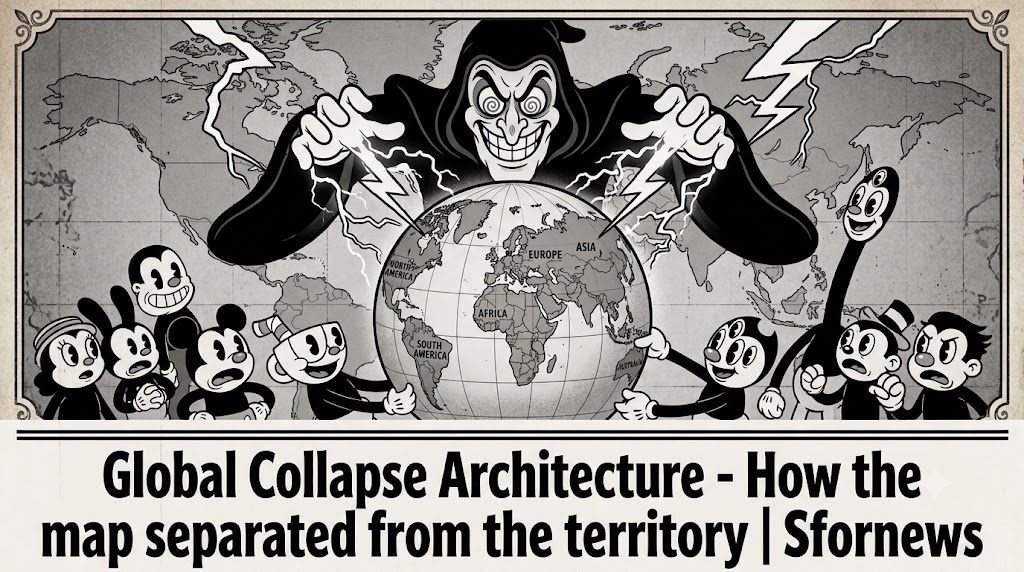
The question is: what happens if an alternative emerges? The answer is the essence of the transition we are witnessing. And this transition has already begun. Most people simply do not notice it because they look at the map, not the territory.
1.3. Creditor structure and the geopolitics of debt
Debt is not only about “how much.” It is also about “to whom.” Whoever holds your debt has you by the throat. Or by the hand. It depends on how you behave.
Largest foreign holders of US debt:
| Rank | Country/region | Amount ($ trillions) |
| 1 | Japan | 1,07 |
| 2 | United Kingdom | 1,01 |
| 3 | China | 0,59 |
| 4 | Belgium | 0,49 |
| 5 | Canada | 0,47 |
| 6 | Luxembourg | 0,4 |
| 7 | France | 0,3 |
| 8 | Ireland | 0,3 |
| 9 | Switzerland | 0,3 |
| 10 | Taiwan | 0,3 |
Source: US Treasury, TIC data, August 2026 [6].
Japan and the United Kingdom are the largest foreign creditors of the United States; China has dropped to third place [6].
Japan is an ally, inside the club. It holds US debt as a reserve asset. This is its way of being part of the system. It cannot leave because its economy is tied to the US market and to US security. Japan is not a “creditor.” It is a “hostage” that holds the debt because it has no other choice.
China is a competitor, outside the club. It holds US debt as a tool of pressure (or as a hostage). China cannot simply dump all its Treasuries, because that would undermine its own reserves. But it can gradually reduce its share. It is not “fighting” the dollar. It is creating an alternative, waiting for the dollar to dig its own grave.
China is reducing the share of US debt in its reserves [7]. Japan is maintaining its holdings. This is not economics. It is geopolitics: a struggle over who will architect the new world.
1.4. Debt as a derivative
A derivative is a financial instrument whose price depends on an underlying asset. Debt is a derivative on trust. It is backed by nothing except a promise to repay. That promise rests on:
the borrower’s ability to generate income,
the creditor’s willingness to wait,
belief that the system will not collapse.
When trust declines, debt turns into a toxic asset. This is what happened to mortgage-backed securities in 2008. It is what is happening now with public debt.
The Basel standards determine how much capital a bank must hold against risks. But the risks are not secured by real assets; they are modelled. When the model collapses, there is not enough capital. It is like building a house on sand.
Conclusion: debt is a derivative. Basel is a system for managing derivatives. And this system is backed by nothing but belief. But belief is not architecture. Belief is an illusion, and an illusion is not a foundation.
1.5. Basel: a club, not a law
The Basel Committee on Banking Supervision was established in 1974 under the Bank for International Settlements. Membership: 28 jurisdictions, 45 members.
Who is inside: the United States; Europe (Germany, France, Italy, Spain, the Netherlands, Belgium, Luxembourg, Sweden, Switzerland, the United Kingdom); Japan, China, India, Brazil, Russia, Saudi Arabia, Türkiye, South Africa, Australia, Canada, Mexico, Argentina, Indonesia, Korea, Hong Kong, and Singapore.
Who is outside the club: Argentina (a member, but with limited rights), Sri Lanka, Zambia, Ghana, Ethiopia, Pakistan, and Nigeria.
| Category | Countries | Status |
| Make the rules and do not follow them | United States | Captain |
| Make the rules and follow them | Europe, Japan | Passengers |
| Help make the rules but have no voice | Russia | Cargo |
| Build a parallel system | China, UAE, Saudi Arabia | Architects |
| Outside the club, pay by its rules | Argentina, Sri Lanka, Zambia, Ghana, Ethiopia | Debtors without rights |
Basel is not a law. It is a club. Its rules apply to those inside. Or to those who are in debt. It is like a private club in London: if you are not a member, you cannot enter. But you must pay dues. You cannot change the rules, and you cannot leave because you are in debt. It is a trap, and it works.
1.6. United States: the captain who exempts himself from the rules
2023: The Biden administration proposed tightening Basel III. Capital requirements for the largest banks would increase by 16–19%.
March 2026: The Trump administration withdraws the 2023 proposal and publishes a new one that lowers requirements. This is an architectural decision, not politics. A strategy.
The figures:
Category I and II banks (the largest): a reduction of 4.8%
Category III and IV banks: a reduction of 5.2%
Small banks: a reduction of 7.8%
Specifically:
Risk weight for corporate loans: from 100% to 95%
Mortgages: risk weight could be lowered to 25%
Securitisation: an 18% reduction in RWA
Michelle Bowman (Barr’s successor, appointed by Trump) defends the position: “Basel rules need to be adapted to the specific circumstances of the United States.”
The United States is inside the club but does not submit to its rules. This is not an exit from the club. It is using its position inside the club to cancel the rules for itself. It is as if a ship’s captain said: “The rules apply to everyone but me. I am the captain.” Everyone else must obey because they are not captains. They are passengers. Or cargo.
1.7. Europe: the passenger who cannot leave
European banks must comply with Basel IV (CRR3). American banks do not. This creates an imbalance. Europe is trapped between the need to comply with Basel and the inability to compete with American banks that do not. This is not a “level playing field.” It is a “race to the bottom.”
The FRTB (Fundamental Review of the Trading Book) problem:
The EU postponed FRTB implementation from 2026 to 2027.
Reason: the United States is not ready.
AFME: “Certain FRTB components continue to pose challenges because of significant operational complexity and excessively conservative capital requirements.”
This is a trap. Europe is not the captain here. Europe is a passenger who pays for a ticket and cannot change the route or get off, because this is the only ship. And it is sailing nowhere.
1.8. Russia: cargo excluded from the operating system
Russia is a member of the Basel Committee. This matters: in the logic of the “club,” Russia is inside but has limited rights. It participates in the development of standards but cannot block them.
Since 2022, Russia has been:
Cut off from SWIFT.
Cut off from most international payment channels.
Excluded from the club’s operating system.
Formally still a member of the BCBS.
Russia is inside the club but excluded from its operating system. It cannot postpone the application of standards as the United States does. It cannot influence the rules. It pays according to rules it did not create. It is as if you were a club member but were not given the key to the front door. You pay the dues, but you cannot enter or change the rules because you are not the captain. You are a passenger. Or cargo.
Sources
US Treasury / JEC (October 2026): US public debt of $40.25 trillion [1].
IMF World Economic Outlook (2026): public debt and debt-to-GDP data [2].
IMF WEO April 2026 / October 2026: Japan, 204.4% / 199.4% [3].
AAF (American Action Forum): US public debt at 100% of GDP in FY2026 [4].
IMF WEO October 2026: China, 104.4% (including part of LGFV debt) [5].
US Treasury, TIC data (August 2026): Treasury holders: Japan $1.07 trillion, the United Kingdom $1.01 trillion, China $0.59 trillion [6].
Money Today (September 2026): China is reducing its Treasury holdings [7].
BRICS Council / Russian Ministry of Energy (June 26, 2026): BRICS+ gold, 6,000 tonnes [8].
CoinMarketCap / SCMP / Atlantic Council: mBridge, $55–83 billion [9].
Congress.gov / S. 4251: Mined in America Act [10].
Federal Register / Executive Order 14233: Strategic Bitcoin Reserve [11].
Hashrate Index (October 2026): US share 35.6%, Russia 18.1%, China 11.7% [12].
EIA Short-Term Energy Outlook (September 2026): US generation and consumption [13].
SforNews / “Kafedra”: editorial team of the “Kafedra” and SforNews magazines [14].
© 2026, editorial team of the “Kafedra” and SforNews magazines. A reference to the original source is required when quoting.


Bitcoin
$62,881.23

Ethereum
$1,672.04

Litecoin
$42.71

Dash
$37.08

Bitcoin Cash
$209.43