Arctic Turn: Northern Sea Route Becomes the New Map of Global Trade 2026 — SforNews Research

  • 14 Jul, 2026
    | Salome K

ARCTIC TURN: THE NORTHERN SEA ROUTE BECOMES THE NEW MAP OF GLOBAL TRADE

Updating materials on the NSR based on fresh data and statements

Geopolitical turbulence in the Middle East and risks to traditional routes through the Suez Canal and the Strait of Hormuz are accelerating the reconfiguration of global logistics. The Northern Sea Route (NSR) is ceasing to be a promising project — it is becoming a key artery of world trade [1][13].

PART 1. WHAT IS CHANGING: FACTS AND FIGURES

The Middle East crisis as a catalyst for the NSR

Minister for the Development of the Russian Far East Alexey Chekunkov stated: “Geopolitical tension directly affects global logistics. The blocking of the Strait of Hormuz, the blockage of the Suez Canal, and the situation in the Middle East as a whole show that world trade needs reliable alternative routes” [1][13]. The number of companies considering the Arctic route for regular shipping is increasing [13].

The advantages of the NSR are becoming undeniable

Delivery via the NSR between Asia and Europe is 30–40% shorter compared to traditional routes [1][3][10]. Example: the route from Murmansk to Shanghai via the NSR takes 28 days versus 45 days via the Suez Canal [3]. China’s Arctic Express reduces transit to 18 days versus 40+ days via Suez [4].

Record cargo traffic figures

Over 5 months of 2026, cargo traffic along the NSR reached 14.5 million tons — a 13% increase compared to the same period in 2025 [2][3][6].
By the end of 2025, 37 million tons were transported, with a record transit volume of 3.2 million tons [2][3][6].
Over 10 years, cargo traffic has grown almost 10-fold [2][3].
Rosatom forecasts crossing the psychological mark of 40 million tons in 2026 [14].

Foreign vessels — a growing trend

In 2022, international transit via the NSR fell by 90% — to 200,000 tons. In 2023, it returned to 2 million tons [11]. Recovery dynamics:

2023 — 7 voyages
2024 — 14 voyages
2025 — 25 voyages
2026 — expected more than 30 voyages [11]

Requests for transit permits (June–October 2026) rose from 12 in 2025 to 18 in 2026 [12].

PART 2. ASIAN GIANTS ENTER THE ARCTIC

China: the first Arctic Express and a target of 20 million tons

China launched the world’s first China-Europe Arctic Express — the container ship Istanbul Bridge (4,890 TEU) departed from Ningbo to British Felixstowe via the NSR [4]. China has set a target of 20 million tons of cargo via the NSR by 2030 [5][9][11]. The route is positioned as the “Polar Silk Road” — part of the “Belt and Road” initiative [4].

India: 5 million tons by 2030

India has announced its intention to increase shipments via the NSR to 5 million tons [5][9].

South Korea: year-round navigation

South Korea plans to be ready for year-round navigation via the NSR by the mid-2030s [5][9].

UAE and Rosatom — a joint venture

The United Arab Emirates have established a joint venture with Rosatom to develop container shipping via the NSR [5][9].

PART 3. INFRASTRUCTURE: RUSSIA AS THE SOVEREIGN OVER THE NSR

Chekunkov emphasized: “The Northern Sea Route is ready for any country. It is important that whoever decides to use it will have no alternative but to use Russian icebreaker escort, emergency rescue centers, and information from our space satellites. And in this sense, Russia is undoubtedly the sovereign over the Northern Sea Route” [5][7][9][15].

Key infrastructure projects:

Two new nuclear icebreakers have already been built, and two more were built earlier [6].
Six emergency rescue vessels have been commissioned [6].
Two hydrographic vessels have been modernized [6].
Five satellites have been launched for ice analysis [9].
The NSR development plan until 2035 includes the construction of 10 nuclear icebreakers and 43 emergency rescue vessels [7][9].

Budget: almost 138 billion rubles have been allocated for the federal project “Development of the Greater Northern Sea Route” for 2026–2028 [3]. The overall NSR development plan until 2035 envisions funding of 1.79 trillion rubles [3].

The Trans-Arctic Transport Corridor integrates the NSR with river routes, coastal infrastructure, investment, and social projects [9].

PART 4. ECONOMIC IMPACT AND PROSPECTS

Target indicators by 2035:

Cargo traffic — 220 million tons [3]
Tax revenues — more than 13.2 trillion rubles [3]
Added value — 31.5 trillion rubles [3]

Key challenges:

The ice-class fleet deficit is estimated at 53% this year and could rise to 55% by 2030 [3].
High costs and the need for Rosatom permits remain barriers [8].

Forecast:
The NSR is transforming from an “alternative route” into a structural axis of global logistics. China, India, and Korea have already secured their place in the Arctic agenda. Japan and Singapore are next.

AUTHORS’ THESES

Tatiana Burmagina:

Author of articles on Russian-Japanese cooperation in energy, technology, and investment: “Russia and Japan: Energy, Technology, Investment — Where Politics Argues, Business Continues Dialogue” (2025) [1].
Author of the article “From Imitation to Reality: How to Build Technological Sovereignty” (Sfornews, 2026) — on technological independence and cooperation within BRICS.
Co-author of materials on the role of the NSR in the Arctic and international transport corridors.

Nikolay Shishorkin:

Director of the Department of the Expert and Communication Platform “Eurasia” [3].
Specialist in international industrial cooperation in key economic sectors: energy, technology, agriculture [7].
Author of the article “Africa and Eurasia: Time for Direct Dialogue” (2026) [3][7].

Antonio Georgopalis:

Belgian financial analyst .
Author of articles on Russian investors’ strategies in the European and US real estate markets .
Focuses on analyzing the goals, deal structures, and preferences of Russian investors, including the use of offshore structures despite geopolitical tensions and sanctions .

OUR MATERIALS ON THE TOPIC

1. “Russia and Japan: Energy, Technology, Investment — Where Politics Argues, Business Continues Dialogue” (Tatiana Burmagina, 2025) — on the prospects for cooperation between Russia and Japan in energy, technology, and the NSR.
2. “China-Russia Cooperation in the Arctic: A New Stage in the Development of the Northern Sea Route” (Antonio Georgopalis, 2025) — an analysis of China’s role in the development of the NSR.
3. “Nikolay Shishorkin. International Industrial Cooperation: The Path to Sustainable Development of the EAEU, SCO, and BRICS Economies” (Nikolay Shishorkin, 2025) — on international cooperation and integration processes.
4. “From Imitation to Reality: How to Build Technological Sovereignty” (Tatiana Burmagina, Sfornews, 2026) — on technological independence and cooperation within BRICS.

Architectural Conclusion:

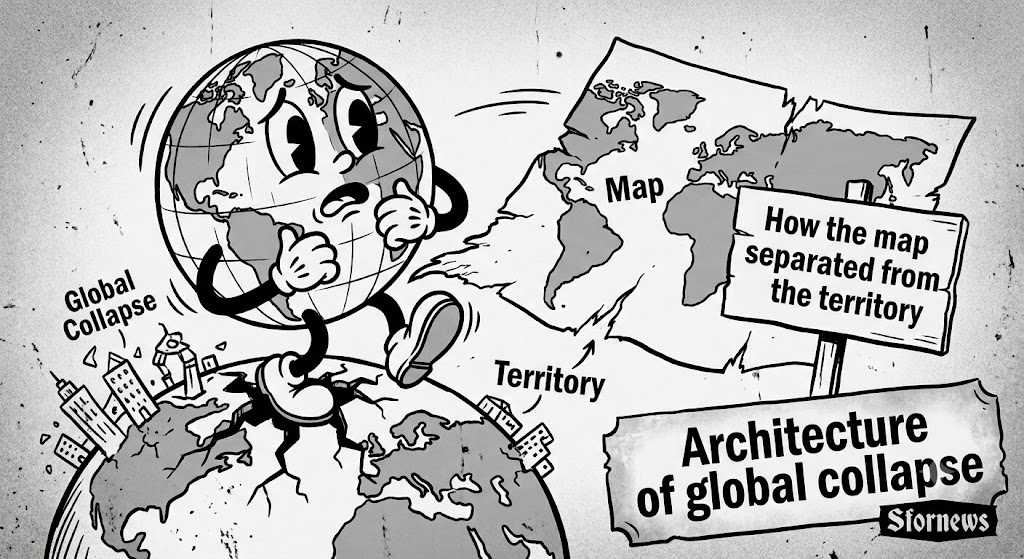
The global logistics map is being redrawn. Old routes (Suez, Hormuz) are becoming zones of risk. The new map is the Arctic, where Russia acts not as a transit country but as a sovereign operator. Asian giants (China, India, Korea) are entering this route not as observers but as participants. 2026 is a bifurcation point when the NSR ceases to be a “project” and becomes a “reality.”

This material was prepared by the editorial board of “Kafedra” and SforNews based on open sources and updated data.

This analysis is for informational purposes only and does not constitute investment advice.

When citing, a link to the original source is required.

List of sources:

1. Vesti.ru, “Chekunkov told how the crisis around the Strait of Hormuz affects interest in the NSR,” 2026 [1]
2. Anadolu Ajansı, “Freight traffic along the Northern Sea Route increased by 13% in 5 months of the year,” 2026 [2]
3. Kommersant, “Freight traffic along the Northern Sea Route increased by 13% in five months,” 2026 [3]
4. World Ports, “World’s First China-Europe Arctic Express Launched,” 2026 [4]
5. Interfax, “Russia is not against the use of the Northern Sea Route by Western countries,” 2026 [5]
6. Morskie Vesti Rossii, “Freight traffic along the Northern Sea Route increased by 13% in 5 months of 2026,” 2026 [6]
7. Yamal-Media, “The Northern Sea Route is open to Western countries. But there are nuances,” 2026 [7]
8. World Ports, “Russian Oil takes the Northern Sea Route to Brunei,” 2026 [8]
9. Izvestia, “Chekunkov spoke about the Russian Federation’s position on the use of the NSR by Western countries,” 2026 [9]
10. Vesti.ru, “The Minister announced the readiness of the Northern Sea Route for international transport,” 2026 [10]
11. PortNews, “Foreign shipping companies may make more than 30 voyages via the NSR in 2026,” 2026 [11]
12. MarineLink, “Arctic Shipping Routes See Increased Interest for 2026 Summer Season,” 2026 [12]
13. News Mail, “Chekunkov: crises around the Suez Canal and Hormuz increase interest in the NSR,” 2026 [13]
14. TASS, “Freight traffic along Northern Sea Route in 2026 already up 15% compared to 2025,” 2026 [14]
15. Morskie Vesti Rossii, “The Northern Sea Route is open to Western countries, Chekunkov stated,” 2026 [15]

© 2026 “Kafedra” and SforNews. When reprinting, a link is required.

  • Latest articles

  • More from the archive Arctic BRICS Eurasia Geoeconomics Global Trends International Trade Logistics Transport